<?xml version="1.0" encoding="UTF-8"?>
<feed xmlns="http://www.w3.org/2005/Atom">
  <title type="text">Hill District Digital History</title>
  <updated>2026-04-25T15:10:40+00:00</updated>
  <generator uri="http://framework.zend.com" version="1.12.20">Zend_Feed_Writer</generator>
  <link rel="alternate" type="text/html" href="https://hillhistory.org/"/>
  <link rel="self" type="application/atom+xml" href="https://hillhistory.org/items/browse?output=rss2"/>
  <id>https://hillhistory.org/</id>
  <author>
    <name>Hill District Digital History</name>
    <uri>https://hillhistory.org</uri>
  </author>
  <link rel="hub" href="http://pubsubhubbub.appspot.com/"/>
  <entry>
    <title type="html"><![CDATA[Centre Avenue YMCA – A beacon of progress in the Hill District]]></title>
    <summary type="html"><![CDATA[<p><img src="https://hillhistory.org/files/fullsize/83b1fa84fb4f1e7d842ff960c6bce244.jpg" alt="Centre Avenue Y.M.C.A." /><br/><p><strong><em></em></strong></p><p><p>Throughout its history, the Young Men’s Christian Association (YMCA) has had a focus of providing quality support to working class men survive the harsh conditions that they were facing. When it was founded in 1851, the YMCA had strong goals to bring support and services to the working class. Unfortunately, the services and lodgings that were offered by the YMCA were heavily segregated. When William Hunton became the first black full time secretary of the YMCA in 1888, he faced the challenges of establishing a place for African Americans under the YMCA’s segregated policies. This led to the birth of a movement that focused on creating “semi-autonomous African American YMCA system,” that no longer focused on the “seemingly futile goals of participation with whites, and instead advocated self-help and racial solidarity.” YMCAs built under this philosophy were to serve as pillars in African American communities and would&nbsp; “Shield black men from the humiliations of lingering racism and segregationist policies.” This required Hunton and others to fundraise and attract benefactors willing to offer aid to those communities seeking to build their YMCA. After a lengthy process of successfully fundraising the required funds to purchase a site and having the structure built, the Pittsburgh’s African American YMCA affiliate officially joined this legacy as the Centre Avenue YMCA in 1923.</p>
The Centre Avenue YMCA, located on the corner of Francis Street and Centre Avenue, served as a cultural and institutional beacon of the Hill District, offering many amenities such as a swimming pool, gym, boxing ring, and community center. &nbsp;The YMCA also provided lodging. These lodgings were often used by black athletes who could not stay at the white only hotels. Among its 86 rooms, many famous figures have claimed residency at some point or another such as baseball hero Jackie Robinson, jazz legend Dizzy Gillespie, and champion-boxer Joe Louis. The Historic YMCA also hosted several speeches and lectures from prominent African Americans such as W.E.B DuBois, Langston Hughes, and Paul Robeson. Even famous Pittsburgh playwright, August Wilson used the Y’s meeting spaces earlier in his career to meet with his group the Centre Avenue Poets, which included fellow writers Charlie Williams and Rob Penny. The YMCA offered many great programs for community members. One such program provided college scholarships to local students, on the basis that they would return and work and work at the YMCA in some capacity after graduation.<br />
<h3><span style="font-weight: 400;">A Slow Decline</span></h3>
<p>Regardless of the opportunities and services the Central Avenue YMCA provided the residents of the Hill District, membership began to steadily decline in the late 1950s. The changes began with the Urban Renewal projects in the Lower Hill, forcing many members to relocate. As the “separate but equal” doctrine in the YMCA’s policy on membership and attendance dissipated due to the success of the Civil Rights movement, many middle class African Americans chose membership at the better funded YMCAs that had once been segregated. The later collapse of the steel industry in the 1970s and 80s meant more people could not afford to use the Y’s services. This turmoil would cause an upsurge in substance abuse and criminal activity in the late 80s and early 90s for the Hill. The Central Avenue YMCA provided a place for transitional housing and provided support services for people fighting substance abuse and mental illness, causing a shift from recreational and community activities to community services. However it was designated a City Historic Infrastructure in 1995.</p>
<h3><span style="font-weight: 400;">Rebuilding</span></h3>
<p>Later, in 2012, a new YMCA was built on Central Ave and named after Thelma Lovette. Lovette was a prominent activist in Pittsburgh who heavily involved herself with the local YMCA as the first woman on the Central Ave Board. As of today, the Centre Avenue YMCA no longer functions in the same capacity as it once did.&nbsp; This does not mean that it has lost all of its original principles.&nbsp; In 2020, it was announced that a partnership between the YMCA and ACTION Housing, with help from $7.4 million provided by over 20 agencies, would transform the Historic Centre Avenue building into a low-income residency for African American men. This renovation allowed the building to continue its mission of being a safe refuge to African American men who require the safety of its walls.&nbsp;<a href="#_ftnref6" name="_ftn6"></a></p>
<p></p>
<p><a href="#_ftnref10" name="_ftn10"></a></p>
<p><a href="#_ftnref12" name="_ftn12"></a></p></p></p><p><em><strong><a href="https://hillhistory.org/items/show/65">For more (including 3 images), view the original article</a>.</strong></em></p><p></p>]]></summary>
    <published>2024-03-26T03:20:37+00:00</published>
    <updated>2025-05-31T23:58:12+00:00</updated>
    <link rel="alternate" type="text/html" href="https://hillhistory.org/items/show/65"/>
    <id>https://hillhistory.org/items/show/65</id>
    <author>
      <name>&lt;span style="font-weight: 400;"&gt;&amp;nbsp;Brandon Self and Andrew Ciavarino&lt;br /&gt;&lt;/span&gt;</name>
    </author>
  </entry>
  <entry>
    <title type="html"><![CDATA[The Pittsburgh Courier – America's Largest Black Newspaper]]></title>
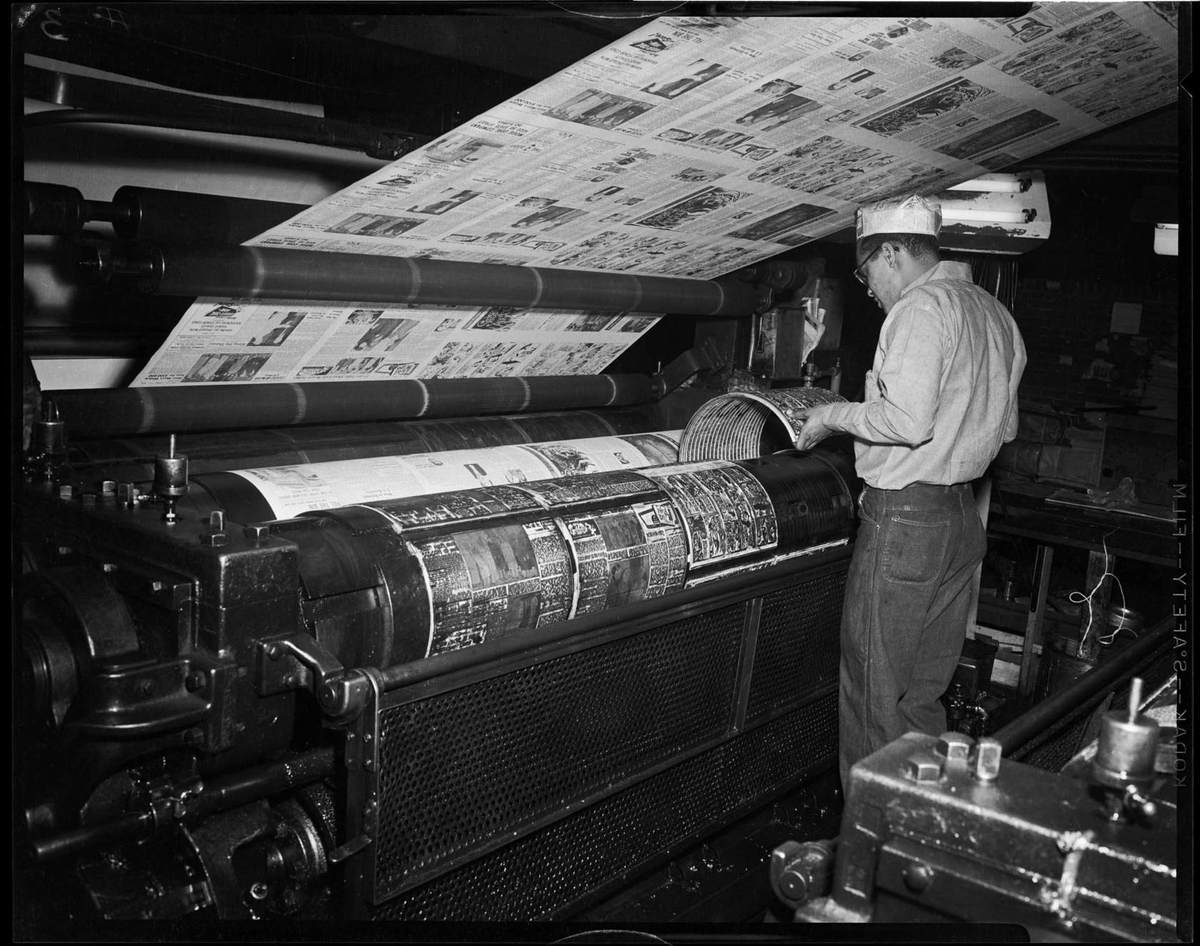
    <summary type="html"><![CDATA[<p><img src="https://hillhistory.org/files/fullsize/da6e5133d56a0a27510810f17c3998bf.jpg" alt="Pittsburgh Courier newspaper press operator, possibly William Brown, possibly printing Chicago or other Midwestern edition" /><br/><p><strong><em></em></strong></p><p><p><span style="font-weight: 400;">In the late 1800s and early 1900s, Pittsburgh’s newsstands suffered from a serious lack of quality Black papers. Out of the six white dailies in the city, only one included Black news. </span><i><span style="font-weight: 400;">The Pittsburgh Press</span></i><span style="font-weight: 400;">’ segregated “Afro-American News” column was far from ideal however, and the little reporting that the </span><i><span style="font-weight: 400;">Press</span></i><span style="font-weight: 400;"> did offer mostly consisted of sensational accounts of crimes, affairs, and other sordid material which hardly painted the Black community in a favorable light.</span></p>
<p><span style="font-weight: 400;">This all would change when Nathaniel Edward Harleston, a security guard at the H.J. Heinz food packing facility, began a newspaper as a way to publish some of his poetry. With the help of a couple of friends from the Heinz plant, the first official issue of the <em>Courier</em> was printed on January 15, 1910. Just a few years later, Harelston’s new paper would expand to include headquarters at 1212 Wylie Ave (though this would later move downtown), and its own publishing plant at 2628 Centre Ave.</span></p>
<p><span style="font-weight: 400;">With such deep roots in the largest historically Black neighborhood in Pittsburgh, it is no surprise that </span><i><span style="font-weight: 400;">The Pittsburgh Courier</span></i><span style="font-weight: 400;"> would become one of the most prominent voices in Black America within just a few decades. Not only would the paper go on to provide a rich account of Black life over the years, it would also serve as an instrument of agency in the fight for civil rights.</span></p>
<h3><span style="font-weight: 400;">A Fight for Rights</span></h3>
<p><span style="font-weight: 400;">Much of the </span><i><span style="font-weight: 400;">Courier’s</span></i><span style="font-weight: 400;"> early reputation as a “crusader” paper for Black rights can be attributed to its first editor, Robert Lee Vann.</span></p>
<blockquote>One reporter, Edna Chappel, was even assigned to visit businesses in the greater Western Pennsylvania area and write about her experiences of discrimination there because of her race.</blockquote>
<p><span style="font-weight: 400;">Vann was the first African American to graduate from University of Pittsburgh’s school of law, and he was one of only five Black lawyers in Pittsburgh at the time. After helping to find investors and using his law expertise to draw up the incorporation papers, Vann took over as editor of the </span><i><span style="font-weight: 400;">Courier</span></i><span style="font-weight: 400;"> when Harleston left in late 1910.&nbsp;</span></p>
<p><span style="font-weight: 400;">From the very beginning, Vann made his vision for the </span><i><span style="font-weight: 400;">Courier</span></i><span style="font-weight: 400;"> clear; the paper would serve to “abolish every vestige of Jim Crowism in Pittsburgh”, as he wrote in an early editorial. In the first years, he would use his writing to address pressing issues in the Hill District, calling for a Black building and loan association as well as a Black hospital to combat the housing and health crises there.&nbsp;</span></p>
<p><span style="font-weight: 400;">A future politician himself, (he would serve as Assistant Attorney General in the Roosevelt administration), Vann called for the readers of his paper to organize in politics. When the </span><i><span style="font-weight: 400;">Courier </span></i><span style="font-weight: 400;">began to have national influence in the early 30s, Vann’s writings carried increasing weight in Black politics. His opinion in one 1932 editorial that “negroes have changed their political philosophy... This year I see them voting a Democratic ticket” has even been credited by some historians with significantly contributing to Roosevelt’s victory later that year.&nbsp;</span></p>
<p><span style="font-weight: 400;">This foray into national affairs continued into the mid-20th century, as the </span><i><span style="font-weight: 400;">Courier</span></i><span style="font-weight: 400;"> began to report more and more on the Civil Rights movement across the country. They covered stories like the </span><a href="https://nmaahc.si.edu/explore/stories/scottsboro-boys"><span style="font-weight: 400;">Scottsboro Boys</span></a><span style="font-weight: 400;">, </span><a href="https://www.archives.gov/milestone-documents/brown-v-board-of-education"><span style="font-weight: 400;">Brown v. Board</span></a><span style="font-weight: 400;">, and the campaigns of </span><a href="https://www.history.com/topics/black-history/a-philip-randolph"><span style="font-weight: 400;">A. Phillip Randolph</span></a><span style="font-weight: 400;">, while their sports reporters doggedly followed Black boxer Joe Louis as he won repeated victories in the ring.&nbsp;</span></p>
<p><span style="font-weight: 400;">The </span><i><span style="font-weight: 400;">Courier </span></i><span style="font-weight: 400;">reported on local injustice towards African Americans as well. They frequently covered the Homestead Grays, Pittsburgh’s Negro League baseball team, and fought for major league desegregation in their editorials. One reporter, Edna Chappel, was even assigned to visit businesses in the greater Western Pennsylvania area and write about her experiences of discrimination there because of her race.&nbsp;</span></p>
<p><span style="font-weight: 400;">The </span><i><span style="font-weight: 400;">Courier </span></i><span style="font-weight: 400;">was known for hiring young, Black talent like Chappel who might never have been given a job at another paper. Famous Pittsburgh photographer Charlie “Teenie” Harris was briefly employed at the paper, as well as William Gardner Smith, a novelist who spent time in the company of other great Black authors like James Baldwin and Richard Wright. Other reporters at</span> <span style="font-weight: 400;">the </span><i><span style="font-weight: 400;">Courier</span></i><span style="font-weight: 400;"> are less well known, but their work was foundational for the paper.&nbsp;</span></p>
<h3><span style="font-weight: 400;">Later Years</span></h3>
<p><span style="font-weight: 400;">After the death of Robert Vann in 1940, the paper did not find an executive editor who could match its first in passion and vision until Percival L. Prattis accepted the executive editorship in 1956. Prattis had worked at the </span><i><span style="font-weight: 400;">Courier</span></i><span style="font-weight: 400;"> for years prior, and had already been instrumental in its development before becoming editor. Vann had originally hired him in 1935 after seeing his impressive work at the </span><i><span style="font-weight: 400;">Courier</span></i><span style="font-weight: 400;">’s rival Black paper, </span><i><span style="font-weight: 400;">The Chicago Defender</span></i><span style="font-weight: 400;">, where Prattis had been city editor. Prattis used his connections in Chicago to expand the circulation of the </span><i><span style="font-weight: 400;">Courier</span></i><span style="font-weight: 400;"> in the Midwest, where the paper had previously struggled to find distributors in its competition with the </span><i><span style="font-weight: 400;">Defender</span></i><span style="font-weight: 400;">.&nbsp;</span></p>
<p><span style="font-weight: 400;">Before he became executive editor, Prattis reported on reconstruction after the war. He heavily covered the creation of the United Nations, even personally attending the founding conference in San Francisco. He also reported on the conflicts in the Middle East, something which was not often seen in Black papers.&nbsp;</span></p>
<p><span style="font-weight: 400;">In the mid-1950s, the advancement of the Civil Rights movement was beginning to convince many establishment white papers to take Black news more seriously. As competition with these white dailies increased, the </span><i><span style="font-weight: 400;">Courier </span></i><span style="font-weight: 400;">began to struggle financially. Despite this, Prattis increased the circulation to a peak of 350,000 copies, with 14 editions nationwide. This likely is due to his aggressive style; under Prattis, the </span><i><span style="font-weight: 400;">Courier</span></i><span style="font-weight: 400;"> reported stories of injustice which its competitors were simply unwilling to publish.</span></p>
<p><span style="font-weight: 400;">Eventually, the </span><i><span style="font-weight: 400;">Courier</span></i><span style="font-weight: 400;">’s money troubles proved too much to overcome, however, and the paper was sold in 1966 to John Sengstacke, owner of the </span><i><span style="font-weight: 400;">Defender</span></i><span style="font-weight: 400;">. He relaunched the paper the next year as </span><i><span style="font-weight: 400;">The New Pittsburgh Courier</span></i><span style="font-weight: 400;">. By then, many of its finest reporters and editors had left, including Prattis and Bolden, and the paper would never again reclaim its previous quality or national influence.&nbsp;</span></p>
<span style="font-weight: 400;">Over the half-century of its publication, </span><i><span style="font-weight: 400;">The Pittsburgh Courier</span></i><span style="font-weight: 400;"> went from a two page collection of a Steel City security guard’s poems to a national paper which changed the landscape of Black life in America. As Frank Bolden once said in an interview, the Black press acted as an “advocate of all our dreams, wishes, and desires.” Without that small printing plant in the Hill, dutifully churning out issues week after week, Black Americans would not have had the chance to see their histories, sufferings, and longings given a voice in the work of the </span><i><span style="font-weight: 400;">Courier</span></i><span style="font-weight: 400;">.</span></p></p><p><em><strong><a href="https://hillhistory.org/items/show/62">For more (including 7 images), view the original article</a>.</strong></em></p><p></p>]]></summary>
    <published>2024-03-07T15:50:22+00:00</published>
    <updated>2025-06-23T00:26:16+00:00</updated>
    <link rel="alternate" type="text/html" href="https://hillhistory.org/items/show/62"/>
    <id>https://hillhistory.org/items/show/62</id>
    <author>
      <name>Nolan Cowan</name>
    </author>
  </entry>
  <entry>
    <title type="html"><![CDATA[Rhumba Theater – Entertainment Hotspot for the Lower Hill]]></title>
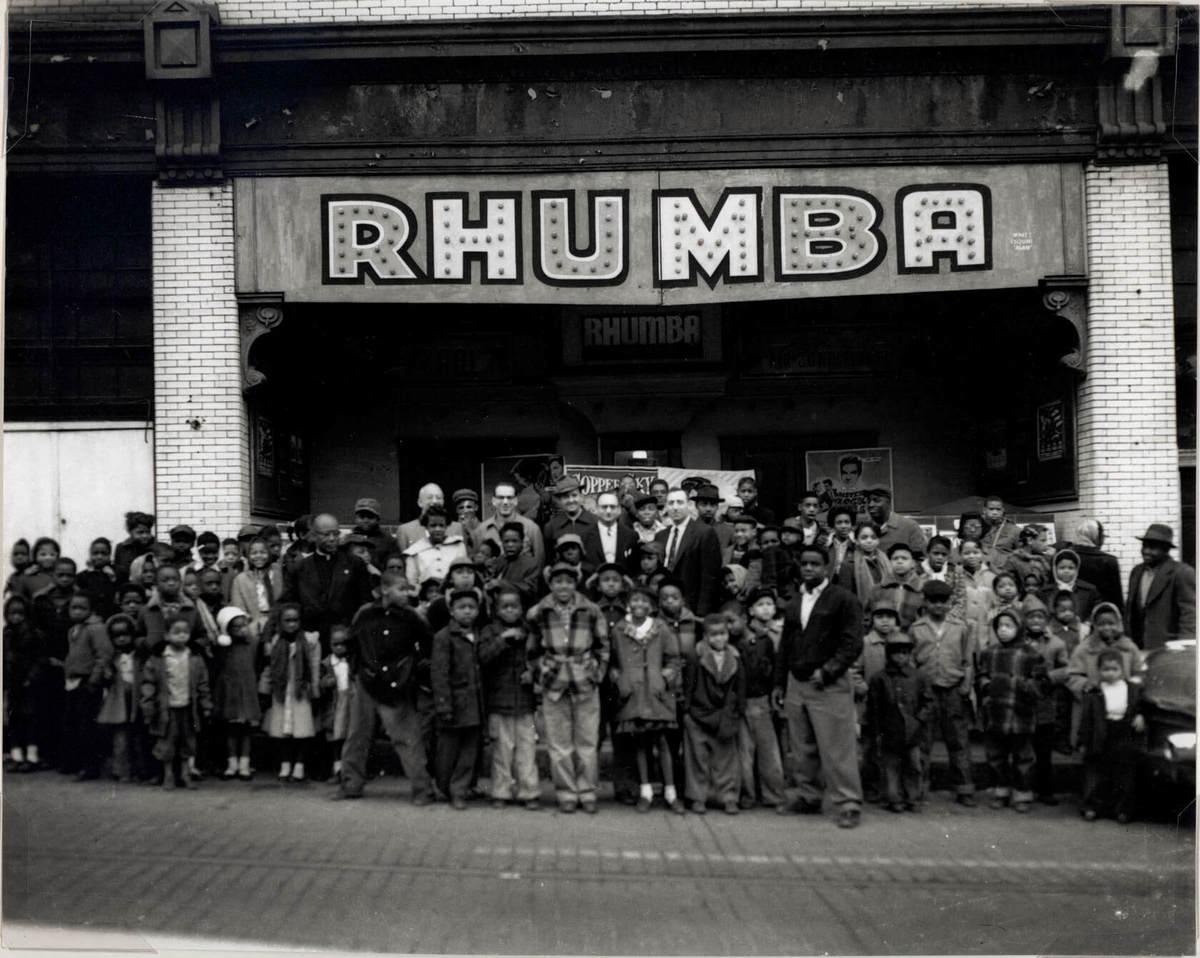
    <summary type="html"><![CDATA[<p><img src="https://hillhistory.org/files/fullsize/dbc8e8b4faddc794b76cfab696fddc7c.jpg" alt="Rhumba Theatre patrons" /><br/><p><strong><em></em></strong></p><p><p><span style="font-weight: 400;">In 1914, brothers Thomas and Martin Burke built a two-story entertainment and retail complex at 53-55 Fullerton at a cost of $7500. The two floors of the structure contained nearly 8,000 total square feet, housing a dance hall, juke box theater, and retail space.</span></p>
<p><span style="font-weight: 400;">Brothers Stanley and Alexander Williams, Hill District entertainment entrepreneurs, operated a 14-table pool hall in the basement for the first decade.&nbsp; After a venture into baseball, Andy then returned to the Burke’s basement and operated the four-lane Monarch Bowling lanes in the basement beginning in 1929.&nbsp; Pastimes such as movies, bowling, and billiards were popular forms of entertainment during the Great Depression, as they were relatively affordable ways for people to forget about hard times, at least for a little while.</span></p>
<h3><span style="font-weight: 400;">Entertainment Nightly</span></h3>
<p><span style="font-weight: 400;">The economic turmoil of the Depression led to a number of changes at the site.&nbsp; Jacob and Sidney Soltz purchased the building during the 1930s, upgraded the theater to show “talkies” (motion pictures with sound), and renamed it the Rhumba.</span></p>
<p><span style="font-weight: 400;">In 1935, the second floor of the building hosted a nightclub called Javo’s Jungle, hailed in the </span><i><span style="font-weight: 400;">Courier</span></i><span style="font-weight: 400;"> as “the classiest night club in the city” at its opening. The nightclub offered a nightly floor show with actress and singer Cora Green, Martha Price, and impersonator Bob Davis. Dewey McDaniels greeted the guests at the door, while “Battle” Keys kept the peace. Tom West and “Hungry Bill” manned the “futuristic” bar and could make any drink requested, no matter how complicated.&nbsp;</span></p>
<p><span style="font-weight: 400;">The building’s basement was also a entertainment hotspot, though less upscale than the upper floor. The basement held the after-hours, or as the </span><i><span style="font-weight: 400;">Pittsburgh Courier </span></i><span style="font-weight: 400;">called them “after yawning” clubs.&nbsp; Frequent proprietorship changes brought a rotating list of club names in the spot, including the Ritz and the El Congo. The members-only Bambola social club opened its doors on November 3, 1946, with floor shows starting at 12:30 am and 2:30 am. The floor shows featured singers, “shake dancers” (burlesque performers), and jazz bands, both of local and national fame.&nbsp; The club finally became the “Tia Juana” club, advertised in the 1950 </span><i><span style="font-weight: 400;">Courier </span></i><span style="font-weight: 400;">as the “hottest spot outside of a blast furnace.”</span></p>
<h3><span style="font-weight: 400;">The Rhumba's Final Bow</span></h3>
<p><span style="font-weight: 400;">Declining conditions in the surrounding neighborhood, and rumors of impending urban redevelopment, led to a decline in the Rhumba.&nbsp; A 1952 gas explosion in nearby properties caused some damage to the theater, and it suffered several projector fires. In his memoir </span><i><span style="font-weight: 400;">Song of the Hill, </span></i><span style="font-weight: 400;">Dr. Ralph Proctor recalled that “The Rhumba was nice when it first opened, but then deteriorated into a ratty place we avoided.” It was demolished in 1957 as part of the Urban Redevelopment Authority’s Lower Hill Redevelopment Project.&nbsp;</span></p></p></p><p><em><strong><a href="https://hillhistory.org/items/show/42">For more (including 4 images and 1 sound clip), view the original article</a>.</strong></em></p><p></p>]]></summary>
    <published>2023-10-02T23:52:55+00:00</published>
    <updated>2025-06-13T13:32:16+00:00</updated>
    <link rel="alternate" type="text/html" href="https://hillhistory.org/items/show/42"/>
    <id>https://hillhistory.org/items/show/42</id>
    <author>
      <name>Andrea Santella</name>
    </author>
  </entry>
  <entry>
    <title type="html"><![CDATA[Lutz's Meat Market]]></title>
    <summary type="html"><![CDATA[<p><img src="https://hillhistory.org/files/fullsize/a8716e3480f2026fd427131563c5d2c3.jpg" alt="Karl Lutz and Cal Cunningham" /><br/><p><strong><em></em></strong></p><p><p>The building at 2145 Centre Avenue was, for many years, the home of Lutz’s Meat Market, and the owner’s name is still visible on the building’s cornice.</p>
<p>German immigrant Charles Lutz founded the meat market in 1894 across the street from where he would eventually build a three-story building on the corner of Centre and Elmore Streets. The meat market made up the first floor, and the Lutz family loved on the floors above. Charles ran the shop for 28 and then sold it to his son Karl in 1922.</p>
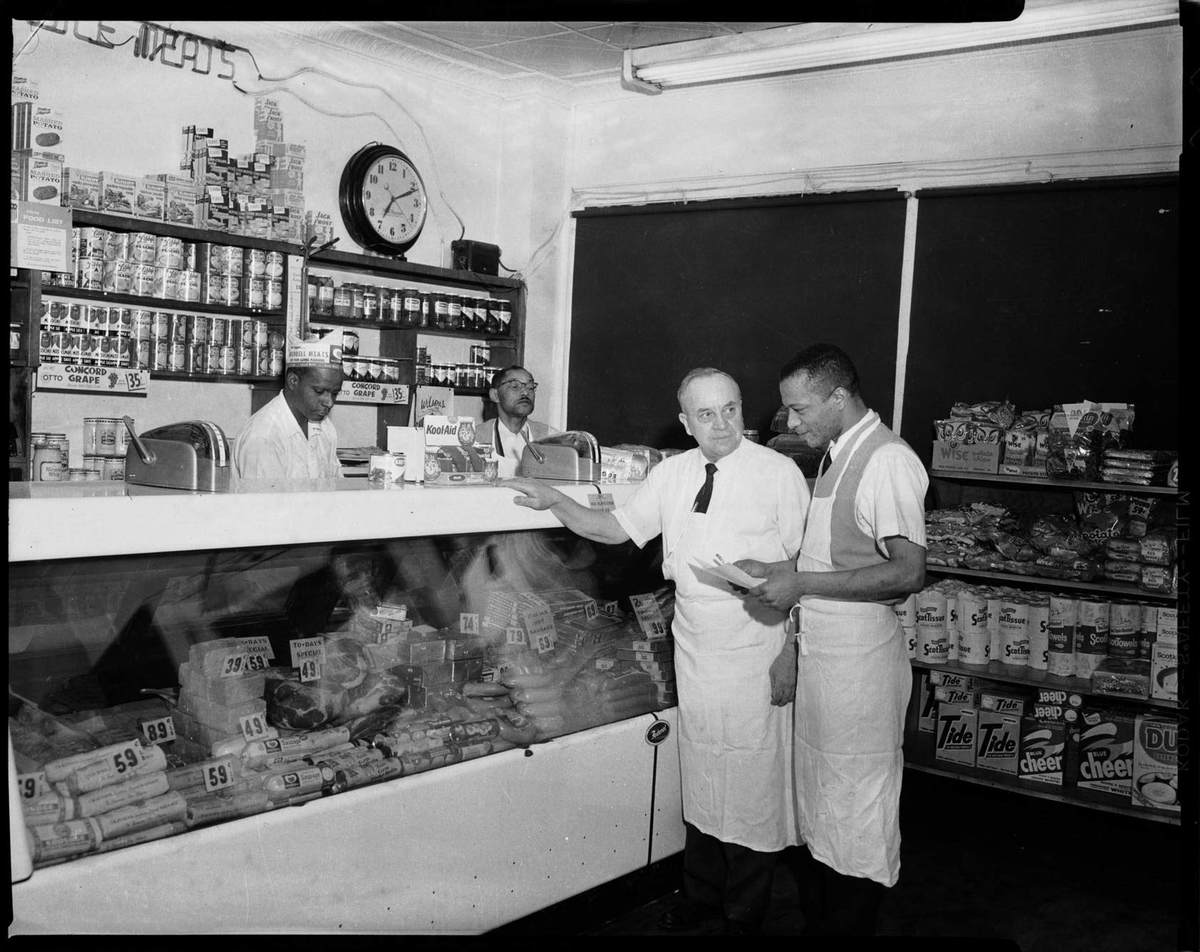
<p>During the decades surrounding World War II, Lutz’s Meat Market was a popular shopping destination for Black migrants that moved to the Hill. It was known for its quality selection and hiring Black employees as clerks and butchers.</p>
<p>Despite its popularity and the family’s good reputation in the community, Lutz’s was not exempt from tensions during the Civil Rights Movement. During the riots in the wake of Martin Luther King Jr’s assassination in April 1968, many business were ransacked and burned – Lutz’s included.</p>
<blockquote>Lutz's was a popular shopping destination for residents in the Hill due to its quality selection, and the fact that nearly all of the store’s employees were Black.</blockquote>
<p>Karl Lutz decided to retire at 63 years old and sold the business to Cal Cunningham. A <em>Pittsburgh Courier </em>article announced the transition and noted, “Karl Lutz will be missed. He was a kind man and taught Cal everything about the business.” Cunningham, a long-time employee and apprentice to Lutz, ran the market for a year before tragically passing of a cerebral hemorrhage. Unable to keep the business alive, his wife closed the market a few years later.</p>
<h3><span style="font-weight: 400;">Lutz's Legacy</span></h3>
<p>Years later, playwright August Wilson would use the Lutz name for a white shop owner character in his 1990 play <em>Two Trains Running</em>. This Lutz character never appears on stage, but complained about by the character Hambone, who is convinced Lutz cheated him out of a pay that was promised. Most August Wilson scholars agree that, while Wilson drew on a familiar name from his past, he did not intend his character to portray the actual Karl Lutz, especially since the fictional business owner did not reflect Karl Lutz’s true character.</p>
<p>More recently, the building has become the home of Nafasi on Centre, a collaboration between the Hill CDC and #ArtsInHD, an initiative of the Hill District Consensus Group. Nafasi on Centre is intended to provide a central hub for innovative artists with Hill District connections; it hosts artist work-space in the basement, a café/gallery on the first floor, and four 1-bedroom apartments and two micro lofts, spread across the second and third floors. The meat market may no longer serve the residents of the Hill District, but it and the Lutz’s family legacy continues to provide a space for residents to come together as a community.</p></p></p><p><em><strong><a href="https://hillhistory.org/items/show/38">For more (including 3 images), view the original article</a>.</strong></em></p><p></p>]]></summary>
    <published>2023-10-02T23:46:03+00:00</published>
    <updated>2025-06-20T14:31:47+00:00</updated>
    <link rel="alternate" type="text/html" href="https://hillhistory.org/items/show/38"/>
    <id>https://hillhistory.org/items/show/38</id>
    <author>
      <name>The Hill District Digital History Team</name>
    </author>
  </entry>
  <entry>
    <title type="html"><![CDATA[Ellis Hotel – Green Book-listed lodging and nightspot]]></title>
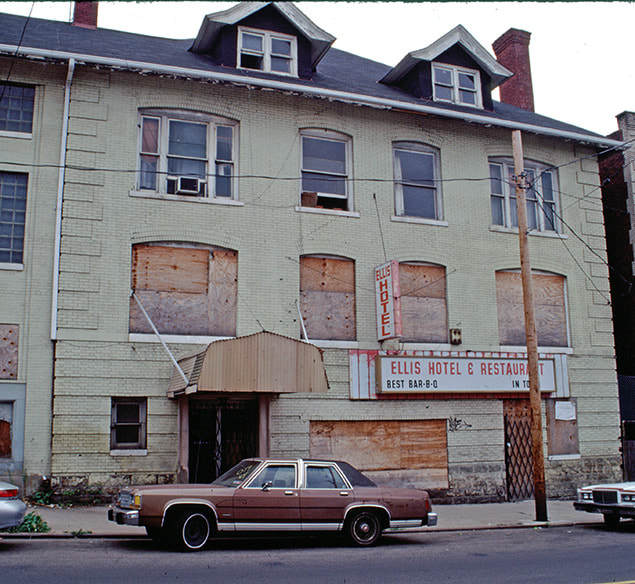
    <summary type="html"><![CDATA[<p><img src="https://hillhistory.org/files/fullsize/de204876b3d9bf6020d7a6f34959b404.jpg" alt="Ellis Hotel after closing" /><br/><p><strong><em></em></strong></p><p>This now vacant lot was once the site of the Ellis Hotel, <span style="font-weight: 400;">a safe haven for traveling Black artists and celebrities, and a hub of culture for the local Hill community.</p><p></span>Originally established by James and Frank Ellis in Pittsburgh's South Side, the hotel eventually relocated to this Centre Avenue address when <span style="font-weight: 400;"><span style="font-weight: 400;"><span style="font-weight: 400;">Frank Ellis and his wife purchased the former Black YWCA building. They transformed</span></span></span><span style="font-weight: 400;"><span style="font-weight: 400;"> the spacious 45-room structure into a centerpiece hotel in the Hill District, opening in 1957. Once opened, the new Ellis was touted as one of the finest establishments in Pittsburgh’s Hill District, gaining a listing in the “Green Book” as a safe place for black travelers visiting Pittsburgh.</span></span>
<p><span style="font-weight: 400;">The Green Book, officially titled <em>The Negro Motorist Green Book,</em> was published annually from 1936 to 1967, and was a lifeline for those navigating a divided America.&nbsp; The book directed Black travelers to restaurants, hotels or service stations that welcomed them with open arms. In an era when downtown Pittsburgh hotels had an unspoken "whites only" policy, the Ellis Hotel was a sanctuary where luminaries like Ella Fitzgerald and Duke Ellington found a home away from home.</span></p>
<span style="font-weight: 400;">Frank Ellis was a president of the Hotel Owners Alliance, an organization consisting of Black hoteliers in the city which formed in 1952 in response to a series of police raids on Black-owned hotels on charges of disorderly conduct or violation of liquor laws. The Hotel Owners Alliance were united in the goal of continuing to provide “courteous service and reasonable prices for their patrons."&nbsp; <br /></span>
<p><span style="font-weight: 400;">The Ellis Hotel was instrumental in Pittsburgh’s jazz culture, hosting famous jazz artists of the time, such as Al Morall, Danny Varlotta and Don Molica. </span><span style="font-weight: 400;">Eddie Russ and his combo could commonly be heard serenading hotel patrons with his “smooth melodic deliveries” that were said to make music lovers “sit up and listen”</span><span style="font-weight: 400;">.</span> <span style="font-weight: 400;"></span></p>
<blockquote>The new Ellis was touted as one of the finest establishments in Pittsburgh’s Hill District, gaining a listing in the “Green Book” as a safe place for black travelers visiting Pittsburgh</blockquote>
<p><span style="font-weight: 400;">More famous patrons were also known to make an appearance - Ella Fitzgerald and pianist Duke Ellington were rare, but highly anticipated performances.</span> <span style="font-weight: 400;">In a time when businesses could turn away patrons on the basis of race, the Ellis Hotel hospitably received Black celebrities such as Jackie Robinson, Miles Davis, Nina Simone, and Ray Charles.</p><p>The Ellis Hotel was known for its entertainment and food alike - the hotel's Shangri-La Lounge showcased</span><span style="font-weight: 400;"> jazz luminaries and served up french-fried shrimp and steak alongside the soulful tunes.</p><p>The Ellis Hotel frequently appears in the plays of August Wilson, including <i>Jitney</i>, <i>Two Trains Running</i>, and <i>King Hedley II</i>. In all three stories, Wilson depicts the hotel as a rendezvous point for escapades between lovers.<br /></span></p>
<p><span style="font-weight: 400;">Like many Hill District businesses, the hotel faced a series of difficulties beginning in the 1970s.&nbsp; In 1980, the building was ultimately converted into a senior living center; however, a 1995 fire left the structure abandoned, and it was demolished in 2002.</p><p>While it no longer stands today, the Ellis Hotel is a symbol of Black resilience and a testament to the challenges faced and the victories won during an era of upheaval.<br /></span></p>
<p><span style="font-weight: 400;"></span></p>
<p><span style="font-weight: 400;">&nbsp;</span></p></p></p><p><em><strong><a href="https://hillhistory.org/items/show/34">For more, view the original article</a>.</strong></em></p><p></p>]]></summary>
    <published>2023-10-02T23:29:18+00:00</published>
    <updated>2025-06-25T01:52:43+00:00</updated>
    <link rel="alternate" type="text/html" href="https://hillhistory.org/items/show/34"/>
    <id>https://hillhistory.org/items/show/34</id>
    <author>
      <name>Amanda Ryczek and Dianne Lemon</name>
    </author>
  </entry>
  <entry>
    <title type="html"><![CDATA[Eddie's Restaurant – Diner was regular hangout for Hill District writers]]></title>
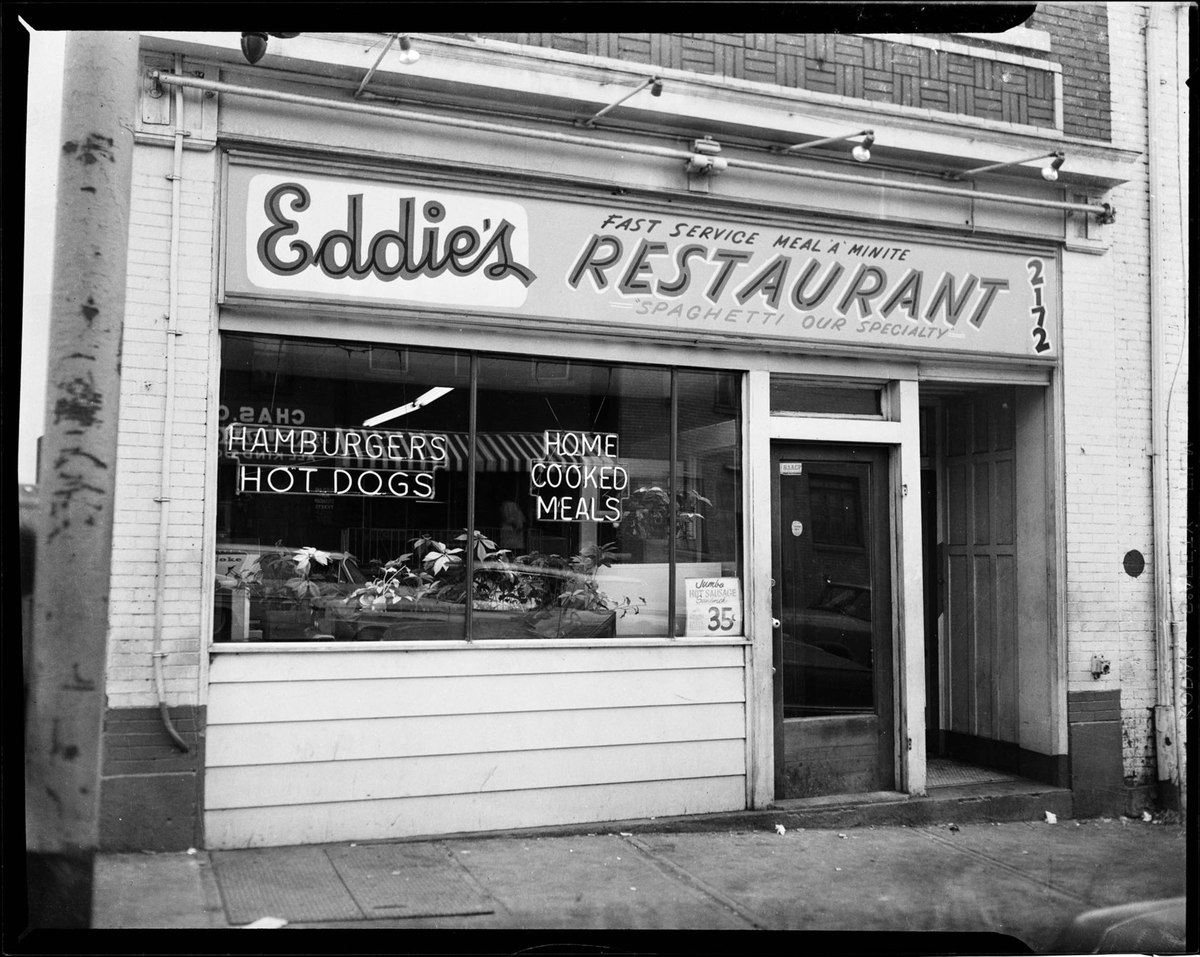
    <summary type="html"><![CDATA[<p><img src="https://hillhistory.org/files/fullsize/ee3e6f8f3c1759f2fe034227d768ced0.jpg" alt="Eddie&#039;s Restaurant exterior" /><br/><p><strong><em></em></strong></p><p>Eddie's Restaurant was an unassuming, inexpensive eatery frequented by many Hill District residents, most notably the group of playwrights and poets that made up the "Black Horizon Theatre Group" - including Rob Penny, Bob Johnson, Maisha Baton, Sala Udin, and August Wilson<br />
<blockquote>"Another place we would hang out was Eddie's Restaurant...they would allow us to sit for hours<br />and didn't bother us. We didn't buy a lot of food, but they would always keep filling up our coffee cups." <br />
<p>-<strong>Sala Udin, recalling the spots favored by the Black Horizon Theatre group<br /></strong></p>
</blockquote>
<p>It has been said that Wilson concieved <em>Jitney</em>, the first of his Pittsburgh Cycle plays, at Eddie's. While Eddie's is mentioned in <em>The Piano Lesson</em>, the play with the strongest connections to it is <em>Two Trains Running</em>, set in a fictional but similar diner, Memphis Lee's, located somewhere in the immediate vicinity.</p><p>Eddie's was torn down in 2006 as part of the construction of the new Hill District branch of the Carnegie Library - perhaps a fitting end for a place that nurtured so many writers with its endless cups of coffee.</p></p></p><p><em><strong><a href="https://hillhistory.org/items/show/33">For more, view the original article</a>.</strong></em></p><p></p>]]></summary>
    <published>2023-10-02T23:27:51+00:00</published>
    <updated>2025-03-17T22:05:02+00:00</updated>
    <link rel="alternate" type="text/html" href="https://hillhistory.org/items/show/33"/>
    <id>https://hillhistory.org/items/show/33</id>
    <author>
      <name>The Hill District Digital History Team</name>
    </author>
  </entry>
  <entry>
    <title type="html"><![CDATA[Black Beauty Lounge – The longest-running bar in the Hill]]></title>
    <summary type="html"><![CDATA[<p><img src="https://hillhistory.org/files/fullsize/ef9bbb3a1194a0e4ab2a1a642391d637.jpg" alt="Part of the August Wilson mural on the wall of B
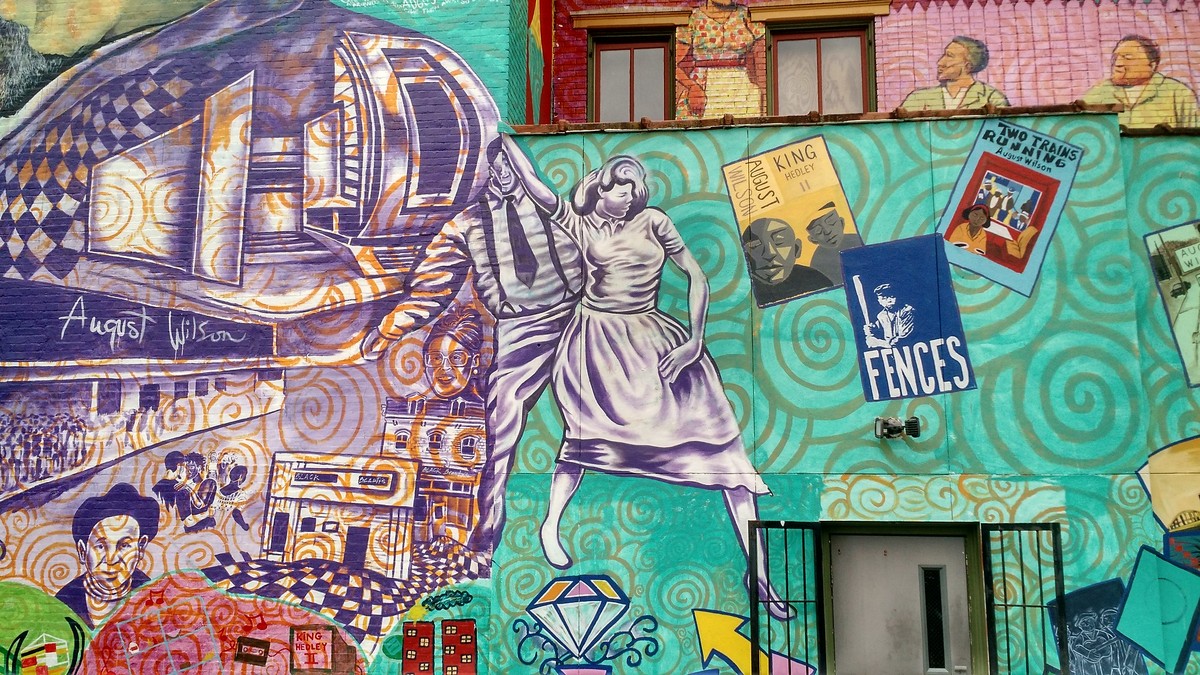
" /><br/><p><strong><em></em></strong></p><p>The Black Beauty Lounge is the longest-running bar in the Hill District, operating at the same site for more than 50 years. The lounge was established In 1972, under the ownership of Roberta Brassell aka "Ms. Bert." Even those who have not patronized the lounge may recognize it as a notable landmark - one side of the building is covered with a large-scale mural celebrating the work of August Wilson.</p></p><p><em><strong><a href="https://hillhistory.org/items/show/32">For more, view the original article</a>.</strong></em></p><p></p>]]></summary>
    <published>2023-10-02T23:25:19+00:00</published>
    <updated>2025-03-17T22:05:14+00:00</updated>
    <link rel="alternate" type="text/html" href="https://hillhistory.org/items/show/32"/>
    <id>https://hillhistory.org/items/show/32</id>
    <author>
      <name>The Hill District Digital History Team</name>
    </author>
  </entry>
  <entry>
    <title type="html"><![CDATA[Crystal Barber Shop – Haircuts, Billiards, and Betting]]></title>
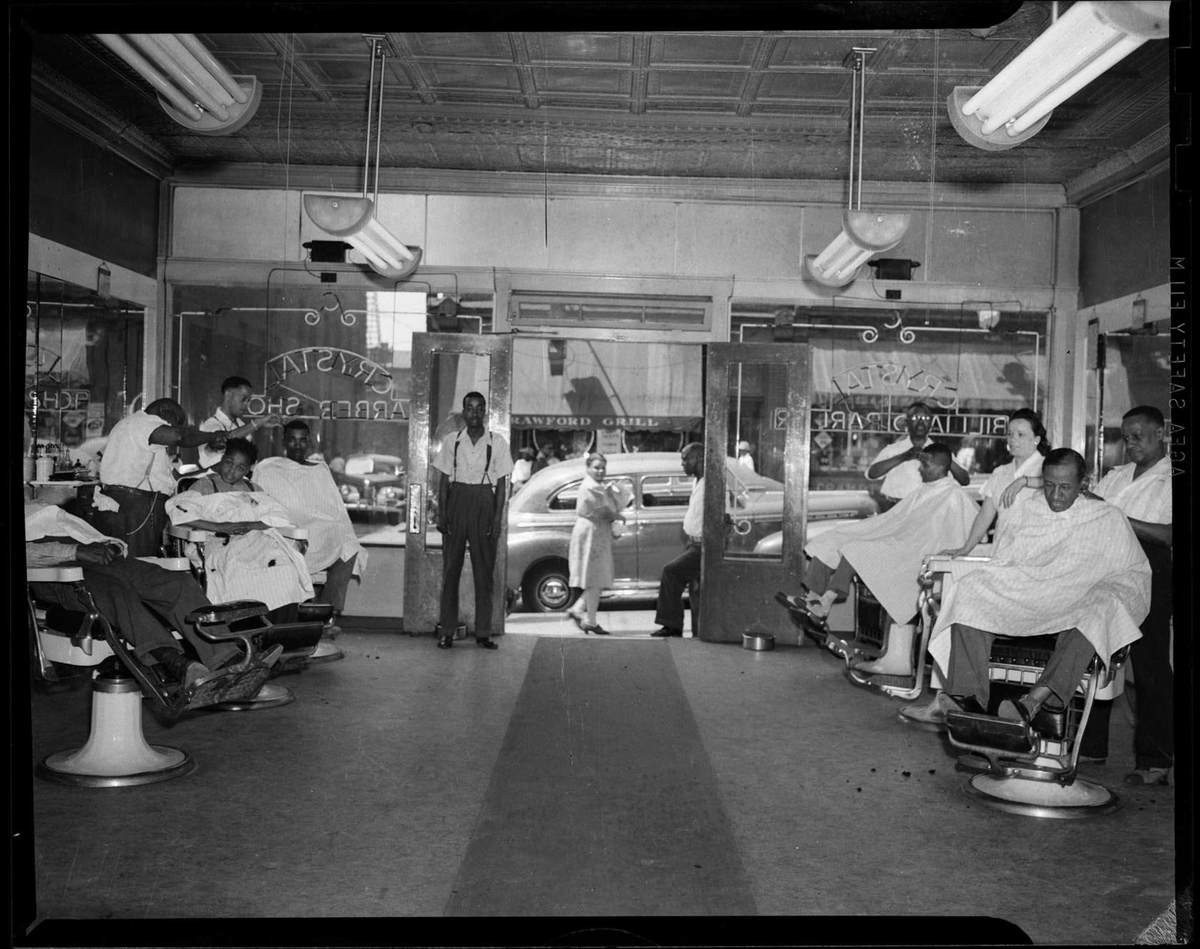
    <summary type="html"><![CDATA[<p><img src="https://hillhistory.org/files/fullsize/aca79f120b73dcf8d96436bf655e30c6.jpg" alt="Barbers at Work" /><br/><p><strong><em>From business to betting, this barbershop carries a lasting legacy in Pittsburgh.</em></strong></p><p><p><span style="font-weight: 400;">In a small corner building at the intersection of Wylie Avenue and Crawford Street stood the Crystal Barber Shop and Billiard Parlor. Bright neon signs in the front window drew customers into a place that provided more than just haircuts and shaves - it was a hub of all aspects of male social life in the Hil.<br /></span></p>
<p><span style="font-weight: 400;">The roots of Crystal Barber Shop traced back to the 1920s when skilled barber Frank Belt frst opened it.</span></p>
<blockquote>Woogie Harris had ulterior motives for purchasing the shop…it was used by Harris and Greenlee as one of the headquarters for an illegal lottery known as “the numbers.”</blockquote>
<p><span style="font-weight: 400;">While he sold the business in 1923 to William "Woogie" Harris, Belt continued to work as a barber at Crystal for many years, gaining a reputation as one of the finest barbers in the city.<br /></span></p>
<p><span style="font-weight: 400;">Men and boys of all ages congregated within the confines of the six-chair shop to engage in activities that went beyond the realm of hairstyling. Like many Black barbershops, the Crystal played an instrumental role in fostering a sense of community and trust among Black entrepreneurs and customers. It was a space where patrons could immerse themselves in the news of the day, swap stories, and get cleaned up for a night out at nearby entertainment venues like Crawford Grill or the Hurricane Lounge. </span><span style="font-weight: 400;">Adding to its appeal as a male social hub, the basement of Crystal's also housed a billiards room, opened in 1941 by Harris and his business partner Gus Greenlee.<br /></span></p>
<h3><span style="font-weight: 400;">Behind Closed Doors</span></h3>
<p><span style="font-weight: 400;">The Crystal Barber Shop and Billiard Parlor also had its secrets. While it was, in fact, a legitimate business, Woogie Harris had ulterior motives for purchasing the shop - namely, the shop was used by Harris and Greenlee as one of the headquarters for an illegal lottery known as “the numbers."&nbsp; </p><p>The numbers is a lottery-style game where players would choose a number, lay a bet with a bookie, and hope their number hit at the next call. To ensure the game wasn't fixed, the number was usually based on some unrelated figure that was both publically available and outside the bookie's control - a popular choice was the published volume of shares traded in a given day on the New York Stock Exchange. It was the Hill’s worst-kept secret that this small barber shop was a front for one of the most successful numbers “banks” in the city.<br /></span></p>
<p><span style="font-weight: 400;">Traditionally, the rise of Harris and Greenlee as the preeminent numbers men in Pittsburgh has been ascribed to a 1930 “crisis” when the number 805 - a favorite "lucky number" of bettors - hit and the city’s numbers men were on the hook for massive payouts. As the story goes, many competing Pittsburgh numbers banks collapsed on the same bet, but Harris and Greenlee scrounged sufficient funds together to emerge after the crisis as the "only game in town.” Conflicting accounts in the historical record, however, suggest this narrative may be more lore than fact. <br /></span></p>
<p><span style="font-weight: 400;">Regardless, by the 1930s the partners ran a highly-successful numbers racket. While Pittsburgh police arrested Harris and Greenlee numerous times over the years on racketeering charges, the fines made little impact on business. It is estimated that at its peak, Harris and Greenlee earned as much as $25,000 a day running numbers.</span></p>
<h3><span style="font-weight: 400;">New Places and New Faces</span></h3>
<p><span style="font-weight: 400;">Pittsburgh’s urban renewal projects ultimately pushed Harris out of his Wylie Avenue shop to a new location at 1605 Centre Avenue. Upon Woogie’s passing in 1967, his wife, Ada, inherited the shop and entrusted its management to her former son-in-law, Harold Slater. Slater was not involved in the numbers game like his predecessor, but had quite the knack for building community. In addition to the shop, Slater worked in waste management for the city of Pittsburgh. He and his wife, Dolores, raised their family just across the street from the Crystal Barber Shop. Harold gave excellent hot towel treatments, served Pittsburgh’s ballplayers and boxers, and generally created a social atmosphere to be remembered.</span></p>
<p><span style="font-weight: 400;">Although the Crystal Barber Shop and Billiard Parlor no longer stands on Centre Avenue, its legacy persists in a unique way. Michelle Slater, the daughter of Crystal manager and barber Harold Slater, began practicing hair over twenty-eight years ago. Today, Michelle operates as “The Crystal Barber” out of Sola Salon, located at 5241 Liberty Avenue Suite 1—just a few minutes away from the original Wylie Avenue shop. Michelle hopes that, through her work, she can continue the tradition of the barbershop and salon as an inclusive community space.</span></p></p></p><p><em><strong><a href="https://hillhistory.org/items/show/18">For more (including 7 images), view the original article</a>.</strong></em></p><p></p>]]></summary>
    <published>2023-08-29T02:38:32+00:00</published>
    <updated>2025-06-18T19:17:52+00:00</updated>
    <link rel="alternate" type="text/html" href="https://hillhistory.org/items/show/18"/>
    <id>https://hillhistory.org/items/show/18</id>
    <author>
      <name>Alyssa Chesek</name>
    </author>
  </entry>
  <entry>
    <title type="html"><![CDATA[New Granada Theater – A Pillar of Pittsburgh Black Culture]]></title>
    <summary type="html"><![CDATA[<p><img src="https://hillhistory.org/files/fullsize/b86dad3aa003ee8c894842a24deb2cb1.jpg" alt="Street View of the New Granada" /><br/><p><strong><em>In the heart of the Hill District stands a time-worn monument, witness to a vibrant history and home to an exciting future.</em></strong></p><p>The New Granada, located in the Hill District at 2007 Centre Avenue, tells a story that is still being created today. The three-story building has served various roles in the community throughout the decades. From ballroom dancing, star-studded music performances, weekly cinematic features, and community events, all have taken place at this site, serving as an "icon" for the Hill District then and now. </p><p>The New Granada has an evolving history that begins with prominent African American architect, Louis Bellinger. He was one of only sixty black architects in the United States in the 1930s. One of his most prominent works, and also one of the few still standing, is the New Granada Theater. The building first opened in 1927 as the Pythian Temple for the fraternal order, the Colored Knights of Pythias. This organization served numerous roles for its members. For example, they were the only social organization at the time to offer life insurance, which aided families after a member's death. Under their ownership, the Knights of Pythias hosted live music and community events. The architectural vision Bellinger constructed for the Pythian Temple led to the iconic New Granada Theater. The Pythian Temple was bought by Henry Hendel after the Knights struggled to make mortgage payments. </p><p>Bellinger's designs allowed for the Pythian Temple to easily be transformed into the New Granada Theater by architect Alfred M. Marks. He redesigned the first floor from a banquet hall to a commercial movie theater. On May 20, 1937, the building reopened as The New Granada Theater. "When the beautiful new Granada theater threw open its doors last Thursday evening, a huge crowd jammed the sidewalks and streets... Men, women, and children ogled and marveled at the beauty and elegance of the interior," and "all races and colors filled up the ticket booth." <span style="font-weight: 400;">While the theater did occasionally show popular white movies like </span><i><span style="font-weight: 400;">Casablanca</span></i><span style="font-weight: 400;">, it was well-known for mostly playing films with African American-led casts, something that was not common at the time. </span>The theater showed a variety of genres from musicals to dramas. The building was also welcoming to all. "A cross-section of Pittsburghers, white and black, middle class, and working poor, attended both 'sepia cinema' or black films starring African American movie stars." The movie theater wasn't the only entertainment that drew in large crowds. The second floor of the New Granada continued the traditions of the Pythian Temple by hosting live music events. </p><p>On the second floor, patrons were transported to a magnificent ballroom stage where "the jazz greats played. The ballroom had indirect lighting, beautiful Venetian blinds, colorful drapes, wall murals, and a revolving crystal ball." Harlem music, a form of jazz, was a staple for the period. Harlem music itself shaped parts of the Hill District culture. This style of jazz music was developed in Harlem, New York, in the early 1900s. Due to the differing racial and economic differences in New York City, the area of Harlem became known as a "city-within-the-city" of New York City. This description can be shared with the Hill District, as it too can be seen as a "city-within-the-city" in comparison to Pittsburgh. Harlem musicians touring from New York City to Chicago would make a stop along the way in Pittsburgh to play on the second floor of the New Granada. </p><p>The second floor housed the Hill City Auditorium and then later changed to the Savoy Ballroom. The Harlem singers were popular in the area but were not the only style of entertainment the Savoy Ballroom saw. Local bands, singers, and orchestras played there as well. They also used the space to host jitterbug contests. The stage at the New Granada attracted well-known jazz stars as well as local performers.</p><p>The New Granada Theater provided a variety of entertainment for Pittsburgh while continuing to be a staple for residents of the Hill District. The building was often used for civic and community engagement. The space housed high school proms and graduations but also worked to "combat juvenile delinquency." The Hill City Youth Municipality was an organization that worked to prevent crime but also worked to serve and "uplift the underprivileged girls and boys of the community." In June of 1939, this organization hosted programs persuading residents to aid in "eliminating conditions that lead to crime and delinquency." They ended the week of events by showing a celebratory film in the New Granada Theater. </p><p>Although the New Granada Theater was a packed place at its height, its popularity and clientele eventually began to wither. The theater had to close its doors in the 1970s. It was purchased by the Hill Community Development Corps (CDC) in 1990. The site became listed on the National Register of Historic Places in 2011. The groundbreaking for the New Granada Square took palce in May 2023 which opened the door for construction of artist apartments, cultural spaces, retail spaces, and more. The New Granada Theater is currently being revitalized as a space of bright hope for the future of the Hill District.</p></p><p><em><strong><a href="https://hillhistory.org/items/show/8">For more (including 6 images), view the original article</a>.</strong></em></p><p></p>]]></summary>
    <published>2023-07-25T21:48:04+00:00</published>
    <updated>2025-06-18T19:08:40+00:00</updated>
    <link rel="alternate" type="text/html" href="https://hillhistory.org/items/show/8"/>
    <id>https://hillhistory.org/items/show/8</id>
    <author>
      <name>Hanna Brandebura</name>
    </author>
  </entry>
  <entry>
    <title type="html"><![CDATA[Hurricane Lounge – Influential Incubator for Pittsburgh Jazz]]></title>
    <summary type="html"><![CDATA[<p><img src="https://hillhistory.org/files/fullsize/38fbcf9a06f2b652f5dbaca0d5212a4b.jpg" alt="Hurricane Lounge exterior" /><br/><p><strong><em>In the 1950s and '60s, the Hurricane served as an upscale jazz lounge that nurtured young musicians, a vision of its dynamic co-owner "Birdie" Dunlap.</em></strong></p><p>Opening its doors in 1953, the Hurricane Bar and Lounge served as one of the numerous hubs for jazz music and night life in the Hill District. The Hurricane Bar set itself apart from other nightclubs nearby by its tropical décor, excellent cuisine, and diverse clientele. Located at 1603 Centre Avenue, it was frequently dubbed the “Happy House of the Hill District”. With an ample seating capacity of 120, the Hurricane attracted guests eager to hear the evening’s jazz ensemble; a stage tucked away in the back provided a platform to dance and listen to aspiring jazz artists. Performers at the Hurricane entailed a variety of jazz stars for the time; Gene Walker, with his “wailing sax and combo” were a favorite at the Hurricane. </p><p>The Hurricane was run by husband-and-wife Shine and “Birdie” Dunlap. Birdie was no stranger to running a nightclub on Centre Avenue; in fact, she had run “Birdie’s Crib” prior to opening the Hurricane. Miss Dunlap “spared no expense” in the designing of the Hurricane, wanting the lounge to serve as a “real show piece” of Hill District culture and life. The elegant décor, which had a tropical flair, was described as both “swanky” and “cozy” by patrons. Aspiring musicians frequently found themselves performing at the Hurricane to a diverse clientele that consisted of both Black and white audience members. These musicians would later go on to become high salaried performing artists such as Jimmy Smith, who Birdie Dunlap personally knew and assisted in the purchase of his first musical instrument. Other big hopeful musicians who made their debut at the Hurricane were names such as Kenny Burrell, George Benson, and Wes Montgomery. The Hurricane attracted bands such as The Lun-A-Tones, a five-piece outfit that was touted as “[making] a bigger sound than most larger groups.” Robert Banks Organ trio from New Jersey would frequently open at the Hurricane, attracting headlines and crowds. The Hurricane’s food was as acclaimed as the music; Dinner specials at the Hurricane varied, but customer favorites included fried chicken, jumbo shrimps, and juicy steaks as well as a variety of “tempting” sides.<br />
<blockquote>"The Hurricane Club was one of my favorite stops, because Birdie always kept things jumping. There was no such thing as being overcrowded. If you had money, you got a seat." <strong>-Ralph Proctor, from <em>Song of the Hill</em></strong></blockquote>
Jazz clubs in Pittsburgh’s Hill District stood as more than just a place for people to congregate and enjoy libations, they were focal points of the area where social gatherings and nightlife thrived. Jazz music in the Hill District carried a long-standing history of cultural significance, just as night clubs provided a space for black female performers to carve out a stage to broadcast their entertainment. The Hurricane was no different; embracing a “live and let live” attitude which permeated the Hill District during the 1950s.&nbsp; The Hurricane’s contribution to jazz culture in the Hill District provided a space for entertainment and comradery that was unmatched. With its ritzy atmosphere, it is no surprise the Hurricane was one of the most in-demand bars on Centre Avenue; it was just down the street from other jazz clubs such as the Crawford Grill. During the height of jazz culture in the Hill District, local musician Al Dowe remembers that “everybody from New York either came to the Hurricane or the Crawford Grill”. </p><p>The Hurricane’s blissful existence would be unfortunately short-lived. Like other bars in Pittsburgh’s Hill District, it fell victim to the changes in the surrounding area. Urban redevelopment demolished much of the Lower Hill, displaced thousands of residents, and dramatically altered the community and its business environment. In 1970, the Hurricane suffered a fire that shut its doors for good.</p><p>Despite the Hurricane’s demise, its influence was recognized on several occasions. In 1973 the Crawford Grill celebrated "Birdie Dunlap Night" to show appreciation for all Birdie had done to encourage and develop the city's young musicians. In 2007, the Hill House Association announced a monthly event that paid tribute to the jazz and culture of Pittsburgh’s historic Hill District. The jazz redux, titled “Live at the Hurricane” sought to recreate the “funky” atmosphere of the Hurricane lounge, showing that the legacy of the Hill's "Happy House" was not forgotten.</p></p><p><em><strong><a href="https://hillhistory.org/items/show/4">For more (including 3 images), view the original article</a>.</strong></em></p><p></p>]]></summary>
    <published>2023-07-24T15:56:39+00:00</published>
    <updated>2025-03-17T22:08:27+00:00</updated>
    <link rel="alternate" type="text/html" href="https://hillhistory.org/items/show/4"/>
    <id>https://hillhistory.org/items/show/4</id>
    <author>
      <name>Amanda Ryczek</name>
    </author>
  </entry>
  <entry>
    <title type="html"><![CDATA[Crawford Grill – A Multicultural Haven for Jazz and Community]]></title>
    <summary type="html"><![CDATA[<p><img src="https://hillhistory.org/files/fullsize/644a4782610f8d397d5a35cdefd12836.jpg" alt="Crawford Grill No. 2 facade, 1975." /><br/><p><strong><em>A key remnant of Pittsburgh’s 20th century musical culture, Crawford Grill was a landmark of Black entrepreneurship, inclusive atmosphere, and legendary jazz music.</em></strong></p><p>When approaching Crawford Grill No. 2, the bustling sounds of the evening crowd could be heard from the curb of Wylie Avenue. Laughter filled the night air, mingling with the hum of loud chatter and the backdrop of jazz music. Upon entering through the front door, patrons were immediately greeted with warm smiles from familiar faces and the enticing aroma of Crawford’s famous chicken wings. For many, Crawford Grill No. 2 was more than just a bar—it was a second home, a platform for both local and nationally-renowned musicians, a haven for those seeking desegregation and equality, and a place where people felt safe and empowered. </p><p>The original Grill was founded by Gus Greenlee, a local Pittsburgh businessman and owner of the Pittsburgh Crawfords, the local Negro league baseball team. The Grill quickly gained a reputation for attracting top-notch music acts while maintaining a welcoming atmosphere for both locals and visitors. It became a well-known venue for legendary musicians like Louis Armstrong, Ella Fitzgerald, Dizzie Gillespie, and Miles Davis, who graced the patrons with their mesmerizing melodies. Moreover, Crawford Grill played a crucial role in nurturing local talents and elevating Pittsburgh as a thriving center of jazz culture. Artists like Walt Harper found their beginnings and built their careers in the city. Harper's performances at Crawford Grill significantly boosted both the venue's popularity and his own recognition, even earning him second place in the <em>Pittsburgh Courier</em> "favorite combo" poll, right behind Louis Armstrong. </p><p>Crawford Grill No. 2 came into existence in 1943 during the peak success of its predecessor. Gus Greenlee, with the help of his business partner Joseph Robinson, expanded his restaurant business to multiple locations. Grill No. 2 also attracted esteemed customers, including the John F. Kennedy, Martin Luther King Jr., Frank Sinatra, and Muhammad Ali, among others. Similar to Grill No. 1, it embraced a diverse clientele, welcoming people of all races and genders at a time when racial violence and segregation were prevalent across much of the United States. Joseph Robinson, later succeeded by his son William “Buzzy” Robinson, managed Crawford Grill No. 2 as a haven for music and good food until its closure nearly 60 years later.
<blockquote>For many, Crawford Grill No. 2 was more than just a bar, it was a second home.</blockquote>
In the late 1940s and early 1950s, Greenlee attempted to expand further, opening two more Crawford Grill locations, but they only lasted a short time. Unfortunately, a fire in 1951 forced Crawford Grill No. 1 to close permanently. Reopening the restaurant proved difficult, and Greenlee passed away one year later in 1952, leaving Grill No. 1 shuttered. Amidst these changes, Crawford Grill No. 2 remained the torchbearer of Crawford Grill's influence on Pittsburgh's music and restaurant scene. </p><p>In the 1960s, changes to the Hill and the larger culture presented challenges to Crawford Grill's continued success&nbsp; First, urban redevelopment in the 1950s and the construction of the Civic Arena in 1960 contributed to the deterioration of the Hill District community, displacing more than 8,000 residents and severing friendships, community support systems, and even aspects of cultural identity. Second, the riots of 1968 following the assassination of Martin Luther King, Jr., damaged the Hill District's reputation among White patrons; in its heyday, 80 percent of the club's audience had been White. Finally, the rise of rock and roll and other forms of popular music led to a decline in the audience for jazz by the late 1960s. While the club remained a mecca for jazz lovers and Hill residents, it could not maintain the booming business of its heyday. A 1975 <em>Post-Gazette</em> article described Joe Robinson, surveying a sparsely-occupied Crawford Grill No. 2 dining room and lamenting, "Used to be you couldn't find a place to sit during lunch hour. Look now—who's here?" </p><p>These challenges ultimately proved insurmountable. With declining interest from outside patrons and a failing urban infrastructure around it, Crawford Grill No. 2 closed its doors for the final time in 2003. It was listed for sale in 2006 and has remained vacant since, serving as a poignant reminder of Pittsburgh's role in America's jazz scene and the Hill District's significant contribution to the diverse and vibrant culture of 20th-century Pittsburgh.</p></p><p><em><strong><a href="https://hillhistory.org/items/show/3">For more (including 9 images), view the original article</a>.</strong></em></p><p></p>]]></summary>
    <published>2023-07-24T12:54:59+00:00</published>
    <updated>2025-03-17T22:08:37+00:00</updated>
    <link rel="alternate" type="text/html" href="https://hillhistory.org/items/show/3"/>
    <id>https://hillhistory.org/items/show/3</id>
    <author>
      <name>Darren Frehulfer</name>
    </author>
  </entry>
</feed>