<?xml version="1.0" encoding="UTF-8"?>
<feed xmlns="http://www.w3.org/2005/Atom">
  <title type="text">Hill District Digital History</title>
  <updated>2026-05-02T09:40:19+00:00</updated>
  <generator uri="http://framework.zend.com" version="1.12.20">Zend_Feed_Writer</generator>
  <link rel="alternate" type="text/html" href="https://hillhistory.org/"/>
  <link rel="self" type="application/atom+xml" href="https://hillhistory.org/items/browse?output=rss2"/>
  <id>https://hillhistory.org/</id>
  <author>
    <name>Hill District Digital History</name>
    <uri>https://hillhistory.org</uri>
  </author>
  <link rel="hub" href="http://pubsubhubbub.appspot.com/"/>
  <entry>
    <title type="html"><![CDATA[Zonia Wilson – A Legacy of Resilience]]></title>
    <summary type="html"><![CDATA[<p><img src="https://hillhistory.org/files/fullsize/83964528f3fc8f495f0eecdbf7b974bc.jpg" alt="Zonia Wilson" /><br/><p><strong><em></em></strong></p><p><p><span style="font-weight: 400;">Bell Zonia Cutler Wilson was born in 1894 in Spear, North Carolina, to Jacob and Sarah Eller Twitty Cutler. Her mother, called Eller, was a respected midwife and healer in their small Appalachian mountain community. The family owned a substantial plot of land; in fact, Zonia’s father was the only Black landowner in the area. Today a scenic nature spot known as Cutler Falls still bears the family name.</span></p>
<p><span style="font-weight: 400;">Though by all accounts her family was a loving one, Zonia’s childhood was not easy. Scraping together a living in the isolated mountains was a constant challenge, and racial discrimination placed an additional burden on families like the Cutlers. During the years of World War I, many men in the community left for military service or work in the area’s mines, leaving women like Zonia to sustain the household.&nbsp;</span></p>
<p><span style="font-weight: 400;">Her young adult life was further marred by sexual violence and wrongful imprisonment, the latter possibly part of an effort to seize her family’s land. For a time she worked as a domestic servant in the household of local politician T.D. Vance. By 1922, Zonia was a mother of three children - named Faye, Daisy, and Detroit (who went by Ray) - facing the usual challenges of parenting amidst the strains of racism and economic hardship.&nbsp;&nbsp;</span></p>
<p><span style="font-weight: 400;">Her life would begin a new chapter in 1928, when Zonia met and married a talented musician from Tennessee named Bynam Wilson. The couple soon moved to Bramwell, West Virginia, where Bynam found work. Sadly, while living there in August 1930, the couple lost a baby boy who died shortly after birth.&nbsp; A few years later in 1932, as part of the larger exodus of Black people out of the American South known as the “Great Migration,” Bynam and Zonia moved north to Pittsburgh, settling in the Hill District.</span></p>
<p><span style="font-weight: 400;">All of Zonia's children adopted the Wilson surname, and she embraced her role as a housewife in their residence on Logan Street. There she raised three more sons, named John, Franklin, and George. The family thrived in their community, with Zonia especially enjoying attending movies at the nearby Rhumba Theater, where her sons worked</span></p>
<p><span style="font-weight: 400;">It was in the Hill in 1945 that Zonia's daughter, Daisy, gave birth to a boy she named Frederick August Kittel, Jr., after his father.&nbsp; By that time, Zonia had come to reside across the street from Daisy on Bedford Avenue, at the home of professional boxer Charlie Burley and his wife Julia.&nbsp;</span></p>
<p><span style="font-weight: 400;">At the age of 20, young Frederick Kittel, Jr. would change his name to August Wilson - the name under which he later became one of America’s most celebrated playwrights. Though Zonia died when he was only five years old, August Wilson often recounted tales of his grandmother’s journey northward, and drew upon her memory as a link to the family’s Southern past. He paid tribute to her through the character of 11-year old Zonia Loomis in </span><i><span style="font-weight: 400;">Joe Turner’s Come and Gone,</span></i><span style="font-weight: 400;"> a play focused on themes of migration to the North and the Black struggle for freedom.</span></p>
<p><span style="font-weight: 400;">Zonia Cutler Wilson's life came to a close in March 1950 at Charlie Burley's house on Bedford Avenue.&nbsp; She was buried in Greenwood Cemetery north of the city. August Wilson, along with his sisters Freda and Linda Jean, paid for a headstone remembering her as “Grandma” - a final act of honor to mark her resting place for those coming after.</span></p>
<p><span style="font-weight: 400;">It is not an overstatement to say that without Zonia’s courage, resilience, and determination to seek a better life, the world may never have known the creative works of August Wilson that have given so many an understanding of the Black experience in America.&nbsp;</span></p></p></p><p><em><strong><a href="https://hillhistory.org/items/show/73">For more (including 2 images), view the original article</a>.</strong></em></p><p></p>]]></summary>
    <published>2024-11-15T20:18:29+00:00</published>
    <updated>2025-03-17T22:00:24+00:00</updated>
    <link rel="alternate" type="text/html" href="https://hillhistory.org/items/show/73"/>
    <id>https://hillhistory.org/items/show/73</id>
    <author>
      <name>Renee Wilson</name>
    </author>
  </entry>
  <entry>
    <title type="html"><![CDATA[Workingmen's Civic Club]]></title>
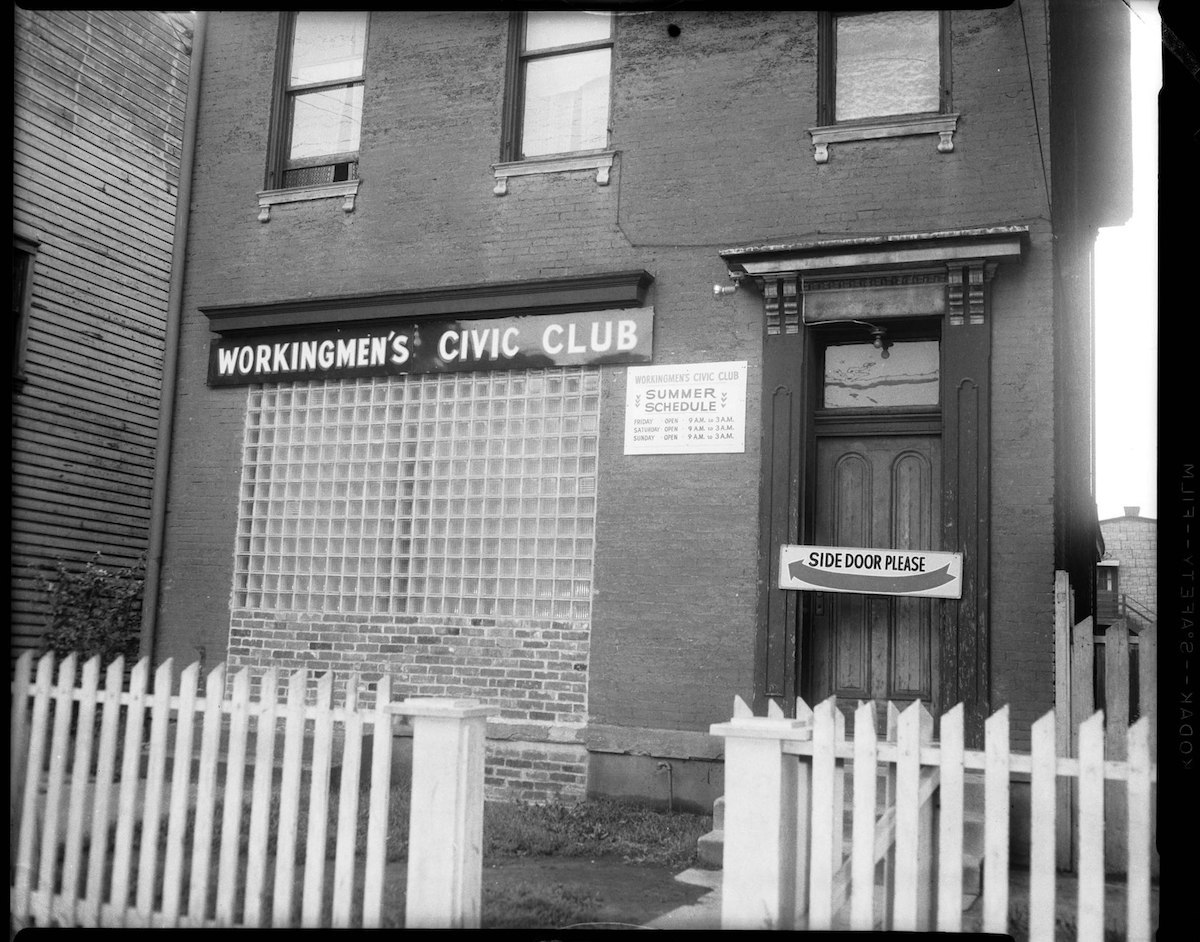
    <summary type="html"><![CDATA[<p><img src="https://hillhistory.org/files/fullsize/16d652dec11c1795e471468eec8609d2.jpg" alt="Workingmen&#039;s Civic Club exterior" /><br/><p><strong><em><p><em>"I went down the Workmen's Club. They had Kenny Fisher down there. You couldn't hardly get in. I ain't never seen so many people</em>."</p>
<p><em><strong>Philmore, "Jitney"</strong></em></p></em></strong></p><p>Now demolished, the Workingmen's Civic Club was a hotspot for music and entertainment. The club reached the height of its popularity in the 1960s, and inspired scenes in four of August Wilson's plays: <em>Joe Turner's Come and Gone, Seven Guitars, Two Trains Running,&nbsp;</em>and&nbsp;<em>Jitney</em>.</p></p><p><em><strong><a href="https://hillhistory.org/items/show/41">For more, view the original article</a>.</strong></em></p><p></p>]]></summary>
    <published>2023-10-02T23:52:35+00:00</published>
    <updated>2025-03-27T17:24:09+00:00</updated>
    <link rel="alternate" type="text/html" href="https://hillhistory.org/items/show/41"/>
    <id>https://hillhistory.org/items/show/41</id>
    <author>
      <name>The Hill District Digital History Team</name>
    </author>
  </entry>
  <entry>
    <title type="html"><![CDATA[Tuberculosis Hospital of Pittsburgh – Conquering Contagion in the Hill District]]></title>
    <summary type="html"><![CDATA[<p><img src="https://hillhistory.org/files/fullsize/6469c8c2480f57191ab924b7eb9f3aa7.jpg" alt="Tuberculosis Hospital" /><br/><p><strong><em>Set atop a scenic hill on Bedford Avenue, this beautiful property was home to the ugly reality of tuberculosis.</em></strong></p><p>During the first half of the twentieth century, tuberculosis posed a grave threat to public health in the United States. The disease was easily transmitted through actions as simple as coughing, sneezing, singing, or even speaking and caused symptoms such as weakness, fever, chest pain, and, at worst, death. For people who lived in cities, the risk of tuberculosis was especially high; poor air quality combined with people living in close proximity to one another created an ideal breeding ground for infection.</p><p>Pittsburgh’s infamous smoky air and densely-populated neighborhoods made its residents highly vulnerable to tuberculosis. By 1905, the disease had climbed the ranks to become the city’s third leading organic cause of death, accounting for 9% of all fatalities. Pittsburgh’s eminent public health crisis set into motion a domino effect of responses. In December of 1906, concerned members of the community formed the Pittsburgh Society for the Prevention and Treatment of Tuberculosis, providing community outreach and treatment throughout the city. The city’s first sanitarium opened just two months later, occupying the McConway House, a converted private home, on Bedford Avenue. By 1908, the two groups had joined forces to form the Tuberculosis League of Pittsburgh; that same year, this league would establish the city’s leading sanitarium, the Tuberculosis Hospital of Pittsburgh.</p><p>If it were not for a few quirks, passersby could easily mistake the Tuberculosis Hospital of Pittsburgh for a city park. The property sits atop a hill overlooking the Allegheny River, high above the factory smoke of the central city. Wooded areas surround the buildings on three sides, with a grassy lawn central to the property. With conventional medicine lacking the resources to treat tuberculosis with drug therapy, fresh air was one of the preferred methods of care. In the hospital’s earliest days, five open-air shacks accompanied the McConway House. Patients of all ages could take respite in these shacks year-round; even in the colder months, people would bundle up in jackets and scarves to lay in the open front buildings and breathe in the cold, crisp air.</p><p>As tuberculosis continued to sweep through Pittsburgh, the hospital quickly outgrew its humble beginnings. In 1909, the Tuberculosis League built a two-story consumption dispensary fitted with two consultation rooms for preventative screenings and skin tests, a treatment room, an operation room, and two recovery rooms. The construction of this building kickstarted nearly two decades of expansion, all with the aim of providing better care for the city’s sick residents.</p><p>With each expansion, the hospital became a bit more specialized. In 1917, the League completed construction on the Women’s and Children’s Building, which featured a unique open-air school where ill children were able to continue their studies in the fresh air. The Christmas Seal Building, named after the Tuberculosis League’s annual fundraising sale of package labels, housed infected World War I veterans. Construction on a Men’s Pavilion finished in the early 1920s, followed by the construction of another treatment ward in 1927.</p><p>However, the hospital served a broader purpose beyond providing a haven for the sick. Healthcare professionals and medical students also found a home at the Tuberculosis Hospital of Pittsburgh. The Power and Service Building provided an on-campus residence for the men and women who fought so tirelessly against the relentless disease. The building was fitted with amenities such as a laboratory and library. The 1927 ward served as a teaching hospital for medical students from the University of Pittsburgh. Here, at the Tuberculosis Hospital of Pittsburgh, the next generation of doctors and nurses would diligently study the prevention and suppression of the disease. The League constructed a second, four-story residence hall for nurses in 1949, which would be the last structure built on the site.</p><p>Before long, the incidence of tuberculosis throughout Pittsburgh began to drop dramatically. By 1925, just 544 people died from the disease, accounting for just over 5% of all fatalities. Ten years later, that number further decreased to 370 people, representing 4% of all deaths and a significant decline from the 1905 total of 9%. With its preventative screenings, tuberculosis tests, and treatment programs, the Tuberculosis Hospital of Pittsburgh was instrumental in this decline.</p><p>As understanding of tuberculosis grew, new treatment options emerged. In 1944, a significant milestone was reached when three scientists developed the first tuberculosis antibiotic, streptomycin. This groundbreaking drug reduced the need for extended quarantines and long hospital stays, thus allowing patients to recover in the comfort of their own homes. Outpatient treatment became a priority for the hospital; examinations for these patients grew 21.5% in the years between 1907 and 1946. Ultimately, the rise in outpatient care led to a decline in the number of patients receiving treatment at the hospital. Due to this decline, the Tuberculosis League officially closed the hospital’s doors in 1955, selling the three hospital buildings and Nurses’ Residence to the State of Pennsylvania. These four buildings would later become the Western Restoration Center, a mental health treatment facility. </p><p>Unfortunately, the Western Restoration Center also shut its doors in the 1980s. Citizens of Pittsburgh moved for the sanitarium to be memorialized, and in 1993, the hospital was listed on the National Register of Historic Places, in recognition of the site's historical significance. In the time since, the site has been home to a daycare, a city health center, and, most recently, senior living apartments. Despite these changes, the facility’s designation as a national historic site cemented its significant contributions into the city’s history, underscoring its enduring importance in the difficult fight against tuberculosis.</p></p><p><em><strong><a href="https://hillhistory.org/items/show/5">For more (including 7 images), view the original article</a>.</strong></em></p><p></p>]]></summary>
    <published>2023-07-25T18:21:46+00:00</published>
    <updated>2025-03-17T22:08:18+00:00</updated>
    <link rel="alternate" type="text/html" href="https://hillhistory.org/items/show/5"/>
    <id>https://hillhistory.org/items/show/5</id>
    <author>
      <name>Alyssa Chesek</name>
    </author>
  </entry>
  <entry>
    <title type="html"><![CDATA[The Pittsburgh Courier – America's Largest Black Newspaper]]></title>
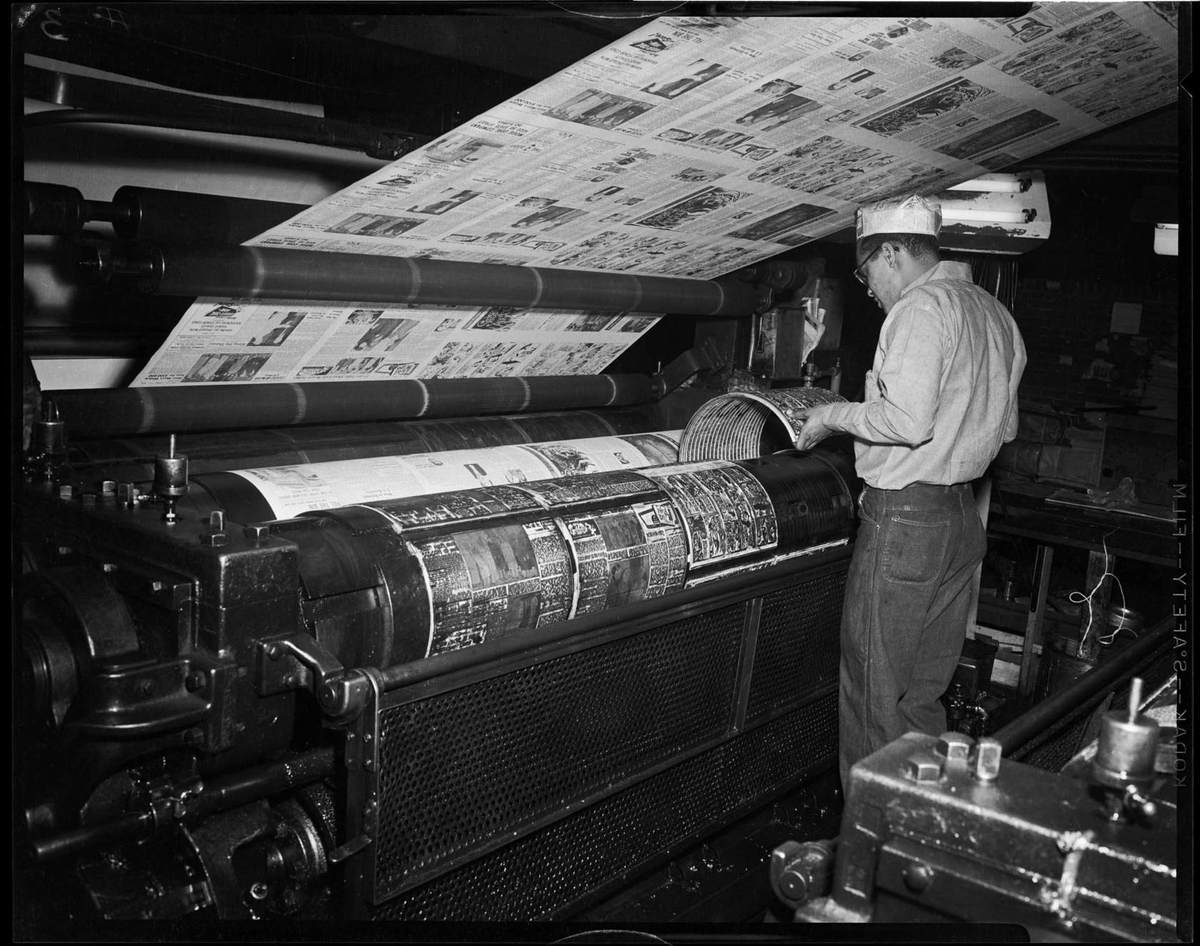
    <summary type="html"><![CDATA[<p><img src="https://hillhistory.org/files/fullsize/da6e5133d56a0a27510810f17c3998bf.jpg" alt="Pittsburgh Courier newspaper press operator, possibly William Brown, possibly printing Chicago or other Midwestern edition" /><br/><p><strong><em></em></strong></p><p><p><span style="font-weight: 400;">In the late 1800s and early 1900s, Pittsburgh’s newsstands suffered from a serious lack of quality Black papers. Out of the six white dailies in the city, only one included Black news. </span><i><span style="font-weight: 400;">The Pittsburgh Press</span></i><span style="font-weight: 400;">’ segregated “Afro-American News” column was far from ideal however, and the little reporting that the </span><i><span style="font-weight: 400;">Press</span></i><span style="font-weight: 400;"> did offer mostly consisted of sensational accounts of crimes, affairs, and other sordid material which hardly painted the Black community in a favorable light.</span></p>
<p><span style="font-weight: 400;">This all would change when Nathaniel Edward Harleston, a security guard at the H.J. Heinz food packing facility, began a newspaper as a way to publish some of his poetry. With the help of a couple of friends from the Heinz plant, the first official issue of the <em>Courier</em> was printed on January 15, 1910. Just a few years later, Harelston’s new paper would expand to include headquarters at 1212 Wylie Ave (though this would later move downtown), and its own publishing plant at 2628 Centre Ave.</span></p>
<p><span style="font-weight: 400;">With such deep roots in the largest historically Black neighborhood in Pittsburgh, it is no surprise that </span><i><span style="font-weight: 400;">The Pittsburgh Courier</span></i><span style="font-weight: 400;"> would become one of the most prominent voices in Black America within just a few decades. Not only would the paper go on to provide a rich account of Black life over the years, it would also serve as an instrument of agency in the fight for civil rights.</span></p>
<h3><span style="font-weight: 400;">A Fight for Rights</span></h3>
<p><span style="font-weight: 400;">Much of the </span><i><span style="font-weight: 400;">Courier’s</span></i><span style="font-weight: 400;"> early reputation as a “crusader” paper for Black rights can be attributed to its first editor, Robert Lee Vann.</span></p>
<blockquote>One reporter, Edna Chappel, was even assigned to visit businesses in the greater Western Pennsylvania area and write about her experiences of discrimination there because of her race.</blockquote>
<p><span style="font-weight: 400;">Vann was the first African American to graduate from University of Pittsburgh’s school of law, and he was one of only five Black lawyers in Pittsburgh at the time. After helping to find investors and using his law expertise to draw up the incorporation papers, Vann took over as editor of the </span><i><span style="font-weight: 400;">Courier</span></i><span style="font-weight: 400;"> when Harleston left in late 1910.&nbsp;</span></p>
<p><span style="font-weight: 400;">From the very beginning, Vann made his vision for the </span><i><span style="font-weight: 400;">Courier</span></i><span style="font-weight: 400;"> clear; the paper would serve to “abolish every vestige of Jim Crowism in Pittsburgh”, as he wrote in an early editorial. In the first years, he would use his writing to address pressing issues in the Hill District, calling for a Black building and loan association as well as a Black hospital to combat the housing and health crises there.&nbsp;</span></p>
<p><span style="font-weight: 400;">A future politician himself, (he would serve as Assistant Attorney General in the Roosevelt administration), Vann called for the readers of his paper to organize in politics. When the </span><i><span style="font-weight: 400;">Courier </span></i><span style="font-weight: 400;">began to have national influence in the early 30s, Vann’s writings carried increasing weight in Black politics. His opinion in one 1932 editorial that “negroes have changed their political philosophy... This year I see them voting a Democratic ticket” has even been credited by some historians with significantly contributing to Roosevelt’s victory later that year.&nbsp;</span></p>
<p><span style="font-weight: 400;">This foray into national affairs continued into the mid-20th century, as the </span><i><span style="font-weight: 400;">Courier</span></i><span style="font-weight: 400;"> began to report more and more on the Civil Rights movement across the country. They covered stories like the </span><a href="https://nmaahc.si.edu/explore/stories/scottsboro-boys"><span style="font-weight: 400;">Scottsboro Boys</span></a><span style="font-weight: 400;">, </span><a href="https://www.archives.gov/milestone-documents/brown-v-board-of-education"><span style="font-weight: 400;">Brown v. Board</span></a><span style="font-weight: 400;">, and the campaigns of </span><a href="https://www.history.com/topics/black-history/a-philip-randolph"><span style="font-weight: 400;">A. Phillip Randolph</span></a><span style="font-weight: 400;">, while their sports reporters doggedly followed Black boxer Joe Louis as he won repeated victories in the ring.&nbsp;</span></p>
<p><span style="font-weight: 400;">The </span><i><span style="font-weight: 400;">Courier </span></i><span style="font-weight: 400;">reported on local injustice towards African Americans as well. They frequently covered the Homestead Grays, Pittsburgh’s Negro League baseball team, and fought for major league desegregation in their editorials. One reporter, Edna Chappel, was even assigned to visit businesses in the greater Western Pennsylvania area and write about her experiences of discrimination there because of her race.&nbsp;</span></p>
<p><span style="font-weight: 400;">The </span><i><span style="font-weight: 400;">Courier </span></i><span style="font-weight: 400;">was known for hiring young, Black talent like Chappel who might never have been given a job at another paper. Famous Pittsburgh photographer Charlie “Teenie” Harris was briefly employed at the paper, as well as William Gardner Smith, a novelist who spent time in the company of other great Black authors like James Baldwin and Richard Wright. Other reporters at</span> <span style="font-weight: 400;">the </span><i><span style="font-weight: 400;">Courier</span></i><span style="font-weight: 400;"> are less well known, but their work was foundational for the paper.&nbsp;</span></p>
<h3><span style="font-weight: 400;">Later Years</span></h3>
<p><span style="font-weight: 400;">After the death of Robert Vann in 1940, the paper did not find an executive editor who could match its first in passion and vision until Percival L. Prattis accepted the executive editorship in 1956. Prattis had worked at the </span><i><span style="font-weight: 400;">Courier</span></i><span style="font-weight: 400;"> for years prior, and had already been instrumental in its development before becoming editor. Vann had originally hired him in 1935 after seeing his impressive work at the </span><i><span style="font-weight: 400;">Courier</span></i><span style="font-weight: 400;">’s rival Black paper, </span><i><span style="font-weight: 400;">The Chicago Defender</span></i><span style="font-weight: 400;">, where Prattis had been city editor. Prattis used his connections in Chicago to expand the circulation of the </span><i><span style="font-weight: 400;">Courier</span></i><span style="font-weight: 400;"> in the Midwest, where the paper had previously struggled to find distributors in its competition with the </span><i><span style="font-weight: 400;">Defender</span></i><span style="font-weight: 400;">.&nbsp;</span></p>
<p><span style="font-weight: 400;">Before he became executive editor, Prattis reported on reconstruction after the war. He heavily covered the creation of the United Nations, even personally attending the founding conference in San Francisco. He also reported on the conflicts in the Middle East, something which was not often seen in Black papers.&nbsp;</span></p>
<p><span style="font-weight: 400;">In the mid-1950s, the advancement of the Civil Rights movement was beginning to convince many establishment white papers to take Black news more seriously. As competition with these white dailies increased, the </span><i><span style="font-weight: 400;">Courier </span></i><span style="font-weight: 400;">began to struggle financially. Despite this, Prattis increased the circulation to a peak of 350,000 copies, with 14 editions nationwide. This likely is due to his aggressive style; under Prattis, the </span><i><span style="font-weight: 400;">Courier</span></i><span style="font-weight: 400;"> reported stories of injustice which its competitors were simply unwilling to publish.</span></p>
<p><span style="font-weight: 400;">Eventually, the </span><i><span style="font-weight: 400;">Courier</span></i><span style="font-weight: 400;">’s money troubles proved too much to overcome, however, and the paper was sold in 1966 to John Sengstacke, owner of the </span><i><span style="font-weight: 400;">Defender</span></i><span style="font-weight: 400;">. He relaunched the paper the next year as </span><i><span style="font-weight: 400;">The New Pittsburgh Courier</span></i><span style="font-weight: 400;">. By then, many of its finest reporters and editors had left, including Prattis and Bolden, and the paper would never again reclaim its previous quality or national influence.&nbsp;</span></p>
<span style="font-weight: 400;">Over the half-century of its publication, </span><i><span style="font-weight: 400;">The Pittsburgh Courier</span></i><span style="font-weight: 400;"> went from a two page collection of a Steel City security guard’s poems to a national paper which changed the landscape of Black life in America. As Frank Bolden once said in an interview, the Black press acted as an “advocate of all our dreams, wishes, and desires.” Without that small printing plant in the Hill, dutifully churning out issues week after week, Black Americans would not have had the chance to see their histories, sufferings, and longings given a voice in the work of the </span><i><span style="font-weight: 400;">Courier</span></i><span style="font-weight: 400;">.</span></p></p><p><em><strong><a href="https://hillhistory.org/items/show/62">For more (including 7 images), view the original article</a>.</strong></em></p><p></p>]]></summary>
    <published>2024-03-07T15:50:22+00:00</published>
    <updated>2025-06-23T00:26:16+00:00</updated>
    <link rel="alternate" type="text/html" href="https://hillhistory.org/items/show/62"/>
    <id>https://hillhistory.org/items/show/62</id>
    <author>
      <name>Nolan Cowan</name>
    </author>
  </entry>
  <entry>
    <title type="html"><![CDATA[The Court of Ideas – <span style="font-weight: 400;">A community-built outdoor theater was an internationally-acclaimed experimen in community planning</span>]]></title>
    <summary type="html"><![CDATA[<p><img src="https://hillhistory.org/files/fullsize/bc119a01f4b967f80be5cac957f57c4b.jpg" alt="Court of Ideas" /><br/><p><strong><em></em></strong></p><p><p>In the late 1960s, Pittsburgh’s Hill District became the birthplace of an innovative architectural project. Spearheaded by visionary architect Troy West, this initiative sought to use architecture as a means of fostering social change in urban communities.</p>
<p>Troy West was no ordinary architect. After studying at Carnegie-Mellon University and working alongside renowned figures like Louis Kahn, West returned to Pittsburgh with a clear mission: to partner with disadvantaged communities in challenging the top-down approach often associated with urban development. His vision took shape in the Hill District through a project called Architecture 2001, which embraced inclusive and participatory design to rehabilitate the neighborhood.</p>
<p>Architecture 2001 brought together an eclectic and diverse team. In addition to architects, the group included a psychologist, a lawyer, and a carpenter who had honed his skills while incarcerated. They were supported by local youth and members of the community, all working toward a shared goal—to create a functional, inspiring space known as the "Court of Ideas" at 2001 Center Avenue. The team didn’t just build; they also provided vocational training in construction, offered rehabilitation programs for those struggling with drug addiction, and improved local housing conditions.</p>
<p>The Court of Ideas itself was an architectural experiment, featuring sloping geometric concrete plinths, forum-like spaces, and a series of mini-stages and seating areas—all covered in vibrant orange carpeting. According to project leader Dick Morton, community reactions during construction were mixed. “People came around to see that we had enough water, and kids came to watch with their dogs. But others would stand whole days and laugh. To them, it was a big joke. They were sure it would not work. Now, everyone wants to be part of it.”</p>
<p>Despite early skepticism, the Court of Ideas quickly became a cultural hub. It hosted poetry readings, political rallies, Christmas parties, and musical concerts featuring renowned artists like Art Blakey and Abbey Lincoln. Architects and designers from around the world visited the site, drawn to its innovative approach to public space and community engagement.</p>
<p>For residents of the Hill District, the Court of Ideas became a source of hope. Troy West emphasized the significance of this grassroots effort, stating, “The best part about this is that it’s being built from within. The people are doing it themselves.”</p><p>One of the most compelling success stories to emerge from the experiment was that of Charles ‘Chuck’ Dial. A former drug addict, Dial turned his life around through his involvement with the project. Initially hired as a construction supervisor, Dial also found stability, overcame his addiction, and became a role model for others in the community.</p>
<p>While today the Court of Ideas site is empty, its lessons about the value of community-driven design, collaboration, and inclusivity still remain, and offer practical insights for community leaders looking to create spaces that serve and uplift local residents.</p></p></p><p><em><strong><a href="https://hillhistory.org/items/show/71">For more (including 3 images), view the original article</a>.</strong></em></p><p></p>]]></summary>
    <published>2024-09-26T15:38:33+00:00</published>
    <updated>2025-03-31T14:22:18+00:00</updated>
    <link rel="alternate" type="text/html" href="https://hillhistory.org/items/show/71"/>
    <id>https://hillhistory.org/items/show/71</id>
    <author>
      <name>Mustafa Kandil</name>
    </author>
  </entry>
  <entry>
    <title type="html"><![CDATA[The Civic Arena – <p><span style="font-weight: 400;">A Mid-Twentieth Century Transformation of the Hill District&nbsp;</span></p>]]></title>
    <summary type="html"><![CDATA[<p><img src="https://hillhistory.org/files/fullsize/a027ac6b7e79b860256e575b5eddb4bd.jpg" alt="Civic Arena under construction" /><br/><p><strong><em></em></strong></p><p><p><span style="font-weight: 400;">In the 1950s, the city of Pittsburgh announced their newest plan for commercial development within the city: the Civic Arena. In Pittsburgh, and many American cities at the time, urban renewal was an attractive concept to city officials, and this proposal meant clearing the Lower Hill to house this new entertainment center. The Lower Hill was an ideal location for the new arena because of its proximity to downtown and other major business districts of Pittsburgh. However, this new development would have significant ramifications not only for the future of business owners and families, but also for the history of the wild and wonderful Hill District.&nbsp;</span></p>
<p><span style="font-weight: 400;">The plan for construction was proposed by the city’s mayor, David L. Lawrence, with the intention of clearing out buildings and structures deemed as slums. As part of an effort by the Urban Redevelopment Authority of Pittsburgh, the plan would allow for these dilapidated buildings to be replaced with new infrastructure for the city. In its place, the Civic Arena would bring business and entertainment to the city. The arena was to be the first in the world to have a retractable roof, and the growing demand for entertainment made the arena an attractive addition. The plan also included newly constructed housing developments that would create more up-scale living. These new apartments, however, would not be affordable for the residents who previously occupied the area.</span></p>
<p><span style="font-weight: 400;">The destruction of housing in the lower Hill District left community members with no choice other than to relocate their homes elsewhere. According to the </span><i><span style="font-weight: 400;">Pittsburgh Courier</span></i><span style="font-weight: 400;"> newspaper article that outlined the reconstruction plans, the Pittsburgh Housing Authority was faced with the responsibility of relocating the 9,000 residents that were bound to lose their homes. However, the suddenness of the demolition and the new construction left the families scattered into neighboring areas. As a result, the middle-class residents of these other Pittsburgh neighborhoods chose to leave the city because of this new overcrowding. The community that was the Lower Hill was fractured and dispersed among the city, breaking deep-rooted connections and relationships that had been around for generations.</span></p>
<p><span style="font-weight: 400;">As a result of the city’s redevelopment efforts, Pittsburgh’s Hill District took on a completely different appearance by the 1960s. The businesses that were displaced had to find new ways to operate, and many of the lively clubs and music joints found temporary locations to keep the spirit and social atmosphere of the Hill alive through this transition. Some of the most noteworthy buildings that were demolished included the very popular Loendi Club, Stanley’s Tavern, and the Crawford Grill, among many others as well. The bustling streets that were once a center for community and business were replaced with an oversized sports arena and an intrusion into a culturally rich society.&nbsp;</span></p>
<p><span style="font-weight: 400;">The Civic Arena closed in 2010 and was demolished shortly after. Today, a parking lot sits at the site of what was once the bustling neighborhood of the Lower Hill District.</span></p></p></p><p><em><strong><a href="https://hillhistory.org/items/show/75">For more (including 3 images), view the original article</a>.</strong></em></p><p></p>]]></summary>
    <published>2024-12-11T01:18:37+00:00</published>
    <updated>2025-03-17T22:00:07+00:00</updated>
    <link rel="alternate" type="text/html" href="https://hillhistory.org/items/show/75"/>
    <id>https://hillhistory.org/items/show/75</id>
    <author>
      <name>Grace &lt;span style="font-weight: 400;"&gt;Venatta&lt;/span&gt;</name>
    </author>
  </entry>
  <entry>
    <title type="html"><![CDATA[St. George Syrian Antiochian Orthodox Church]]></title>
    <summary type="html"><![CDATA[<p><img src="https://hillhistory.org/files/fullsize/a20f4bcf0c610374ab3d187d5d0b65a1.jpg" alt="Church exterior" /><br/><p><strong><em></em></strong></p><p>This small, yellow brick church, topped with a traditional orthodox onion dome, served as a spiritual home for Pittsburgh's Syrian, Lebanese, and Palestinian communities from 1917 to 1959. It was during this time that August Wilson, who wrote the famous "Pittsburgh Cycle," frequently spent time on the chapel steps with other Hill District youth. Following the congregation's move to Oakland in 1959, various Protestant groups used the church as a space for worship.</p></p><p><em><strong><a href="https://hillhistory.org/items/show/26">For more, view the original article</a>.</strong></em></p><p></p>]]></summary>
    <published>2023-09-27T00:18:24+00:00</published>
    <updated>2025-06-20T16:55:06+00:00</updated>
    <link rel="alternate" type="text/html" href="https://hillhistory.org/items/show/26"/>
    <id>https://hillhistory.org/items/show/26</id>
    <author>
      <name>The Hill District Digital History Team</name>
    </author>
  </entry>
  <entry>
    <title type="html"><![CDATA[St. Benedict the Moor School – Lasting legacy of Catholic education in the Hill]]></title>
    <summary type="html"><![CDATA[<p><img src="https://hillhistory.org/files/fullsize/5dc2aba389ec81f857e3de6212b3b610.jpg" alt="St. Benedict the Moor building" /><br/><p><strong><em></em></strong></p><p><p><span style="font-weight: 400;">The history of Catholic education in the Hill begins on July 28, 1889, when Fr. Patrick McDermott rented a house on Fulton Street in the Hill District and converted it into a church and school.&nbsp;&nbsp;</span></p>
<p><span style="font-weight: 400;">That same year the Sisters of Mercy, an international order of nuns, started a day program for education and learning at the school. The Sisters of Mercy was founded in 1831 by Catherine McAuley, and vowed to serve those who suffer from poverty, sickness and lack of education. In 1941, they began offering social services and catechetical instruction in Pittsburgh’s Hill District.</span></p>
<p><span style="font-weight: 400;">In the 1950s, the St. Richard’s School was predominantly African American. August Wilson, the Pulitzer-Prize winning playwright who grew up in the Hill, attended St. Richard’s School from third to seventh grade.&nbsp; Visiting the school years later to speak with students, he recalled that his sixth grade teacher, Sister Christopher, was the first teacher who encouraged him to pursue writing.&nbsp; He would later sponsor poetry and play writing contests for the students.</span></p>
<h5><span style="font-weight: 400;">Era of Change</span></h5>
<p><span style="font-weight: 400;">The movement of much of the white Catholic population out of the Hill in the decades after World War II had a major impact on the Catholic presence in the neighborhood. Hill Catholic parishes underwent several consolidations. St. Brigid and Holy Trinity parish were merged in 1958 after the demolition of the Holy Trinity church as part of the Lower Hill Redevelopment project. The new St. Brigid parish was itself merged with St. Benedict the Moor a decade later, to form St. Brigid-St. Benedict the Moor.</span></p>
<p><span style="font-weight: 400;">Catholic schools in the neighborhood also merged during the period, eventually consolidating as the Hill District Catholic School in 1973 at 2900 Bedford Ave. The school was not large, comprising fewer than 200 students. A Pittsburgh</span><i><span style="font-weight: 400;"> Post-Gazette</span></i><span style="font-weight: 400;"> profile in 1973 noted that Hill District Catholic’s students “are black; only one-third are Catholic, and most come from homes that statisticians would consider economically and socially disadvantaged.”&nbsp; The feature noted that many parents of limited means sacrificed to send their children to the school, believing the education to be of superior quality to the public school options available.&nbsp; Despite this, the school struggled financially; in 1975, a $20,000 budget shortage nearly resulted in its closing.</span></p>
<p><span style="font-weight: 400;">In 1977, the parishes of St. Richard’s and St. Brigid-St. Benedict the Moor eventually consolidated into one entity, establishing St. Benedict the Moor as the parish of the Hill. Hill District Catholic was rededicated as St. Benedict the Moor School in 1978.</span></p>
<h5><span style="font-weight: 400;">Financial Stability and Continued Success</span></h5>
<p><span style="font-weight: 400;">While St. Benedict school gained some financial stability in the 1980s, it still struggled to pay the bills, especially as the subsidy provided by the diocese steadily declined.&nbsp; In 1990, Pittsburgh-area corporate leaders formed the Extra Mile Foundation to raise funds for urban Catholic education, and meet the needs of poor families who depend on the Catholic schools in their neighborhoods.&nbsp; Support from the foundation has provided essential financial stability since its creation.</span></p>
<p><span style="font-weight: 400;">A 2005 independent study of the school’s graduates over the previous 10 years found a strong record of academic success at St. Benedict’s. Two-thirds of its students went on to public high school and one-third to Catholic high schools. The study found no graduate from St. Benedict the Moor School ever had to repeat ninth grade, and that 92 percent graduated from high school. More than half pursued higher education.</span></p>
<p><span style="font-weight: 400;">In the summer of 2011, the Extra Mile Foundation purchased the vacant Robert Lee Vann Public School building at 631 Watt Street </span><span style="font-weight: 400;">for $350,000 as a new home for St. Benedict The Moor School. </span><span style="font-weight: 400;">The Vann building provided greater space to enable St. Benedict Catholic School to again expand its outreach and to start a pre-kindergarten program.</span></p>
<h5><span style="font-weight: 400;">Conclusion</span></h5>
<p><span style="font-weight: 400;">Like the Hill District itself, the story of St. Benedict the Moor Catholic School is one of resilience and perseverance. From its humble beginnings in 1889 to its transformation over the course of the 20th century, through several different names and locations, the school has served as a community beacon, providing quality education to generations of students.</span></p></p></p><p><em><strong><a href="https://hillhistory.org/items/show/66">For more (including 3 images), view the original article</a>.</strong></em></p><p></p>]]></summary>
    <published>2024-05-21T16:07:12+00:00</published>
    <updated>2025-03-17T22:01:11+00:00</updated>
    <link rel="alternate" type="text/html" href="https://hillhistory.org/items/show/66"/>
    <id>https://hillhistory.org/items/show/66</id>
    <author>
      <name>J. Roger Davis</name>
    </author>
  </entry>
  <entry>
    <title type="html"><![CDATA[St. Benedict the Moor Church – Historic home of Pittsburgh's Black Catholic community]]></title>
    <summary type="html"><![CDATA[<p><img src="https://hillhistory.org/files/fullsize/1fc7ca50a9a2036755b10f654573e9af.jpg" alt="Statue of St. Benedict the Moor" /><br/><p><strong><em><span style="font-weight: 400;">For over a century, Pittsburgh’s Black Catholics have found a literal sanctuary at St. Benedict the Moor, a church named for the patron saint of African Americans.</span></em></strong></p><p><p><span style="font-weight: 400;">The late 19th century saw the emergence of the “Colored Conventions” movement - a series of national conventions organized by Black leaders and focused on a variety of social and political issues.&nbsp;</span></p>
<blockquote>As many of the Hill District’s older white residents left the neighborhood, St. Benedict the Moor’s clergy and the Diocese listened and learned how to adapt the liturgies for Black traditions, including a gospel choir which performs weekly.</blockquote>
<p><span style="font-weight: 400;">Among these was the Colored Catholic Congress, first held January 1889 in Washington, DC to address racial discrimination within the American Catholic church.&nbsp; Moved by these efforts, Fr. Patrick McDermott, CSSp, created a mission as part of the Pittsburgh Catholic College of the Holy Ghost (now Duquesne University) in July 1889. The Black parish met in several church buildings through the years, until in 1962 the Diocese of Pittsburgh reopened the former Holy Trinity Church building as a new permanent home for St. Benedict the Moor parish. <br /></span></p>
<p><span style="font-weight: 400;">At the time of the move, the Hill District was still trying to rebuild its community and find a way forward from the destruction wrought by the city’s Urban Redevelopment Authority when it cleared much of the Lower Hill during the late 1950s for the construction of the city’s Civic Arena. The corner of Centre Avenue and Crawford Street became the “line drawn in the sand” for Hill residents, who organized to prevent further clearance and redevelopment of the Hill at a place now known as <a href="https://hillhistory.org/items/show/7">Freedom Corner</a>. St. Benedict the Moor Church became a symbolic landmark as Black Pittsburghers of all faiths and their allies rallied and marched for equality and civil rights protections from the church's front steps.<br /></span></p>
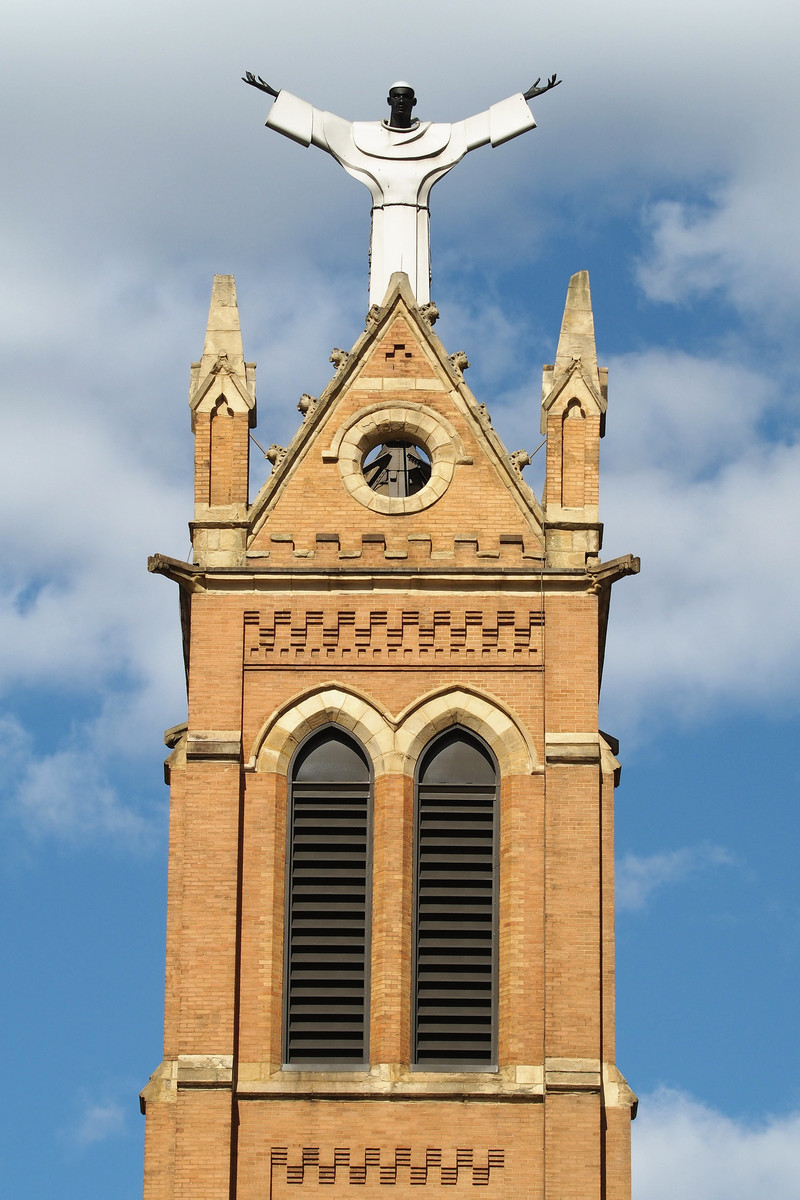
<p><span style="font-weight: 400;">In late 1968, the Diocese of Pittsburgh installed the eighteen-foot-tall statue of</span> <span style="font-weight: 400;">St. Benedict the Moor</span><span style="font-weight: 400;"> atop the church’s bell tower. St. Benedict the Moor was born as Benedetto Manasseri near Messina, Italy. His parent were Africans who had been enslaved in the early 16th Century and taken to San Fratello, a part of the region of Sicily, Italy. Although persecuted because of his race, he became known for generosity, feeding the hungry, and conducting miracles. The statue was commissioned by Bishop John Wright and funded through a donation from an “anonymous Protestant donor of one of Pittsburgh’s oldest families.” Sculpted by </span><span style="font-weight: 400;">Frederick Charles Shandy</span><span style="font-weight: 400;">, the statue depicts St. Benedict facing the Golden Triangle with arms spread wide.&nbsp; The symbolism of the statue has been interpreted in various ways - some intepret it as a rebuke of downtown and its neglect of the Hill, while others argue the statue is in a posture of welcoming and embrace.</span><span style="font-weight: 400;"> "At the precise boundary between these two worlds," said Rev. John Wright, bishop of Pittsburgh, in 1968, "the hands of a black Christian saint, St. Benedict the Moor, will be lifted in gestures of forgiveness, prayer, and peace over the Pittsburgh community."&nbsp;<br /></span></p>
<p><span style="font-weight: 400;">As many of the Hill District’s older white residents left the neighborhood, St. Benedict the Moor’s clergy and the Diocese listened and learned how to adapt the liturgies for Black traditions, including a gospel choir which performs weekly. St. Benedict the Moor was also the first parish in the Diocese of Pittsburgh to be assigned a Black priest, Fr. Augustus Taylor, Jr. </p><p>In addition to serving the Hill, the parish draws worshippers from throughout Greater Pittsburgh. This geographic reach is generally unheard of in the Catholic faith, where parishes are typically based upon physical residence. The Diocese had merged St. Benedict the Moor with two other parishes at the beginning of 2020, but this move was met with resistance from St. Benedict the Moor’s parishioners.&nbsp; Both clergy and the congregation saw an opportunity to preserve their traditions and petitioned the diocese to recognize St. Benedict the Moor as a “personal parish”, which distinguishes a parish with traditions additional to the usual mass structures. Bishop David Zubik approved the petition and recognized the personal parish of St. Benedict the Moor on July 13, 2020.</span></p></p></p><p><em><strong><a href="https://hillhistory.org/items/show/44">For more (including 4 images), view the original article</a>.</strong></em></p><p></p>]]></summary>
    <published>2023-10-17T13:32:02+00:00</published>
    <updated>2025-03-17T22:03:23+00:00</updated>
    <link rel="alternate" type="text/html" href="https://hillhistory.org/items/show/44"/>
    <id>https://hillhistory.org/items/show/44</id>
    <author>
      <name>Amy Brunner</name>
    </author>
  </entry>
  <entry>
    <title type="html"><![CDATA[Robert R. Lavelle – Building Communities and People]]></title>
    <summary type="html"><![CDATA[<p><img src="https://hillhistory.org/files/fullsize/265bed4eecdbd3f134e4320329a51113.jpg" alt="Robert R. Lavelle and son " /><br/><p><strong><em><p>In a time when banks regularly refused mortgages to Black applicants, Robert R. Lavelle invested in Black homeownership in the Hill District community.</p></em></strong></p><p>For a large part of the twentieth century, Pittsburgh's real estate industry and homeowners blocked African American access to housing and homeownership. Racism and redlining denied these qualified applicants home loans and ownership due to the color of the applicant's skin and the close-mindedness and shortsightedness of those in power at loaning institutions. Banks simply did not lend to African Americans, and lenders avoided certain neighborhoods, creating "a self-fulfilling prophecy of neglect and deterioration." African Americans found themselves left out of lending programs. As an example, though the Federal Housing Administration (FHA) was founded in the 1930s, as of 1967, only 3% of all new homes had been sold to African Americans. Robert R. Lavelle, however, proactively worked to change these issues of ownership for Pittsburgh's African American community. </p><p>Starting in the early 1950s, Robert R. Lavelle made homeownership a reality for numerous Pittsburgh African Americans. Lavelle spent his entire life working to revitalize the Hill District. After twenty-one years at the Pittsburgh Courier, Lavelle changed careers and started his own business - Lavelle Real Estate - in 1951. A few years later, he rescued the faltering Dwelling House Savings and Loan in 1957 and used that bank to focus on supporting African American homeownership in Pittsburgh and the Hill District in particular. Lavelle's group loaned to African Americans when others would not. His efforts made a difference, as homeownership in the Hill grew from 14% in the 1960s to over 40% in the 1990s. </p><p>Lavelle argued that "Homeownership is the basis of all wealth" and that "When poor people own the land they're living on, then they have power." Homeownership gave residents standing to demand more from their schools through the payment of property tax. Additionally, homeownership drove neighborhood and community improvements through the simple concept of pride of ownership.
<blockquote>You can have integrity no matter what your situation.<br /><b>-Robert Lavelle, 1988<br /></b></blockquote>
<br />When financial hardship hit customers, Lavelle would counsel them on financial matters. On late notices, Lavelle would often offer handwritten Bible verses focused on the importance of responsibility. </p><p>Throughout his life, Robert R. Lavelle fought to correct wrongs and injustice when he encountered them. As a young serviceman returning from World War II, Lavelle encountered racism in the Jim Crow South. When Lavelle refused to sit in the back of a streetcar in Virginia, a white man threatened him with a crowbar. Lavelle would later recount: "I stood up to him. I've always fought for self-respect, and I was willing to lose my life for it right then and there." In 1967, after being denied membership and access to Pittsburgh's real estate association and multilist service, the NAACP Legal Defense Fund represented Lavelle in his suit against 35 Pittsburgh realtors in a case centered on his exclusion from professional services. The suit was settled out of court, with Lavelle Real Estate being granted membership in the real estate association and full access to the listing service. </p><p>While Lavelle championed the Hill District, he also lamented the effect crime had in reducing the quality of life for its residents. In the wake of Dr. Martin Luther King Jr.'s assassination and the Eight-Day Riots, Pittsburgh found itself in a tumultuous time where crime levels escalated. In a 1969 letter to the editor of the Pittsburgh Courier, Lavelle noted that in that year, his Hill District real estate office had been burglarized three times, suffered several other attempts, fell victim to thievery, and that he personally was held up at gunpoint. Lavelle argued that citizens must work with police to protect and develop their neighborhoods and best interests and make their communities "peaceful and economically progressive." </p><p>Sadly, a different kind of crime forced Lavelle's lending institution, Dwelling House Savings and Loan, to close its doors in 2009 - the institution was the victim of online crime and deposit fraud. Robert R. Lavelle's real estate business, Lavelle Real Estate, is still operating and an important part of the Hill District. </p><p>Lavelle was born in Tennessee on October 4, 1915, and passed away in Pittsburgh at the age of ninety-four on July 4, 2010. In between, he worked to correct injustice where he encountered it and helped improve the lives of the people who call the Hill District home. His legacy is the thousands of families he helped acquire a home when other institutions turned their backs on them, as well as the Lavelle family he left behind. The Hill District is a better place today because of his efforts in the past.</p></p><p><em><strong><a href="https://hillhistory.org/items/show/10">For more (including 3 images), view the original article</a>.</strong></em></p><p></p>]]></summary>
    <published>2023-07-26T19:49:57+00:00</published>
    <updated>2025-04-16T15:12:25+00:00</updated>
    <link rel="alternate" type="text/html" href="https://hillhistory.org/items/show/10"/>
    <id>https://hillhistory.org/items/show/10</id>
    <author>
      <name>Julie Bowman</name>
    </author>
  </entry>
  <entry>
    <title type="html"><![CDATA[Rhumba Theater – Entertainment Hotspot for the Lower Hill]]></title>
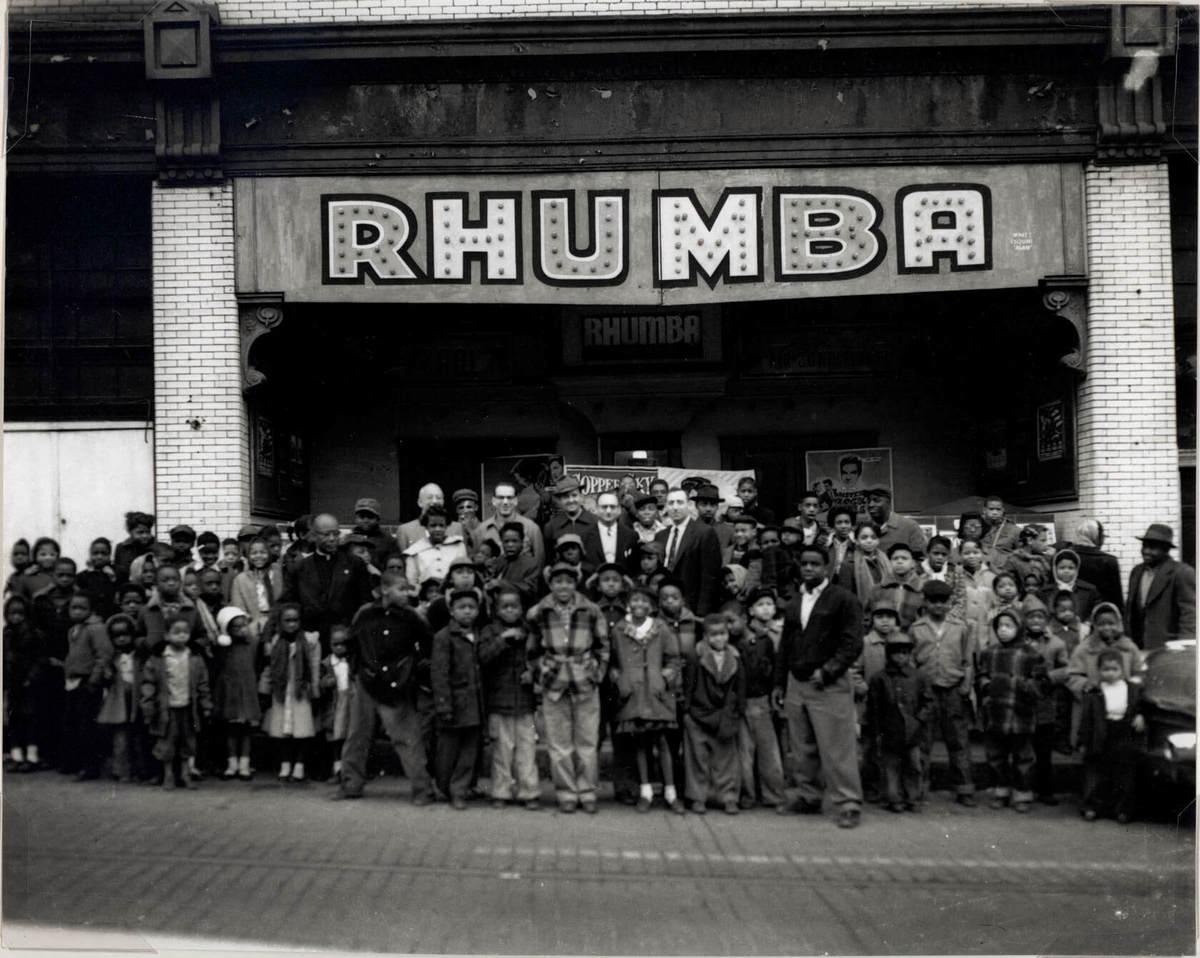
    <summary type="html"><![CDATA[<p><img src="https://hillhistory.org/files/fullsize/dbc8e8b4faddc794b76cfab696fddc7c.jpg" alt="Rhumba Theatre patrons" /><br/><p><strong><em></em></strong></p><p><p><span style="font-weight: 400;">In 1914, brothers Thomas and Martin Burke built a two-story entertainment and retail complex at 53-55 Fullerton at a cost of $7500. The two floors of the structure contained nearly 8,000 total square feet, housing a dance hall, juke box theater, and retail space.</span></p>
<p><span style="font-weight: 400;">Brothers Stanley and Alexander Williams, Hill District entertainment entrepreneurs, operated a 14-table pool hall in the basement for the first decade.&nbsp; After a venture into baseball, Andy then returned to the Burke’s basement and operated the four-lane Monarch Bowling lanes in the basement beginning in 1929.&nbsp; Pastimes such as movies, bowling, and billiards were popular forms of entertainment during the Great Depression, as they were relatively affordable ways for people to forget about hard times, at least for a little while.</span></p>
<h3><span style="font-weight: 400;">Entertainment Nightly</span></h3>
<p><span style="font-weight: 400;">The economic turmoil of the Depression led to a number of changes at the site.&nbsp; Jacob and Sidney Soltz purchased the building during the 1930s, upgraded the theater to show “talkies” (motion pictures with sound), and renamed it the Rhumba.</span></p>
<p><span style="font-weight: 400;">In 1935, the second floor of the building hosted a nightclub called Javo’s Jungle, hailed in the </span><i><span style="font-weight: 400;">Courier</span></i><span style="font-weight: 400;"> as “the classiest night club in the city” at its opening. The nightclub offered a nightly floor show with actress and singer Cora Green, Martha Price, and impersonator Bob Davis. Dewey McDaniels greeted the guests at the door, while “Battle” Keys kept the peace. Tom West and “Hungry Bill” manned the “futuristic” bar and could make any drink requested, no matter how complicated.&nbsp;</span></p>
<p><span style="font-weight: 400;">The building’s basement was also a entertainment hotspot, though less upscale than the upper floor. The basement held the after-hours, or as the </span><i><span style="font-weight: 400;">Pittsburgh Courier </span></i><span style="font-weight: 400;">called them “after yawning” clubs.&nbsp; Frequent proprietorship changes brought a rotating list of club names in the spot, including the Ritz and the El Congo. The members-only Bambola social club opened its doors on November 3, 1946, with floor shows starting at 12:30 am and 2:30 am. The floor shows featured singers, “shake dancers” (burlesque performers), and jazz bands, both of local and national fame.&nbsp; The club finally became the “Tia Juana” club, advertised in the 1950 </span><i><span style="font-weight: 400;">Courier </span></i><span style="font-weight: 400;">as the “hottest spot outside of a blast furnace.”</span></p>
<h3><span style="font-weight: 400;">The Rhumba's Final Bow</span></h3>
<p><span style="font-weight: 400;">Declining conditions in the surrounding neighborhood, and rumors of impending urban redevelopment, led to a decline in the Rhumba.&nbsp; A 1952 gas explosion in nearby properties caused some damage to the theater, and it suffered several projector fires. In his memoir </span><i><span style="font-weight: 400;">Song of the Hill, </span></i><span style="font-weight: 400;">Dr. Ralph Proctor recalled that “The Rhumba was nice when it first opened, but then deteriorated into a ratty place we avoided.” It was demolished in 1957 as part of the Urban Redevelopment Authority’s Lower Hill Redevelopment Project.&nbsp;</span></p></p></p><p><em><strong><a href="https://hillhistory.org/items/show/42">For more (including 4 images and 1 sound clip), view the original article</a>.</strong></em></p><p></p>]]></summary>
    <published>2023-10-02T23:52:55+00:00</published>
    <updated>2025-06-13T13:32:16+00:00</updated>
    <link rel="alternate" type="text/html" href="https://hillhistory.org/items/show/42"/>
    <id>https://hillhistory.org/items/show/42</id>
    <author>
      <name>Andrea Santella</name>
    </author>
  </entry>
  <entry>
    <title type="html"><![CDATA[Remarkable Reporters]]></title>
    <summary type="html"><![CDATA[<p><img src="https://hillhistory.org/files/fullsize/2df000ccf79eee2ce5e25b2f69d374b8.jpg" alt="Frank E. Bolden Recieving Lifetime Achievement Award" /><br/><p><strong><em></em></strong></p><p><p><span data-contrast="none">There were many notable reporters who worked for the <em>Courier</em> throughout its production in the 20th century, but two stand out among the rest as truly remarkable.<br /></span></p>
<h3><span style="font-weight: 400;">Frank E. Bolden</span></h3>
<p><span data-contrast="none"><br />Frank E. Bolden was a bright pre-med student at University of Pittsburgh when he began writing as a stringer, or freelance reporter, for the </span><i><span data-contrast="none">Courier</span></i><span data-contrast="none">.</span><span data-ccp-props="{&quot;134233117&quot;:false,&quot;134233118&quot;:false,&quot;335551550&quot;:0,&quot;335551620&quot;:0,&quot;335557856&quot;:16777215,&quot;335559738&quot;:0,&quot;335559739&quot;:210}">&nbsp;</span><span data-contrast="none">Barred from med school because of his race, and unwilling to find a teaching position in the deep South, Bolden took on a full-time position at the paper when he graduated in 1934.&nbsp;His beat was on Wylie Avenue, right in the heart of the Hill. He wrote about the nightlife there, reporting from clubs where future jazz legends like Billy Eckstine, Mary Lou Williams, and Art Blakey would play every night. He also wrote about the prostitution and gambling that was common on the street.</span><span data-ccp-props="{&quot;134233117&quot;:false,&quot;134233118&quot;:false,&quot;335551550&quot;:0,&quot;335551620&quot;:0,&quot;335557856&quot;:16777215,&quot;335559738&quot;:0,&quot;335559739&quot;:210}">&nbsp;</span></p>
<p><span data-contrast="none">When World War II broke out, Bolden made history as one of the two African American war correspondents in the nation. As he traveled overseas, he took the&nbsp;</span><i><span data-contrast="none">Courier</span></i><span data-contrast="none">’s mission to fight for the representation and rights of Black people with him. In a time when military desegregation was fiercely contested, it was a widely held belief that Black soldiers would prove to be cowardly and untrustworthy on the battlefield. Bolden’s reporting in the Pacific theater and in Italy combated this notion; one division he covered earned 12,000 citations of valor during their invasion of Italy. In Asia, he gave voice to the stories of the Black soldiers and engineers working on the infamous Burma Road. His work in the Pacific Theater led him to interview both Mahatma Gandhi and Jawaharlal Nehru, two leaders in the Indian campaign for independence from Britain, who both expressed support for the American Black civil rights movement.&nbsp;</span><span data-ccp-props="{&quot;134233117&quot;:false,&quot;134233118&quot;:false,&quot;335551550&quot;:0,&quot;335551620&quot;:0,&quot;335557856&quot;:16777215,&quot;335559738&quot;:0,&quot;335559739&quot;:210}">&nbsp;</span></p>
<p><span data-contrast="none">After returning to the States, Bolden received numerous offers from major news publications as a result of his prominent reporting during the war. He turned them all down, however, to take up his old beat on the Hill again. His reporting for the&nbsp;</span><i><span data-contrast="none">Courier&nbsp;</span></i><span data-contrast="none">in the post-war era often focused on the lack of Black police officers in Pittsburgh, and his campaign for this cause resulted in the promotion of the first Black lieutenant on the force.&nbsp;</span><span data-ccp-props="{&quot;134233117&quot;:false,&quot;134233118&quot;:false,&quot;335551550&quot;:0,&quot;335551620&quot;:0,&quot;335557856&quot;:16777215,&quot;335559738&quot;:0,&quot;335559739&quot;:210}">&nbsp;</span></p>
<p><span data-contrast="none">Bolden died in 2003 in Squirrel Hill, just a few miles away from where he did his reporting on Wylie Ave. His work has proved to be an invaluable resource to researchers of the area over the years, and he was not the only&nbsp;</span><i><span data-contrast="none">Courier</span></i><span data-contrast="none">&nbsp;writer who has served in some way as an amateur historian.</span><span data-ccp-props="{&quot;134233117&quot;:false,&quot;134233118&quot;:false,&quot;335551550&quot;:0,&quot;335551620&quot;:0,&quot;335557856&quot;:16777215,&quot;335559738&quot;:0,&quot;335559739&quot;:210}">&nbsp;<br /></span></p>
<h3><span style="font-weight: 400;">Joel Augustus Rogers</span></h3>
<p><span data-contrast="none">Joel Augustus Rogers, according to the African American Registry, “probably did more popularize African history than any writer of the 20th century.” Originally from Jamaica, the writer, journalist, and amateur historian’s books and&nbsp;</span><i><span data-contrast="none">Courier&nbsp;</span></i><span data-contrast="none">articles became a powerful force in American race relations. In 1927, Robert Vann sent Rogers on an international tour of Europe and Africa for the paper. There he would experience the differences between European, African, and American approaches to race, as well as visit culturally important cities like Rome, Berlin, Casablanca, Paris, Cairo, and more. He recorded his travels in Europe and the knowledge he gained there for his audience back in Pittsburgh, many of whom would have never been able to experience such things for themselves.</span><span data-ccp-props="{&quot;134233117&quot;:false,&quot;134233118&quot;:false,&quot;335551550&quot;:0,&quot;335551620&quot;:0,&quot;335557856&quot;:16777215,&quot;335559738&quot;:0,&quot;335559739&quot;:210}">&nbsp;</span></p>
<p><span data-contrast="none">It was these international tours that allowed him to continue his research in the history of the African diaspora as well. When he returned to America, he would partner with cartoonist George L. Lee to create a&nbsp;</span><i><span data-contrast="none">Courier</span></i><span data-contrast="none">&nbsp;column to share his discoveries in African history with its readers. The result was titled “Your History” and ran from 1934 to 1966. The column’s mantra, “Your history dates back beyond the cotton fields; back thousands of years before the time of Christ”, ran at the top of every new installment and preceded the charming illustrations and captions which detailed the role of Black men and women throughout world history. The column was praised for its accessibility to the average person as well as its pioneering spirit in a time when Black history was not widely studied or taught. Lee’s bold, compelling designs confronted the racial stereotyping common in cartoons then and made “Your History” a perfect example of the kind of representation the&nbsp;</span><i><span data-contrast="none">Courier</span></i><span data-contrast="none">&nbsp;fought for.</span><span data-ccp-props="{&quot;134233117&quot;:false,&quot;134233118&quot;:false,&quot;335551550&quot;:0,&quot;335551620&quot;:0,&quot;335557856&quot;:16777215,&quot;335559738&quot;:0,&quot;335559739&quot;:210}">&nbsp;</span></p></p></p><p><em><strong><a href="https://hillhistory.org/items/show/74">For more (including 2 images), view the original article</a>.</strong></em></p><p></p>]]></summary>
    <published>2024-11-21T21:49:25+00:00</published>
    <updated>2025-06-23T00:28:06+00:00</updated>
    <link rel="alternate" type="text/html" href="https://hillhistory.org/items/show/74"/>
    <id>https://hillhistory.org/items/show/74</id>
    <author>
      <name>Nolan Cowan and Scott Miller</name>
    </author>
  </entry>
  <entry>
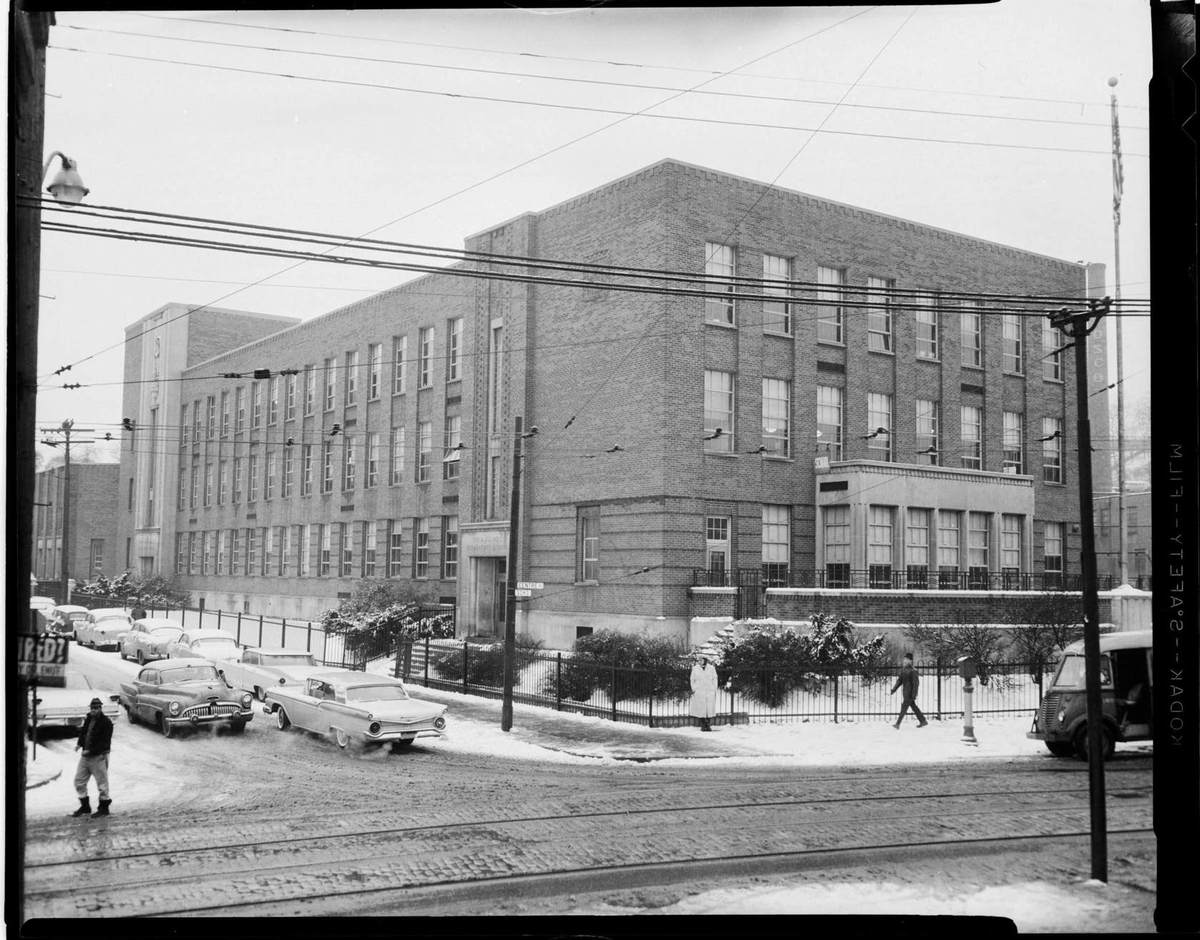
    <title type="html"><![CDATA[Pittsburgh Weil School]]></title>
    <summary type="html"><![CDATA[<p><img src="https://hillhistory.org/files/fullsize/27fc4fff3202f391ed459066a1d3ca95.jpg" alt="Exterior of the Weil School" /><br/><p><strong><em></em></strong></p><p>The Weil School, named after prolific Pittsburgh lawyer Adolphus Leo Weil, was designed by Marion M. Steen in 1942. Members of the Hill District's arts community, including Rob Penny, August Wilson, and Sala Udin, ran the Black Horizon Theater out of Weil's auditorium. August Wilson directed several of the company's plays, which featured works from Black playwrights Amiri Baraka, Ed Bullins, and Rob Penny himself.</p></p><p><em><strong><a href="https://hillhistory.org/items/show/47">For more (including 3 images), view the original article</a>.</strong></em></p><p></p>]]></summary>
    <published>2023-11-12T18:19:01+00:00</published>
    <updated>2025-03-17T22:02:49+00:00</updated>
    <link rel="alternate" type="text/html" href="https://hillhistory.org/items/show/47"/>
    <id>https://hillhistory.org/items/show/47</id>
    <author>
      <name>The Hill District Digital History Team</name>
    </author>
  </entry>
  <entry>
    <title type="html"><![CDATA[New Granada Theater – A Pillar of Pittsburgh Black Culture]]></title>
    <summary type="html"><![CDATA[<p><img src="https://hillhistory.org/files/fullsize/b86dad3aa003ee8c894842a24deb2cb1.jpg" alt="Street View of the New Granada" /><br/><p><strong><em>In the heart of the Hill District stands a time-worn monument, witness to a vibrant history and home to an exciting future.</em></strong></p><p>The New Granada, located in the Hill District at 2007 Centre Avenue, tells a story that is still being created today. The three-story building has served various roles in the community throughout the decades. From ballroom dancing, star-studded music performances, weekly cinematic features, and community events, all have taken place at this site, serving as an "icon" for the Hill District then and now. </p><p>The New Granada has an evolving history that begins with prominent African American architect, Louis Bellinger. He was one of only sixty black architects in the United States in the 1930s. One of his most prominent works, and also one of the few still standing, is the New Granada Theater. The building first opened in 1927 as the Pythian Temple for the fraternal order, the Colored Knights of Pythias. This organization served numerous roles for its members. For example, they were the only social organization at the time to offer life insurance, which aided families after a member's death. Under their ownership, the Knights of Pythias hosted live music and community events. The architectural vision Bellinger constructed for the Pythian Temple led to the iconic New Granada Theater. The Pythian Temple was bought by Henry Hendel after the Knights struggled to make mortgage payments. </p><p>Bellinger's designs allowed for the Pythian Temple to easily be transformed into the New Granada Theater by architect Alfred M. Marks. He redesigned the first floor from a banquet hall to a commercial movie theater. On May 20, 1937, the building reopened as The New Granada Theater. "When the beautiful new Granada theater threw open its doors last Thursday evening, a huge crowd jammed the sidewalks and streets... Men, women, and children ogled and marveled at the beauty and elegance of the interior," and "all races and colors filled up the ticket booth." <span style="font-weight: 400;">While the theater did occasionally show popular white movies like </span><i><span style="font-weight: 400;">Casablanca</span></i><span style="font-weight: 400;">, it was well-known for mostly playing films with African American-led casts, something that was not common at the time. </span>The theater showed a variety of genres from musicals to dramas. The building was also welcoming to all. "A cross-section of Pittsburghers, white and black, middle class, and working poor, attended both 'sepia cinema' or black films starring African American movie stars." The movie theater wasn't the only entertainment that drew in large crowds. The second floor of the New Granada continued the traditions of the Pythian Temple by hosting live music events. </p><p>On the second floor, patrons were transported to a magnificent ballroom stage where "the jazz greats played. The ballroom had indirect lighting, beautiful Venetian blinds, colorful drapes, wall murals, and a revolving crystal ball." Harlem music, a form of jazz, was a staple for the period. Harlem music itself shaped parts of the Hill District culture. This style of jazz music was developed in Harlem, New York, in the early 1900s. Due to the differing racial and economic differences in New York City, the area of Harlem became known as a "city-within-the-city" of New York City. This description can be shared with the Hill District, as it too can be seen as a "city-within-the-city" in comparison to Pittsburgh. Harlem musicians touring from New York City to Chicago would make a stop along the way in Pittsburgh to play on the second floor of the New Granada. </p><p>The second floor housed the Hill City Auditorium and then later changed to the Savoy Ballroom. The Harlem singers were popular in the area but were not the only style of entertainment the Savoy Ballroom saw. Local bands, singers, and orchestras played there as well. They also used the space to host jitterbug contests. The stage at the New Granada attracted well-known jazz stars as well as local performers.</p><p>The New Granada Theater provided a variety of entertainment for Pittsburgh while continuing to be a staple for residents of the Hill District. The building was often used for civic and community engagement. The space housed high school proms and graduations but also worked to "combat juvenile delinquency." The Hill City Youth Municipality was an organization that worked to prevent crime but also worked to serve and "uplift the underprivileged girls and boys of the community." In June of 1939, this organization hosted programs persuading residents to aid in "eliminating conditions that lead to crime and delinquency." They ended the week of events by showing a celebratory film in the New Granada Theater. </p><p>Although the New Granada Theater was a packed place at its height, its popularity and clientele eventually began to wither. The theater had to close its doors in the 1970s. It was purchased by the Hill Community Development Corps (CDC) in 1990. The site became listed on the National Register of Historic Places in 2011. The groundbreaking for the New Granada Square took palce in May 2023 which opened the door for construction of artist apartments, cultural spaces, retail spaces, and more. The New Granada Theater is currently being revitalized as a space of bright hope for the future of the Hill District.</p></p><p><em><strong><a href="https://hillhistory.org/items/show/8">For more (including 6 images), view the original article</a>.</strong></em></p><p></p>]]></summary>
    <published>2023-07-25T21:48:04+00:00</published>
    <updated>2025-06-18T19:08:40+00:00</updated>
    <link rel="alternate" type="text/html" href="https://hillhistory.org/items/show/8"/>
    <id>https://hillhistory.org/items/show/8</id>
    <author>
      <name>Hanna Brandebura</name>
    </author>
  </entry>
  <entry>
    <title type="html"><![CDATA[Mrs. Frankie Pace – Hill District Activist, Businesswoman, Leader]]></title>
    <summary type="html"><![CDATA[<p><img src="https://hillhistory.org/files/fullsize/f68a4af4e6c2bbd24a4ad685f1449d31.jpg" alt="Mrs. Frankie Pace" /><br/><p><strong><em></em></strong></p><p>Franklin Wilhamina “Frankie Mae” Pace was born in 1905 in Clinton, Louisiana, near Baton Rouge, to Henreatta and Louis Scott. She grew up in Chicago, Illinois, with her nine older siblings and moved to Pittsburgh in 1936 with her husband, Charles H. Pace. </p><p>The couple owned a gospel music store, the Old Ship of Zion Music Company (later changed to the Charles H. Pace Music Publishers) on Centre Avenue.&nbsp; Charles and Frankie quickly made themselves fixtures in the Hill District community.</p><p>As a young woman, Frankie wanted to become a social worker, but had limited means to attend college.&nbsp; Instead, she served the Hill community through volunteer work and community organizing. Pace especially devoted herself to improving education and housing in the Hill District. She quickly emerged as an icon, described by Henry Freeman of the United Way Family and Children’s Services as a “‘real honest-to-goodness community leader" for disenfranchised communities.</p><p>Mrs. Pace was an original member of the Homeowners and Tenants Association—the first group to protest City Hall during Pittsburgh Mayor David L. Lawrence’s tenure; that group eventually became the Citizens Committee for Hill District Renewal (CCHDR), which Pace founded with realtor <a href="https://hillhistory.org/items/show/10" target="_blank" rel="noopener">Robert Lavelle</a> and civil rights activist Jim McCoy. The CCHDR was instrumental in organizing community leadership to ensure urban redevelopment in the Hill District be done only with community input.<br />
<blockquote>I knew that ...if you wanted something done in your neighborhood you had to find out who to see to get it done, then go there and speak up.<br /><strong>-Frankie Pace</strong></blockquote>
In 1954, Mayor David Lawrence named Mrs. Pace to a special committee to combat poverty in Pittsburgh, on which she served for sixteen years. She was also involved with many programs of Lyndon Johnson's "Great Society" in the 1960s, including Model Cities and the Office of Economic Opportunity.</p><p>In 1967, Pace testified before a U.S. Senate Sub-Committee on Manpower and Poverty in support of President Johnson’s "War on Poverty." Amidst the escalating Vietnam War, she spoke directly and with conviction, telling the Senators that “if we can spend billions of dollars to destroy life, we ought to spend millions of dollars to save life.”</p><p>Her community service also included a membership on the Board of Directors for the Urban League of Pittsburgh and the National Association for the Advancement of Colored People (NAACP) of Pittsburgh, and a number of other community organizations. She was a lifelong active member of the Rodman Street Baptist Church </p><p>Frankie Pace's devotion to the Hill District came from a deep religious faith, a desire to serve others, and an understanding of her responsibilities in the community. In an interview before her death in 1989, Pace stated, “‘I already knew even by the time I came here if you wanted something done in your neighborhood you had to find out who to see to get it done, then go there and speak up.’”&nbsp; The Hill benefited because Frankie Pace spent her life doing just that.</p><p>In 2021, the City of Pittsburgh honored Mrs. Pace with the newly-opened <a href="https://www.lowerhillredevelopment.com/events-announcements/ribbon-cutting-ceremony-marks-the-opening-of-frankie-pace-park-formerly-i-579-cap-park-connecting-downtown-and-hill-district">Frankie Pace Park</a> located between the Lower Hill and downtown.</p></p><p><em><strong><a href="https://hillhistory.org/items/show/1">For more (including 3 images and 1 sound clip), view the original article</a>.</strong></em></p><p></p>]]></summary>
    <published>2023-06-23T01:51:54+00:00</published>
    <updated>2025-03-17T22:08:57+00:00</updated>
    <link rel="alternate" type="text/html" href="https://hillhistory.org/items/show/1"/>
    <id>https://hillhistory.org/items/show/1</id>
    <author>
      <name>The Hill District Digital History Team</name>
    </author>
  </entry>
  <entry>
    <title type="html"><![CDATA[Mary Dee – How The First Black Female DJ Changed America&nbsp;]]></title>
    <summary type="html"><![CDATA[<p><img src="https://hillhistory.org/files/fullsize/d0b3f8bc8beef77293cea74e669b5ed4.jpg" alt="WHOD Promotional Ad" /><br/><p><strong><em></em></strong></p><p>Disc jockeys hold an important place in popular music, bridging the gap between artists and listeners. Many famous DJs have been instrumental in bringing the latest music to the masses. One name that doesn’t come up often, however, is the game-changing Mary Dee, the first Black female disc jockey in the United States, who broadcast from the Hill District.</p><p>Mary Dee was revolutionary. Among the first DJs to become a national figure, her show on Pittsburgh’s WHOD attracted hundreds of thousands of listeners from 1948 to 1956. At the height of her popularity, she had a studio, interviewed celebrities, hosted public events, and promoted new talent. She also used her status to bring attention to issues in the Black community. After she left Pittsburgh in 1956, she remained on air and became a fixture in Baltimore and Philadelphia until her death in 1964.</p><p>Dee was born Mary Elizabeth Goode Dudley in 1912 in Homestead PA. Her parents, William and Mary, the children of enslaved people, moved to the Pittsburgh area in the late 1800s. Driven and keen to express herself, Dee graduated from St. Mann Radio School in Pittsburgh in 1948, and when WHOD started up soon after, she applied for a job. Though the station turned her down, she persisted and was finally offered a show on the condition she found sponsorship. After securing backing, the 15-minute “Movin’ Around with Mary Dee” went on the air and quickly exploded in popularity.</p><p>Within months, her airtime increased to an hour, and she soon had a new segment, the highly successful, faith-based “Gospel Train”. People from all walks of life would tune in to hear her. By the 1950s, she had established herself as WHOD’s shining star, interviewing Jackie Robinson, Sarah Vaughn, Tony Bennett, Nat King Cole, Eartha Kitt, and countless other celebrities. In 1951, the station gifted her "Studio Dee" on the corner of Centre and Herron Avenues in the Hill. </p><p>Dee gave to her community as much as it gave her. Committed to civil rights, she used her platform to address Black issues of the day. She frequently had her brother, Malvin “Mal” Goode, a reporter with the Courier, on her show to cover Black news. Goode, who went on to become the first Black newsman employed by ABC, tackled the latest in segregation and police brutality. Dee also believed in giving a voice to young people. She played music popular with teenagers, such as rock and roll, emceed teen clubs, and had a teen segment hosted by her daughter Sherlynn, or “Little Dee”. Additionally, she promoted the careers of obscure up-and-comers and served as a mentor for Black children, such as future guitarist George Benson.&nbsp;<br />Unfortunately, not everything went smoothly. In 1952, she divorced her abusive husband Franklin, who left her to raise their children alone. While she and WHOD were generally popular, they faced racist backlash from some listeners. In 1955, the station was sold to buyers who converted it into WAMO, a country showcase. In 1956, Dee, her brother, and the four other Black employees were fired, with owner Leonard Walk citing competition in the “Negro market.”&nbsp;</p><p>While Dee lost her studio, she wouldn’t stay down. She moved to Baltimore and continued working, before coming to Philadelphia to start a show in 1958, invited by her friend Dolly Banks who ran a local station.. With her new program, “Songs of Faith”, Dee came back to the mainstream, winning greater popularity than ever before. She remained active in the Black community, joining the NAACP and the National Council of Negro Women, as well as being among the first African Americans accepted into American Women of Radio and Television. By the time of her death on March 17th, 1964, she had become legendary, and 3,000 people attended her Philadelphia funeral.</p><p>“Legendary” describes Mary Dee best. A trailblazer, she not only created a path for many Black women to follow, but through her connection with the society around her, from the Hill to America at large, she helped set the stage for what DJs are supposed to be. She played records others weren’t willing to play and spoke about topics others wouldn’t cover.</p></p><p><em><strong><a href="https://hillhistory.org/items/show/80">For more (including 3 images), view the original article</a>.</strong></em></p><p></p>]]></summary>
    <published>2024-12-11T17:59:45+00:00</published>
    <updated>2025-06-18T15:11:43+00:00</updated>
    <link rel="alternate" type="text/html" href="https://hillhistory.org/items/show/80"/>
    <id>https://hillhistory.org/items/show/80</id>
    <author>
      <name>Charlie Stoops</name>
    </author>
  </entry>
  <entry>
    <title type="html"><![CDATA[Lutz's Meat Market]]></title>
    <summary type="html"><![CDATA[<p><img src="https://hillhistory.org/files/fullsize/a8716e3480f2026fd427131563c5d2c3.jpg" alt="Karl Lutz and Cal Cunningham" /><br/><p><strong><em></em></strong></p><p><p>The building at 2145 Centre Avenue was, for many years, the home of Lutz’s Meat Market, and the owner’s name is still visible on the building’s cornice.</p>
<p>German immigrant Charles Lutz founded the meat market in 1894 across the street from where he would eventually build a three-story building on the corner of Centre and Elmore Streets. The meat market made up the first floor, and the Lutz family loved on the floors above. Charles ran the shop for 28 and then sold it to his son Karl in 1922.</p>
<p>During the decades surrounding World War II, Lutz’s Meat Market was a popular shopping destination for Black migrants that moved to the Hill. It was known for its quality selection and hiring Black employees as clerks and butchers.</p>
<p>Despite its popularity and the family’s good reputation in the community, Lutz’s was not exempt from tensions during the Civil Rights Movement. During the riots in the wake of Martin Luther King Jr’s assassination in April 1968, many business were ransacked and burned – Lutz’s included.</p>
<blockquote>Lutz's was a popular shopping destination for residents in the Hill due to its quality selection, and the fact that nearly all of the store’s employees were Black.</blockquote>
<p>Karl Lutz decided to retire at 63 years old and sold the business to Cal Cunningham. A <em>Pittsburgh Courier </em>article announced the transition and noted, “Karl Lutz will be missed. He was a kind man and taught Cal everything about the business.” Cunningham, a long-time employee and apprentice to Lutz, ran the market for a year before tragically passing of a cerebral hemorrhage. Unable to keep the business alive, his wife closed the market a few years later.</p>
<h3><span style="font-weight: 400;">Lutz's Legacy</span></h3>
<p>Years later, playwright August Wilson would use the Lutz name for a white shop owner character in his 1990 play <em>Two Trains Running</em>. This Lutz character never appears on stage, but complained about by the character Hambone, who is convinced Lutz cheated him out of a pay that was promised. Most August Wilson scholars agree that, while Wilson drew on a familiar name from his past, he did not intend his character to portray the actual Karl Lutz, especially since the fictional business owner did not reflect Karl Lutz’s true character.</p>
<p>More recently, the building has become the home of Nafasi on Centre, a collaboration between the Hill CDC and #ArtsInHD, an initiative of the Hill District Consensus Group. Nafasi on Centre is intended to provide a central hub for innovative artists with Hill District connections; it hosts artist work-space in the basement, a café/gallery on the first floor, and four 1-bedroom apartments and two micro lofts, spread across the second and third floors. The meat market may no longer serve the residents of the Hill District, but it and the Lutz’s family legacy continues to provide a space for residents to come together as a community.</p></p></p><p><em><strong><a href="https://hillhistory.org/items/show/38">For more (including 3 images), view the original article</a>.</strong></em></p><p></p>]]></summary>
    <published>2023-10-02T23:46:03+00:00</published>
    <updated>2025-06-20T14:31:47+00:00</updated>
    <link rel="alternate" type="text/html" href="https://hillhistory.org/items/show/38"/>
    <id>https://hillhistory.org/items/show/38</id>
    <author>
      <name>The Hill District Digital History Team</name>
    </author>
  </entry>
  <entry>
    <title type="html"><![CDATA[Letsche Education Center – A Non-Traditional Approach to Education]]></title>
    <summary type="html"><![CDATA[<p><img src="https://hillhistory.org/files/fullsize/cd89b0c2ccad0d8d5c2ec5c47b84b79d.jpg" alt="Letsche School Exterior" /><br/><p><strong><em></em></strong></p><p>The Letsche Education Center, built in 1905 as the Letsche Elementary School, is an art deco building designed by architect Marian M. Steen. Originally occupying the lot at 1530 Cliff Street, a 1941 addition expanded the school to 1527 Bedford Avenue. In April of 1975, Pittsburgh's Board of Education decided to transition Letsche from an elementary school to an alternative learning center. In the years following, Letsche began to offer programs for non-traditional students: the Twelfth Grade Special Program helped students who failed to obtain the necessary number of credit hours receive their diploma; the Semester Make-Up program allowed students affected by non-academic issues to retake courses for credit; the Ed-Med program provided classes to pregnant students; and the Project Retrieval program helped to re-enroll students who have dropped out of school to raise children. The building was accepted into the National Register of Historic Places in 1986. At a 2004 meeting, members of the Pittsburgh Public School District's Board of Education voted to consolidate Letsche and the Options Center schools, with instruction continuing at the Baxter High School in Homewood North. The school officially closed sometime around 2007, remaining vacant since. In 2022, the Pittsburgh Urban Redevelopment Authority approved the sale of the Letsche building with plans to convert it into forty-two mixed income apartments. Developers will also add an addition to the property including four townhouses and a garden space.</p></p><p><em><strong><a href="https://hillhistory.org/items/show/19">For more (including 3 images), view the original article</a>.</strong></em></p><p></p>]]></summary>
    <published>2023-09-12T01:32:22+00:00</published>
    <updated>2025-03-17T22:06:25+00:00</updated>
    <link rel="alternate" type="text/html" href="https://hillhistory.org/items/show/19"/>
    <id>https://hillhistory.org/items/show/19</id>
    <author>
      <name>Alyssa Chesek</name>
    </author>
  </entry>
</feed>