<?xml version="1.0" encoding="UTF-8"?>
<feed xmlns="http://www.w3.org/2005/Atom">
  <title type="text">Hill District Digital History</title>
  <updated>2026-05-02T10:41:09+00:00</updated>
  <generator uri="http://framework.zend.com" version="1.12.20">Zend_Feed_Writer</generator>
  <link rel="alternate" type="text/html" href="https://hillhistory.org/"/>
  <link rel="self" type="application/atom+xml" href="https://hillhistory.org/items/browse?output=rss2"/>
  <id>https://hillhistory.org/</id>
  <author>
    <name>Hill District Digital History</name>
    <uri>https://hillhistory.org</uri>
  </author>
  <link rel="hub" href="http://pubsubhubbub.appspot.com/"/>
  <entry>
    <title type="html"><![CDATA[Addison Terrace – Affordable Housing and Community Amenities for the Hill]]></title>
    <summary type="html"><![CDATA[<p><img src="https://hillhistory.org/files/fullsize/8375009ada42313be5e8de5c7331211f.jpg" alt="Housing Project" /><br/><p><strong><em></em></strong></p><p>The Terrace Village public housing was one of the earliest public housing projects in the city, initiated under the "New Deal" to combat the Great Depression and provide affordable housing for working families.</p><p>On October 9, 1940, President Roosevelt dedicated Terrace Village, described at the time as the nation’s second-largest public housing project. In front of a crowd of nearly 30,000, the President praised “intelligent and sympathetic cooperation between the Federal Government and the local agencies”. He then handed a key to what was described as the nation’s 100,000th low-rent housing unit to Lester and Pearl Churchfield, the wife of a 26-year-old mill worker whose family of 5 had previously been crowded into a dilapidated single-room apartment.</p><p>Addison Terrace and its companion projects Terrace Village I &amp; II and Alequippa Terrace, were designed as complete communities, featuring swimming pools, athletic grounds, and community centers. In later decades, Addison Terrace and other public housing developments struggled to maintain that vision, for a variety of complex reasons.</p></p><p><em><strong><a href="https://hillhistory.org/items/show/20">For more (including 2 images and 1 video), view the original article</a>.</strong></em></p><p></p>]]></summary>
    <published>2023-09-27T00:04:07+00:00</published>
    <updated>2025-06-06T21:51:09+00:00</updated>
    <link rel="alternate" type="text/html" href="https://hillhistory.org/items/show/20"/>
    <id>https://hillhistory.org/items/show/20</id>
    <author>
      <name>The Hill District Digital History Team</name>
    </author>
  </entry>
  <entry>
    <title type="html"><![CDATA[Art Blakey – Orphan from the Hill became world-famous jazz legend]]></title>
    <summary type="html"><![CDATA[<p><img src="https://hillhistory.org/files/fullsize/ea03b307ae70d86525135c31d4034d98.jpg" alt="Jazz Messengers in concert at Amsterdam&#039;s Concertgebouw. " /><br/><p><strong><em></em></strong></p><p><p><span style="font-weight: 400;">When most people think of jazz drummer Art Blakey, they might think of his unique and influential style of playing, or his years spent with his wildly popular band the Jazz Messengers. What often goes unnoticed are his roots in the Hill.</p><p></span><span style="font-weight: 400;">Blakey was born on October 11, 1919 in Pittsburgh to a single mother who died soon after he was born. He was raised by a family friend, not learning until years later that his foster mother was not his biological mother. Growing up in a home on Chauncey Street, he received some piano lessons in school, and gained musical experience in his foster family’s Seventh-Day Adventist Church. His uncle, Rubi Blakey, was a well known choir director in the area - in the late 1930s the elder Blakey put on several concerts with his group at venues like the Warren Methodist United Church in the Hill and Pittsburgh’s Carnegie Music Hall.&nbsp;</span></p>
<p><span style="font-weight: 400;">As a young teen, Art worked in the Carnegie steel mills, an experience he later described as one he “would like to forget.” His talent for music soon gave him a route out of the rough industrial work that was common in Pittsburgh, and by the time he was 14, Art was making money playing at clubs in the Hill. He started with piano, but soon switched to the drums when fellow Pittsburgh jazz legend Errol Garner needed a drummer for a gig.&nbsp;</span></p>
<p><span style="font-weight: 400;">While gaining a variety of experience in Pittsburgh nightclubs, Blakey was still working other jobs to make ends meet. At 18, he married his first wife, Clarice Stewart and began a family. The 1940 U.S. Census locates the Blakey family, including two young daughters, living in the Hill at 613 Boone Way (a location eventually demolished as part of the 1950s Lower Hill redevelopment project), and lists Art’s primary occupation as a road construction laborer for the Works Progress Administration.&nbsp; The census record also identifies 3 of Clarice’s siblings and an unrelated lodger at the same address, suggesting the young family’s straitened circumstances.&nbsp;</span></p>
<p><span style="font-weight: 400;">In the early 1940s, however, Art began to gain steadier employment as a musician, securing a residency with Alyce Brooks in a group called the “Rhythm Maniacs” at the Coobus Club (later renamed the Celebrity) on Centre Avenue. He also toured with Mary Lou Williams, a jazz pianist and composer from East Liberty. By 1943, he began to work in Fletcher Henderson’s big band, though he would soon move on the next year to play with Billy Eckstine, another Pittsburgh native. Art would later drum for the likes of Miles Davis and Charlie Parker, and in the mid-50s he formed his own band, the Jazz Messengers.&nbsp;</span></p>
<p><span style="font-weight: 400;">Art’s drumming was intense and passionate. His playing provided every tune with a raw bed of energy which fed into the solos of other band members. He was also an innovator; contemporaries credit Art with being among the first to master complex musical stylings like polyrhythms, and he was said to be a master of maintaining independence between all four limbs while drumming. Critics have labeled his music as “hard bop”, a faster, more aggressive variant of be-bop which was reminiscent of jazz’s roots in the blues. In a time when jazz audiences were becoming increasingly white, Art’s music managed to captivate a mostly Black audience. His bluesy style of playing was a return to the beginnings of jazz, and can be considered a revival of the Black ballroom scene.</span></p>
<p><span style="font-weight: 400;">While his playing style w</span><span style="font-weight: 400;">as distinctive and influential, Blake</span><span style="font-weight: 400;">y’s role as a bandleader and mentor was an equally important legacy.</span></p>
<blockquote><span style="font-weight: 400;">Even when I was playing with Miles Davis, Art was the strength of the band. </span><b><br />-Jackie McLean, saxophonist</b><span style="font-weight: 400;"></span></blockquote>
<p><span style="font-weight: 400;">&nbsp; His keen eye for talent led him to invest in </span><span style="font-weight: 400;">many young jazz musicians who would go on to become legends in their own right. Folks like Donald Byrd, Freddie Hubbard, Keith Jarrett, and Joanne Brackeen were all shaped by Art over the years as part of his band. Wynton Marsalis credited his time playing with Blakey’s Jazz Messengers as influential in his choice to pursue jazz instead of classical music. The musicians Blakey worked with saw him as the core of any group he was a part of; as saxophonist Jackie McLean put it, “Even when I was with Miles Davis, Art was the strength of the band.” In addition to developing the members of his band as musicians, Art became almost like a father figure to many. Javon Jackson, a member of the Jazz Messengers in the late 80’s, told the </span><i><span style="font-weight: 400;">New York Times</span></i><span style="font-weight: 400;"> that Art “taught [him] to be a man, how to stand up and be accounted for.”&nbsp;</span></p>
<span style="font-weight: 400;">Although Art Blakey died in 1990, his influence persists. For Meredith Soeder, a historian of jazz, the culture of mentorship that Art created was a reflection of his Pittsburgh roots. She writes in the </span><i><span style="font-weight: 400;">Western Pennsylvania History</span></i><span style="font-weight: 400;"> journal that the “warmth and fraternity that was so easily found in Pittsburgh” was spread throughout the jazz world by “its famous musicians who never forgot their home.” His natural talent as a drummer and a bandleader certainly helped him carve out for himself a distinguished place in jazz history, but it was his beginnings in the Hill that started Art Blakey on his journey to become an icon of modern jazz drumming. </span></p></p><p><em><strong><a href="https://hillhistory.org/items/show/50">For more (including 6 images), view the original article</a>.</strong></em></p><p></p>]]></summary>
    <published>2024-01-02T17:11:26+00:00</published>
    <updated>2025-07-02T19:08:17+00:00</updated>
    <link rel="alternate" type="text/html" href="https://hillhistory.org/items/show/50"/>
    <id>https://hillhistory.org/items/show/50</id>
    <author>
      <name>Nolan Cowan</name>
    </author>
  </entry>
  <entry>
    <title type="html"><![CDATA[August Wilson House – Inspiring "The Pittsburgh Cycle"]]></title>
    <summary type="html"><![CDATA[<p><img src="https://hillhistory.org/files/fullsize/c76b478383a84181100c9dacea43a3fc.jpg" alt="Exterior of the Wilson House" /><br/><p><strong><em>This Bedford Avenue dwelling was the childhood home of the playwright known as "theater's poet of Black America."</em></strong></p><p><h4>Early Life</h4>
The man known to us today as August Wilson was born Fredrick August Kittel in 1945. The su name came from his red-haired German father, Fredrick Kittel, a baker from Bohemia. His mother was Daisy Wilson, an African American whose parents had migrated from North Carolina. Wilson and his six siblings lived in the two-room (later four-room) apartment at 1727 Bedford Avenue until 1958, when August was 13.</p><p>Wilson's childhood friend and schoolmate at Holy Trinity Catholic School, Sala Udin, described him as shy but perceptive. "August would never raise his hand in class to give the answer, but if a nun called on him, he usually knew the answer," recalled Udin. "He didn't participate in rough physical games on the schoolyard, but he always watched, with a sly smile on his face." </p><p>August's father was only in the home intermittently. Education was extremely important to Daisy Wilson, and August enrolled as the first black student in Central Catholic High School. Daily threats and abuse drove him to Connelley Vocational High School in the Hill, but August found it unchallenging; he would later attend Gladstone High School. Wilson later reflected on the story behind his final dropout in the 10th grade: "I wrote a paper about 20 pages long, on Napoleon. He was one of my heroes. I went to the library, got the books, wrote it, and turned it in. The teacher asked to see me after school, and he handed me the paper. There were two grades listed on it: A+ and E. Now, he said to me, 'You've got a sister in college, right? Well, I don't think you wrote this. Now, tell me, what grade should you have?' Of course, I said 'A+' and so he circled E. I took the paper, tore it up, and dropped it in the waste can, walked out of Gladstone, and never went back."</p><p>He would later return to the Hill and adopt his mother's maiden name. The newly branded August Wilson educated himself in the Carnegie Libraries of Pittsburgh. In the 1960s, he began to consider himself a poet and befriended other black writers such as Rob Penny. They hung out at Irv's Bar in the Hill District, and Wilson began to write plays based on conversations he overheard around his neighborhood. He joined Black nationalist groups and founded the Black Horizons theater with his writer friends.<br />
<blockquote>Like most people, I have this sort of love-hate relationship with Pittsburgh. This is my home, and at times I miss it and find it tremendously exciting, and other times I want to catch the first thing out that has wheels.<br /><b>-August Wilson</b></blockquote>
After his mother's death, August Wilson's career took off. He won the Pulitzer Prize for his play "Fences" in 1987, something he would win again for his play "The Piano Lesson" in 1989. Overall, Wilson would write 10 plays in 24 years, 9 of which are set in the Hill District. These plays would later be known as "The Pittsburgh Cycle," with each play set in a different decade. Freda Ellis, August Wilson's sister, wrote of his plays: "In the struggle to realize the American dream, blacks have lost their identity. This is one of the issues raised in August's plays: How does a black man become a successful American without sacrificing his real culture and the richness of his identity?"<br />
<h4>The House Before August</h4>
The building that one day would serve as the birthplace of August Wilson was originally built in the 1840s. The brick structure featured a storefront and several apartments. As August Wilson was born, the building belonged to Beatrice (Bella) and Louis Siger, a Jewish couple who operated a market out of the front and rented the spaces in the back and upstairs. Bella would let Wilson's sisters work in the store from time to time. In the front apartment of the house lived the Buteras, an Italian-American family who operated the watch repair shop next door. The last Buteras resident to be born in the house was Johnny Buteras in 1915. He would refer to August as "Little Freddie Kittel."<br />
<h4>The Pittsburgh Connection</h4>
August Wilson moved away from Pittsburgh, first to St. Paul, Minnesota, in 1978 and later Seattle, Washington, in 1990. However, while moving further physically away from his native Pittsburgh, his mind remained in the Hill District. In 1996, Wilson's play, "Seven Guitars," premiered on Broadway and won the New York Film Critics Circle Award. The backyard of 1727 Bedford Avenue is, in fact, the setting for "Seven Guitars."</p><p>Wilson's friend and fellow Hill District writer, Rob Penny, wrote of Wilson's relationship to his city: "August always had a strong sense of history. He feels we can all learn from the past so we can improve the future. I think Pittsburgh's history has been very, very important to him. The city is a puzzle, a disjointed place with all the different ethnic groups going their separate ways. But everything that is America exists here, from the artistic beauty to the ugliness. It's all had an effect on August."<br />
<h4>The Fight to Save The August Wilson House</h4>
August Wilson died from liver cancer in 2005 at age 60. Soon afterward, several projects began in Pittsburgh to honor him and his legacy. The project to save 1727 Bedford Avenue was spearheaded by his nephew, an attorney, Paul Ellis. Ellis was concerned that "demolition of other historic landmarks has been done without a reverent analysis of black history" By 2008, the home was in great disrepair, the lot next door was vacant, and the watch shop on the other side sat empty after Johnny Buteras had been killed in a robbery in 2001.</p><p>In 2008, Pittsburgh's City Council unanimously voted to declare historic status for the home. Paul Ellis and his nonprofit, The Daisy Wilson Artist Community, had a plan to turn the home into a writers' retreat: complete with a shop, a museum, and living accommodations. Ellis's nonprofit and volunteers from "Renew Pittsburgh" began to clean up the property and stabilize the structural stability of the house, described as "the first step in a $2 million-dollar project." Thanks to these efforts, the house joined the National Register of Historic Places in 2013 and received a historic marker sign out front. Today, the Daisy Wilson Artist Community - with funding from passionate Wilson fans such as Denzel Washington - is working to complete their dream of completely restoring the building for community applications while hosting community parties and artistic events.</p></p><p><em><strong><a href="https://hillhistory.org/items/show/15">For more (including 3 images), view the original article</a>.</strong></em></p><p></p>]]></summary>
    <published>2023-08-02T16:04:04+00:00</published>
    <updated>2025-03-17T21:46:31+00:00</updated>
    <link rel="alternate" type="text/html" href="https://hillhistory.org/items/show/15"/>
    <id>https://hillhistory.org/items/show/15</id>
    <author>
      <name>Zach Cene</name>
    </author>
  </entry>
  <entry>
    <title type="html"><![CDATA[Aurora Reading Club – A club for community involvement with a lasting impact]]></title>
    <summary type="html"><![CDATA[<p><img src="https://hillhistory.org/files/fullsize/38a81c3bb18df164728c2d99fd174734.jpg" alt="90th Anniversary Celebration" /><br/><p><strong><em></em></strong></p><p><p><span style="font-weight: 400;">In 1894, six women in the Hill District of Pittsburgh unknowingly made history with the creation of the Aurora Reading Club. Rachel Lovett Jones, along with Hannah Lovett, Virginia Woodson Proctor, Anna Posey, and Cora V. Hill Washington aimed to create a space where African American women could explore literacy, the arts, and the sciences at a time when African American women were not given many opportunities to do so.&nbsp; Their goals still live on within the club today.</span></p>
<p><span style="font-weight: 400;">The Aurora Reading Club created the motto, “Lifting as we climb,” to signify the women’s goal of helping each member better themselves through education and advocacy for themselves and each other. They did this through sharing literature, participating in cultural and political events, and using the reputation developed through the years to aid in their social pursuits. The club’s most common events consist of luncheons and community events to advocate and raise awareness for promoting literacy both locally and nationally.</span></p>
<p><span style="font-weight: 400;">Each month, the group hosts a luncheon at one of the member’s homes. This is in addition to a grand anniversary luncheon held in a larger venue to accommodate additional guests. Membership in the Aurora Reading Club has become a generational tradition, resulting in members like Thelma Lovette Morris, current co-chair of the club and the great-granddaughter of founder Hannah Lovett.&nbsp;</span></p>
<p><span style="font-weight: 400;">Examples of the club’s work have been regularly mentioned in the </span><i><span style="font-weight: 400;">Pittsburgh Courier</span></i><span style="font-weight: 400;">, which documented the Club’s meetings, including guest speakers, the topic of the meeting’s discussion, and informing readers about the book the group had talked about. They have also documented the wide variety of issues the Aurora Reading Club has addressed to help in the spread of information important to Pittsburgh.</span></p>
<p><span style="font-weight: 400;">In 1959, the </span><i><span style="font-weight: 400;">Pittsburgh Courier</span></i><span style="font-weight: 400;"> documented a club meeting where the topic discussed was about “an ordinance against discriminating in housing.” The luncheon had a member of the Commission come and talk about the working of the Office of the Mayor of Pittsburgh. In addition to area specific news, in 1960, the </span><i><span style="font-weight: 400;">Pittsburgh Courier</span></i><span style="font-weight: 400;"> reported the club had one of their monthly luncheons talking about “Negro History,” which discussed “contributions of the Negro in religion, poetry, music, science, medicine and architecture both locally and nationally.” This meeting also touched on many “firsts” like those of Dr. Vivian Davidson Hewitt, the first African American librarian.&nbsp;</span></p>
<p><span style="font-weight: 400;">The Aurora Reading Club is not only able to help local areas within Western Pennsylvania, like the Hill District, but people all over the country as well. The current day club’s accomplishments, documented in the </span><i><span style="font-weight: 400;">Pittsburgh</span></i> <i><span style="font-weight: 400;">Courier</span></i><span style="font-weight: 400;">, include setting up the Evers Book Fund in order to gather and ship books to multiple communities in Mississippi as well as providing books for the Selma Burke Art Center. The Aurora Reading Club has its roots placed firmly in the Hill District and has shown that it remains true to and has improved upon their original goals in 1894. <br /></span></p></p></p><p><em><strong><a href="https://hillhistory.org/items/show/79">For more (including 2 images and 1 video), view the original article</a>.</strong></em></p><p></p>]]></summary>
    <published>2024-12-11T17:56:51+00:00</published>
    <updated>2025-03-17T21:59:06+00:00</updated>
    <link rel="alternate" type="text/html" href="https://hillhistory.org/items/show/79"/>
    <id>https://hillhistory.org/items/show/79</id>
    <author>
      <name>&lt;p&gt;&lt;span style="font-weight: 400;"&gt;Claire Kleffman&lt;/span&gt;&lt;/p&gt;</name>
    </author>
  </entry>
  <entry>
    <title type="html"><![CDATA[Bethel African Methodist Episcopal Church – Resilience and Revitalization in the Hill]]></title>
    <summary type="html"><![CDATA[<p><img src="https://hillhistory.org/files/fullsize/9579d9248f865eb9bd1c2624d9a6d05b.jpg" alt="Bethel A.M.E. Church on 1206 Wylie Avenue, now torn down" /><br/><p><strong><em>An institution focused on faith, service, and activism, Bethel AME is a testament to the enduring spirit of Pittsburgh's Black community.</em></strong></p><p>The Bethel African Methodist Episcopal Church in Pittsburgh recently signed a deal with the Pittsburgh Penguins hockey team to recuperate its historic land. But why was this deal necessary? Under a program known as "urban renewal" in the 1950s, Pittsburgh city leaders ordered Bethel AME and many other historic buildings to be demolished to make way for the Civic Arena. Today, Bethel fights for its return to the neighborhood it called home. Yet this glimpse only tells a fraction of the church's story. To truly understand the modern context, the church's powerful history spanning the 1800s and 1900s needs to be understood. Through its social and spiritual history, Bethel AME Church greatly impacted the Lower Hill neighborhood and its African American community.<br />
<h3><span style="font-weight: 400;">Early Activism</span></h3>
<br />In the nineteenth century, Bethel played a vigorous role in black civil rights. Originally known as the "African Church," black residents created it in 1808 as a non-denominational church to support their small community. The church's recruitment quickly expanded as more black Americans arrived in Pennsylvania, since the state offered a safe haven for escaped slaves. In order to properly organize their membership, the church officially affiliated with the African Methodist Episcopal Church in 1818. The AME Church formed as a national anti-slavery organization; in other words, the church supported escaping slaves in the Underground Railroad, opposed the African colonization movement, and bolstered black suffrage and education. </p><p>Through these political goals, Bethel AME in Pittsburgh joined a united movement dedicated to black civil rights, and actively participated in that movement. Under the leadership of Reverend Lewis Woodson, the Pittsburgh church itself became a stop on the Underground Railroad to help escaping slaves. Reverend Woodson soon led the church to form the city's first school for black children in 1831. Additionally, as the movement expanded throughout Pennsylvania, Bethel AME hosted the state's civil rights convention in 1841. </p><p>During the turbulence of Reconstruction, the national AME Church sent missionaries to help protect the rights of the newly freed African Americans of the South. Black Pittsburgh residents regularly participated in this missionary work. One Pittsburgh Courier article proudly cites the service history of the city's men and women, including local missionary president Harriet White and "young people's department" director Elsie Meeks as recently as 1953. </p><p>The national AME Church also pushed for black representation and justice in American history, as a significant actor in the 1876 centennial celebrations. Representatives like Christian Recorder editor Benjamin Tucker Tanner advocated for events celebrating black history, including memorials of African American military service, religious liberty, and new monuments to black spiritual leaders like African Methodist founder Richard Allen. </p><p>Within this coalition, Bethel AME remained a powerful force for black civil rights in Pittsburgh. Reverend J. W. Gazaway, pastor of Bethel AME, provides a perfect example of black leadership in the city. In 1898, Gazaway spoke out against the trend of lynching black men, and served his community as a spiritual advisor to black Americans imprisoned in an unfair criminal justice system. Through their efforts at black education, suffrage, civil rights, and spiritual support, the leaders of Bethel AME played a key role in black civil rights in the 1800s. <br />
<h3><span style="font-weight: 400;">20th Century Challenges</span></h3>
<br />Moving into the twentieth century, the national AME organization faced new challenges affecting the Pittsburgh church. Over two decades, several black denominations splintered into different factions with disparate goals, and Pittsburgh remained in the center of this debate. Bethel AME hosted a conference for these denominations to unite in common interests and proposed the Pittsburgh Plan for Unification in 1927. The Colored Methodist Episcopal, African Methodist Episcopal, and African Methodist Episcopal Zion churches all wanted an equal balance of leadership and structure, to ensure no single denomination would absorb the others in the potential merger. While these factions ultimately remained separate, this illustrates another example of Bethel's authority on the national stage, which continues through the modern civil rights movement.</p><p>Beyond its wide range of influence, Bethel has provided a welcoming respite to generations of African Americans in Pittsburgh. By 1962, Reverend J. G. Harris found that "the vineyard is richer" as the pews of his church filled with more educated, active members. <em>Pittsburgh Courier</em> writer Theodore Graham reported this steadily growing church membership owed its success to the caring involvement of church leaders in all facets of life, including "housing, labor, community problems, and politics." With such passion for advocacy, Bethel church members knew their leaders would speak out to protect their interests. </p><p>Bethel also stands strong as an institution that feels like a second home to its members.
<blockquote>Bethel has provided a welcoming respite to generations of African Americans in Pittsburgh.</blockquote>
In addition to weekly Sunday services and Wednesday Bible Study and Church School groups, churchgoers have always joined together to celebrate their house of faith. Over decades, members organized anniversary celebrations of the church's founding, including banquets where key community leaders remembered Bethel's role in their lives. These reverent speeches came from influential men and women, such as Judge John Drew of the Common Pleas Court in 1953. During a report on one well-attended banquet, Courier religious editor Bert Logan examined the history of Bethel's charitable entrepreneurs, highlighting a spirit of caring philanthropy. Bethel AME Church acted as a vibrant part of life in the Lower Hill.<br />
<h3><span style="font-weight: 400;">Urban Renewal Era</span></h3>
<br />Unfortunately, during the 1950s, the church's neighborhood came under attack. Relying on environmental language of urban "blight" or a decaying landscape, the Urban Redevelopment Authority of Pittsburgh pursued a program of "urban renewal" and demolished the historically black Lower Hill District. This trend occurred across American cities of the postwar era and aimed to remove poor, declining, and largely minority neighborhoods and replace them with new commercial development. More than 8,000 residents were evicted from the Lower Hill, and many of the businesses and institutions were lost or destroyed.</p><p>After decades of civil rights activism to restore their community, black Pittsburgh residents established major breakthroughs. Twenty-first century activism has produced a legacy of community engagement, including community benefits agreements to guarantee black residents will have a say in projects involving economic development. Within this activism, Bethel AME persists as a community leader, offering a space for change.<br />
<h3><span style="font-weight: 400;">Recent Developments</span></h3>
<br />In April 2023, a great deal of the Pittsburgh press focused on Bethel's story. Through a comprehensive agreement between the Pittsburgh Penguins legal team and the leaders of Bethel AME, new plans are underway to create new housing, a childcare facility, and a commercial zone in the Lower Hill. These public relations initiatives demonstrate how Bethel endures as a vital authority in the memory of Pittsburgh's black community. Despite the shifting physical locations of the Bethel AME Church in Pittsburgh, it has remained an eminent source of strength in the Hill community for over two centuries. The spiritual and social power of this house of faith transcends place and time.</p></p><p><em><strong><a href="https://hillhistory.org/items/show/9">For more, view the original article</a>.</strong></em></p><p></p>]]></summary>
    <published>2023-07-26T12:57:36+00:00</published>
    <updated>2025-06-01T01:09:35+00:00</updated>
    <link rel="alternate" type="text/html" href="https://hillhistory.org/items/show/9"/>
    <id>https://hillhistory.org/items/show/9</id>
    <author>
      <name>Joseph Naughton</name>
    </author>
  </entry>
  <entry>
    <title type="html"><![CDATA[Black Beauty Lounge – The longest-running bar in the Hill]]></title>
    <summary type="html"><![CDATA[<p><img src="https://hillhistory.org/files/fullsize/ef9bbb3a1194a0e4ab2a1a642391d637.jpg" alt="Part of the August Wilson mural on the wall of B
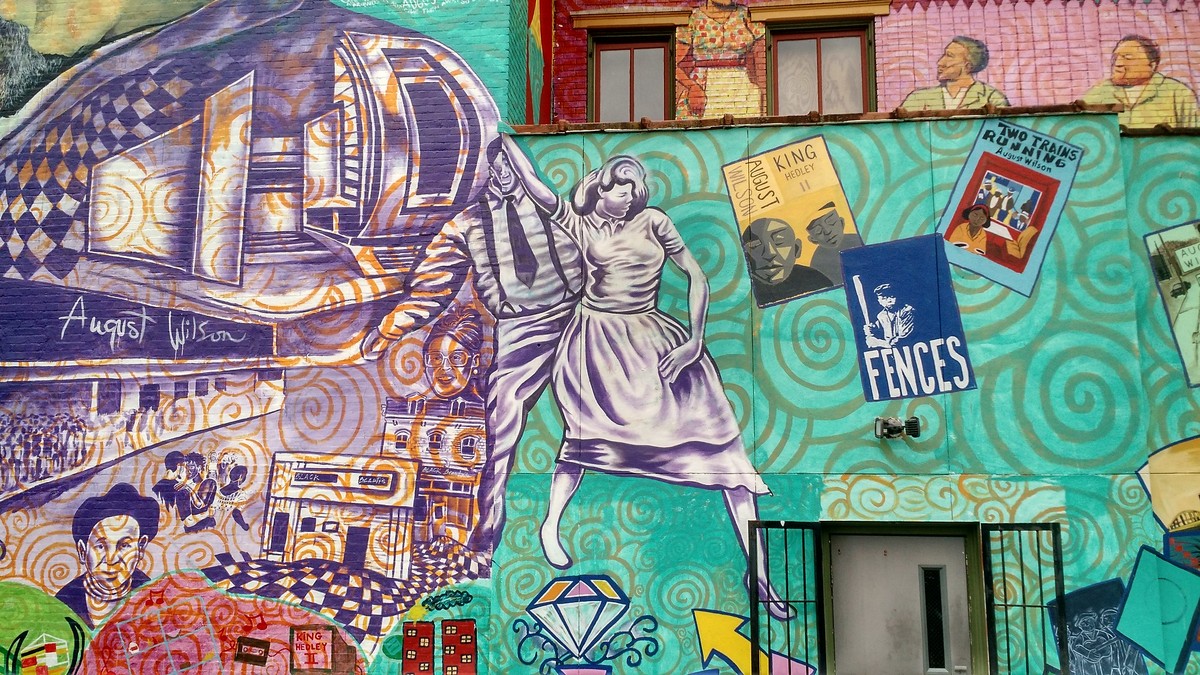
" /><br/><p><strong><em></em></strong></p><p>The Black Beauty Lounge is the longest-running bar in the Hill District, operating at the same site for more than 50 years. The lounge was established In 1972, under the ownership of Roberta Brassell aka "Ms. Bert." Even those who have not patronized the lounge may recognize it as a notable landmark - one side of the building is covered with a large-scale mural celebrating the work of August Wilson.</p></p><p><em><strong><a href="https://hillhistory.org/items/show/32">For more, view the original article</a>.</strong></em></p><p></p>]]></summary>
    <published>2023-10-02T23:25:19+00:00</published>
    <updated>2025-03-17T22:05:14+00:00</updated>
    <link rel="alternate" type="text/html" href="https://hillhistory.org/items/show/32"/>
    <id>https://hillhistory.org/items/show/32</id>
    <author>
      <name>The Hill District Digital History Team</name>
    </author>
  </entry>
  <entry>
    <title type="html"><![CDATA[Black Horizon Theatre Company – Local school served as performance site for Black Arts movement]]></title>
    <summary type="html"><![CDATA[<p><img src="https://hillhistory.org/files/fullsize/35e069d968d39ecaaa88282adf030154.jpg" alt="Black Horizon performers" /><br/><p><strong><em></em></strong></p><p><p><span style="font-weight: 400;">In 1968, student activist at the University of Pittsburgh founded the Black Action Society (BAS), an organization to serve the needs and interests of Black students by building community and “providing educational, political, and social programming relative to the Black experience.”</span><span style="font-weight: 400;"><br /></span><span style="font-weight: 400;"><br /></span><span style="font-weight: 400;"> As part of this effort, Pitt's BAS developed an arts organization to support Black writers, artists and performers. This idea was modeled after the Black Arts Repertory Theatre in Harlem, founded in 1965 by playwright and poet Amiri Baraka, usually considered the founding of a national Black Arts Movement.</span></p>
<p><span style="font-weight: 400;">The BAS would meet at a restaurant called the Pan Fried Fish on Wylie Ave. Known for having the best fish sandwiches for miles around, the restaurant was a gathering spot for students and artists in the neighborhood to express themselves freely, creating music, poetry, and art under a united cause.<br /></span></p>
<h3><span style="font-weight: 400;">A Grand Entrance</span></h3>
<p><span style="font-weight: 400;"></span><span style="font-weight: 400;">One night, artist and native resident Frank Floyd Hightower was exhibiting his photography and leading a discussion on his work at the restaurant when he met August Wilson, Rob Penny, and Curtiss E. Porter, who were playwrights, social activists, and artists in their own right. Penny and Porter were also co-directors of the University of Pittsburgh's Africana Studies Program. That same night, they also met Sala Udin and Sakina Abdul A’la, an actress and women’s rights advocate. This group of friends became instrumental in the local Black Arts movement and together founded Black Horizon Theatre. Their goal was to establish a community theater aimed at raising social consciousness within the Black community and the world.&nbsp;</span></p>
<p><span style="font-weight: 400;">The A. Leo Weil School auditorium at 2250 Centre Ave became home to Black Horizon Theatre, and they staged plays there from 1968 to 1972. The school’s principal allowed them to use the auditorium at no charge. </p><p>Black Horizon Theatre Company portrayed characters struggling with inequality, opening the audience’s and community’s eyes to the constant obstacles African Americans faced. The company initially charged only 50 cents for admission to their plays. “We literally went into the street a half hour before the show and talked people into going in,” recalled Wilson years later. “Once they got in, they really liked it.”</span></p>
<h3><span style="font-weight: 400;">August Wilson's Contributions</span></h3>
In many ways, the experience of Black Horizon Theatre was responsible for initiating a transformation in August Wilson’s writing; poetry had been his primary focus through the mid-1960s, but he volunteered to direct the company’s productions - even though he had no previous experience. Instead, he taught himself the fundamentals from a book checked out from the local library.&nbsp; As his experience in theater grew, his creative focus also began to shift to playwriting.
<p><span style="font-weight: 400;">Black Horizon Theatre dispersed by the mid-1970s. In 1975, Dr. Vernell A. Lillie, a University of Pittsburgh professor, continued Black Horizons’ legacy by founding the Kuntu Repertory Theatre.</span></p>
<p><span style="font-weight: 400;">The following year, August Wilson brought his early playwriting effort, </span><i><span style="font-weight: 400;">Homecoming</span></i><span style="font-weight: 400;">, to Kuntu. It was his first play to be produced by a resident company at the University of Pittsburgh. Wilson won his first Pulitzer Prize in 1987 for his Broadway show </span><i><span style="font-weight: 400;">Fences</span></i><span style="font-weight: 400;"> and later won a second Pulitzer Prize in 1990 for </span><i><span style="font-weight: 400;">The Piano Lesson</span></i><span style="font-weight: 400;">.</span></p>
<p><span style="font-weight: 400;">While Wilson was the most prominent author to come out of the Pittsburgh Black Arts scene and Black Horizon Theatre, it is important to recognize and appreciate the Black Horizon Theater, and the creative collaborators who helped shape and nurture his remarkable talent.&nbsp;</span></p></p></p><p><em><strong><a href="https://hillhistory.org/items/show/72">For more (including 4 images), view the original article</a>.</strong></em></p><p></p>]]></summary>
    <published>2024-11-14T15:26:01+00:00</published>
    <updated>2025-07-08T18:27:00+00:00</updated>
    <link rel="alternate" type="text/html" href="https://hillhistory.org/items/show/72"/>
    <id>https://hillhistory.org/items/show/72</id>
    <author>
      <name>J. Roger Davis</name>
    </author>
  </entry>
  <entry>
    <title type="html"><![CDATA[Central Baptist Church – Faith and Activism in the Hill]]></title>
    <summary type="html"><![CDATA[<p><img src="https://hillhistory.org/files/fullsize/b9305e405697c49d6c1897b469e6afe0.jpg" alt="Congregation of Central Baptist" /><br/><p><strong><em></em></strong></p><p>Throughout the 111 years that Central Baptist Church has stood at 2200 Wylie Avenue, it has offered the residents of the Hill District a strong Black religious presence in the neighborhood which has uplifted the whole community. Though the church has had its struggles over the decades, the devoted leaders which have pastored it have continually made Central Baptist into a church body which serves the Hill both socially and spiritually.<br />
<h3><span style="font-weight: 400;">Difficult Beginnings</span></h3>
<br />Formed in 1891, Central Baptist purchased its building on the corner of Kirkpatrick and Wylie in 1912, and has stayed there ever since. The church’s first years were uneventful until it began experiencing severe financial difficulties during the tenure of its sixth pastor, Dr. Rev. C.A. Ward, likely due to the economic hardships brought to the Hill by the Great Depression. The situation was made even worse when the church building caught fire from unknown causes in 1934, which required significant efforts to rebuild. According to one Courier article, the church’s debts were so large in the late thirties that they were “‘choking’ the life and spirit” from its congregation. Though Rev. Ward attempted to resign, the church board decided against it, and Central Baptist did not receive a new pastor until the reverend passed away in 1937. </p><p>His successor, Rev. Cornell E. Talley, was one of the most beloved pastors the church ever had. A relatively young man for his trade at just 31 years old, Talley arrived from Indianapolis with his wife and eight month old son, and preached his first sermon at Central Baptist in 1938. Within just three years, he tripled the church’s attendance from 532 regular members to 1,500, and he not only managed to pay off all of Central Baptist’s debts, but increased the church’s savings to $5,000. </p><p>This kind of growth was unheard of for the church previously, but the church’s rocky history seemed not to bother Rev. Talley. He was known for his motto, “Forgetting those things which were behind, and reaching forth unto those things which are before.” Under his leadership this became the guiding vision behind Central Baptist, inspiring their participation in the struggle for Black freedoms.<br />
<h3><span style="font-weight: 400;">Fighting for Rights</span></h3>
<br />The church at this time took an active role in the civil rights movement, hosting several NAACP rallies in support of activists in the South and at home. They even hosted NAACP chief counsel Thurgood Marshall in 1950, just a few years before his landmark victory in <em>Brown v. Board</em> and his historic tenure as the first African American Supreme Court Justice. </p><p>Dr. Martin Luther King came to visit on several occasions, leading services of worship at the church as well as delivering his “A Knock at Midnight” speech there. When Rev. Talley took a position with another church in 1961, Dr. King was even considered as a candidate in the church’s search for a new pastor. </p><p>Talley's resignation was vigorously protested by many of the congregation’s members, a testament to how much he was cherished as the pastor there. He was succeeded by Dr. Isaac Green, who led Central Baptist from 1963 to 1994, and saw the church through endeavors like their first televised services and the creation of the Central Baptist Academy. The church’s current pastor, Rev. Victor Grigsby, has continued Central Baptist’s legacy of community service and activism, even holding a rally to support former President Barack Obama’s campaign in 2008.</p></p><p><em><strong><a href="https://hillhistory.org/items/show/27">For more (including 4 images), view the original article</a>.</strong></em></p><p></p>]]></summary>
    <published>2023-09-27T00:19:55+00:00</published>
    <updated>2025-06-21T18:54:37+00:00</updated>
    <link rel="alternate" type="text/html" href="https://hillhistory.org/items/show/27"/>
    <id>https://hillhistory.org/items/show/27</id>
    <author>
      <name>Nolan Cowan</name>
    </author>
  </entry>
  <entry>
    <title type="html"><![CDATA[Centre Avenue YMCA – A beacon of progress in the Hill District]]></title>
    <summary type="html"><![CDATA[<p><img src="https://hillhistory.org/files/fullsize/83b1fa84fb4f1e7d842ff960c6bce244.jpg" alt="Centre Avenue Y.M.C.A." /><br/><p><strong><em></em></strong></p><p><p>Throughout its history, the Young Men’s Christian Association (YMCA) has had a focus of providing quality support to working class men survive the harsh conditions that they were facing. When it was founded in 1851, the YMCA had strong goals to bring support and services to the working class. Unfortunately, the services and lodgings that were offered by the YMCA were heavily segregated. When William Hunton became the first black full time secretary of the YMCA in 1888, he faced the challenges of establishing a place for African Americans under the YMCA’s segregated policies. This led to the birth of a movement that focused on creating “semi-autonomous African American YMCA system,” that no longer focused on the “seemingly futile goals of participation with whites, and instead advocated self-help and racial solidarity.” YMCAs built under this philosophy were to serve as pillars in African American communities and would&nbsp; “Shield black men from the humiliations of lingering racism and segregationist policies.” This required Hunton and others to fundraise and attract benefactors willing to offer aid to those communities seeking to build their YMCA. After a lengthy process of successfully fundraising the required funds to purchase a site and having the structure built, the Pittsburgh’s African American YMCA affiliate officially joined this legacy as the Centre Avenue YMCA in 1923.</p>
The Centre Avenue YMCA, located on the corner of Francis Street and Centre Avenue, served as a cultural and institutional beacon of the Hill District, offering many amenities such as a swimming pool, gym, boxing ring, and community center. &nbsp;The YMCA also provided lodging. These lodgings were often used by black athletes who could not stay at the white only hotels. Among its 86 rooms, many famous figures have claimed residency at some point or another such as baseball hero Jackie Robinson, jazz legend Dizzy Gillespie, and champion-boxer Joe Louis. The Historic YMCA also hosted several speeches and lectures from prominent African Americans such as W.E.B DuBois, Langston Hughes, and Paul Robeson. Even famous Pittsburgh playwright, August Wilson used the Y’s meeting spaces earlier in his career to meet with his group the Centre Avenue Poets, which included fellow writers Charlie Williams and Rob Penny. The YMCA offered many great programs for community members. One such program provided college scholarships to local students, on the basis that they would return and work and work at the YMCA in some capacity after graduation.<br />
<h3><span style="font-weight: 400;">A Slow Decline</span></h3>
<p>Regardless of the opportunities and services the Central Avenue YMCA provided the residents of the Hill District, membership began to steadily decline in the late 1950s. The changes began with the Urban Renewal projects in the Lower Hill, forcing many members to relocate. As the “separate but equal” doctrine in the YMCA’s policy on membership and attendance dissipated due to the success of the Civil Rights movement, many middle class African Americans chose membership at the better funded YMCAs that had once been segregated. The later collapse of the steel industry in the 1970s and 80s meant more people could not afford to use the Y’s services. This turmoil would cause an upsurge in substance abuse and criminal activity in the late 80s and early 90s for the Hill. The Central Avenue YMCA provided a place for transitional housing and provided support services for people fighting substance abuse and mental illness, causing a shift from recreational and community activities to community services. However it was designated a City Historic Infrastructure in 1995.</p>
<h3><span style="font-weight: 400;">Rebuilding</span></h3>
<p>Later, in 2012, a new YMCA was built on Central Ave and named after Thelma Lovette. Lovette was a prominent activist in Pittsburgh who heavily involved herself with the local YMCA as the first woman on the Central Ave Board. As of today, the Centre Avenue YMCA no longer functions in the same capacity as it once did.&nbsp; This does not mean that it has lost all of its original principles.&nbsp; In 2020, it was announced that a partnership between the YMCA and ACTION Housing, with help from $7.4 million provided by over 20 agencies, would transform the Historic Centre Avenue building into a low-income residency for African American men. This renovation allowed the building to continue its mission of being a safe refuge to African American men who require the safety of its walls.&nbsp;<a href="#_ftnref6" name="_ftn6"></a></p>
<p></p>
<p><a href="#_ftnref10" name="_ftn10"></a></p>
<p><a href="#_ftnref12" name="_ftn12"></a></p></p></p><p><em><strong><a href="https://hillhistory.org/items/show/65">For more (including 3 images), view the original article</a>.</strong></em></p><p></p>]]></summary>
    <published>2024-03-26T03:20:37+00:00</published>
    <updated>2025-05-31T23:58:12+00:00</updated>
    <link rel="alternate" type="text/html" href="https://hillhistory.org/items/show/65"/>
    <id>https://hillhistory.org/items/show/65</id>
    <author>
      <name>&lt;span style="font-weight: 400;"&gt;&amp;nbsp;Brandon Self and Andrew Ciavarino&lt;br /&gt;&lt;/span&gt;</name>
    </author>
  </entry>
  <entry>
    <title type="html"><![CDATA[Connelley Trade School (Energy Innovation Center) – Educating the Steel City’s Workforce]]></title>
    <summary type="html"><![CDATA[<p><img src="https://hillhistory.org/files/fullsize/eee7cb0eafb59364b4db770c73776306.jpg" alt="Connelley Students" /><br/><p><strong><em>For 70 years, the Connelley Trade School Building served students seeking vocational education. Today, the building continues its educational legacy in innovative ways.</em></strong></p><p><div class="flex flex-grow flex-col gap-3">
<div class="min-h-[20px] flex items-start overflow-x-auto whitespace-pre-wrap break-words flex-col gap-4">
<div class="markdown prose w-full break-words dark:prose-invert light">
<p><span style="font-weight: 400;">In 1930, it was decided that a new school for vocational professions should be a part of the Pittsburgh Public School District. A construction site was chosen because it was close to downtown and accessible from central rail stations but physically high enough so that it would be above the smoke from nearby factories. The site had, since the mid-1800s, been occupied by several homes and the old Central High School building. Connelley Trade School was finished in 1931 and sits on a hilltop overlooking the Allegheny River. The school was named after Clifford B. Connelley (1863-1928), who was a school dropout and messenger boy who rose to become a city council member and a prominent member of the Pennsylvania Commission of Labor and Industry. Connelley had been an advocate for the expansion of vocational education across the state.</span></p>
<h3><span style="font-weight: 400;">Facilities to Serve the Steel City</span></h3>
<p>Once construction was completed in 1931, Connelley was the largest building of its type in the state. It boasted features such as a 75-meter swimming pool, gyms, and a full-service kitchen for both education and a delicious lunch. However, Connelley's amazing classrooms were the real focus. It boasted carpentry, plumbing, and plastering classrooms. The complex also had sheet metal workshops, auto-mechanic shops, and radio operating laboratories. The building was so large, and classrooms so gigantic, that interior hallways could fit whole trucks within them to facilitate the delivery of materials and the removal of student work.</p>
<h3><span style="font-weight: 400;">The War Years</span></h3>
<p>As the drums of war began to beat in Europe, Pittsburgh stepped into its role as part of the Arsenal of Democracy. Connelley led the way in educating Pittsburgh's young workers on the production of war materials. The pre-war period became Connelley's peak. In the 1939-1940 school year, attendance peaked at 1,800 students when the school had been built for 1,600.</p>
<p>During the war, welding and machine shops ran two shifts a day to train students in the production of guns, planes, tanks, and bombs. In the following decades, the wars hurt enrollment, but returning veterans of World War II, Korea, and Vietnam went to Connelley in search of new beginnings. These new students put their skills to excellent use. For example, a student-created mirror ball was used in school dances across the 1950s. During this period, Connelley's students built toy trains, printed cookbooks, and found other ways to fundraise for the local community.</p>
<h3><span style="font-weight: 400;">The Turbulant 1960s</span></h3>
<p>During the 1950s, the City of Pittsburgh planned a large urban redevelopment project that would tear down the Lower Hill District (which Connelley was located on the edge of) and replace it with a new "Civic Arena." By 1960, the citizens of the Hill District fought back and held back the redevelopment at the middle hill, but much of the local population that Connelley served had been wiped out.</p>
<p>At the turn of the 1960s, Connelley, like all schools in Pittsburgh and the United States, dealt with the issue of desegregation. While U.S. schools were desegregated by the Supreme Court in 1954, segregation continued in de facto practice afterward. In 1961, the case Taylor vs. Board of Education of City School District of New Rochelle declared that de facto segregation in school districts to be unconstitutional. This resulted in a period of racial tension in Pittsburgh schools as about 900 black students were transferred to white majority schools. However, school-to-school inequality remained high. At Connelley, it was decided that as the 1970s began, budget cuts would make Connelley a paid program only.</p>
<h3><span style="font-weight: 400;">A Diverse Student Body and Faculty</span></h3>
<p>Connelley served students from across the Pittsburgh area. Many of these students were underperforming at traditional schools or were just seeking vocational training. Harry Habay, from the class of 1944, took hours to hitchhike from his native West Deer all the way to the Hill District to attend Connelley. Newcomers to Pittsburgh were also students of Connelley; many students attended simply to learn how to speak English as a second language. In the 1960s and 70s, these classes were free of charge; however, by the 1990s, due to state budget cuts, the sticker shock of a new $650 dollar-a-semester price tag led to dwindling attendance.</p>
<p>Some students remember the faculty truly being the most impressive part of Connelley. For instance, Lee Hebermann, who graduated in 1959, was motivated by the high expectations of teachers like Savero DonGiovanni, who pushed him to stay in school and to later pursue goals above and beyond being a mechanic. DonGiovanni would later become vice-principal.</p>
<h3><span style="font-weight: 400;">The End of Connelley and A New Start</span></h3>
<p>In 2003, enrollment at Connelley had fallen to 730. The following year, $2.5 million in state budget cuts for vocational programs made Connelley unsustainable for Pittsburgh Public Schools. In 2004, the school board voted to close Connelley Trade School after 70 years of operation.</p>
<p>While the building was left vacant, plans began to circulate for a new use for the building. In 2013, part of future Mayor Bill Peduto's campaign included a plan for a "Pittsburgh Connelley for the 21st century." Upon election, Peduto worked with the non-profit developer, Pittsburgh Gateway Corporation, to develop the site for the 21st century. In 2015, at the cost of $47 million dollars, the Energy Innovation Center opened. Inside what was formerly Connelley's complex, The Innovation Center is an office and education space that boasts LEED certified green infrastructure. These amenities include stormwater absorbing trees, electric vehicle charging stations, and a 40-foot wind turbine with enough strength to power the average U.S. four-family household. Today, the Energy Innovation Center brings the spirit of education and innovation of the Connelley Trade School into the 21st century.</p>
</div>
</div>
</div></p></p><p><em><strong><a href="https://hillhistory.org/items/show/11">For more (including 7 images), view the original article</a>.</strong></em></p><p></p>]]></summary>
    <published>2023-07-26T20:05:59+00:00</published>
    <updated>2025-06-18T19:11:47+00:00</updated>
    <link rel="alternate" type="text/html" href="https://hillhistory.org/items/show/11"/>
    <id>https://hillhistory.org/items/show/11</id>
    <author>
      <name>Zach Cene</name>
    </author>
  </entry>
  <entry>
    <title type="html"><![CDATA[Crawford Grill – A Multicultural Haven for Jazz and Community]]></title>
    <summary type="html"><![CDATA[<p><img src="https://hillhistory.org/files/fullsize/644a4782610f8d397d5a35cdefd12836.jpg" alt="Crawford Grill No. 2 facade, 1975." /><br/><p><strong><em>A key remnant of Pittsburgh’s 20th century musical culture, Crawford Grill was a landmark of Black entrepreneurship, inclusive atmosphere, and legendary jazz music.</em></strong></p><p>When approaching Crawford Grill No. 2, the bustling sounds of the evening crowd could be heard from the curb of Wylie Avenue. Laughter filled the night air, mingling with the hum of loud chatter and the backdrop of jazz music. Upon entering through the front door, patrons were immediately greeted with warm smiles from familiar faces and the enticing aroma of Crawford’s famous chicken wings. For many, Crawford Grill No. 2 was more than just a bar—it was a second home, a platform for both local and nationally-renowned musicians, a haven for those seeking desegregation and equality, and a place where people felt safe and empowered. </p><p>The original Grill was founded by Gus Greenlee, a local Pittsburgh businessman and owner of the Pittsburgh Crawfords, the local Negro league baseball team. The Grill quickly gained a reputation for attracting top-notch music acts while maintaining a welcoming atmosphere for both locals and visitors. It became a well-known venue for legendary musicians like Louis Armstrong, Ella Fitzgerald, Dizzie Gillespie, and Miles Davis, who graced the patrons with their mesmerizing melodies. Moreover, Crawford Grill played a crucial role in nurturing local talents and elevating Pittsburgh as a thriving center of jazz culture. Artists like Walt Harper found their beginnings and built their careers in the city. Harper's performances at Crawford Grill significantly boosted both the venue's popularity and his own recognition, even earning him second place in the <em>Pittsburgh Courier</em> "favorite combo" poll, right behind Louis Armstrong. </p><p>Crawford Grill No. 2 came into existence in 1943 during the peak success of its predecessor. Gus Greenlee, with the help of his business partner Joseph Robinson, expanded his restaurant business to multiple locations. Grill No. 2 also attracted esteemed customers, including the John F. Kennedy, Martin Luther King Jr., Frank Sinatra, and Muhammad Ali, among others. Similar to Grill No. 1, it embraced a diverse clientele, welcoming people of all races and genders at a time when racial violence and segregation were prevalent across much of the United States. Joseph Robinson, later succeeded by his son William “Buzzy” Robinson, managed Crawford Grill No. 2 as a haven for music and good food until its closure nearly 60 years later.
<blockquote>For many, Crawford Grill No. 2 was more than just a bar, it was a second home.</blockquote>
In the late 1940s and early 1950s, Greenlee attempted to expand further, opening two more Crawford Grill locations, but they only lasted a short time. Unfortunately, a fire in 1951 forced Crawford Grill No. 1 to close permanently. Reopening the restaurant proved difficult, and Greenlee passed away one year later in 1952, leaving Grill No. 1 shuttered. Amidst these changes, Crawford Grill No. 2 remained the torchbearer of Crawford Grill's influence on Pittsburgh's music and restaurant scene. </p><p>In the 1960s, changes to the Hill and the larger culture presented challenges to Crawford Grill's continued success&nbsp; First, urban redevelopment in the 1950s and the construction of the Civic Arena in 1960 contributed to the deterioration of the Hill District community, displacing more than 8,000 residents and severing friendships, community support systems, and even aspects of cultural identity. Second, the riots of 1968 following the assassination of Martin Luther King, Jr., damaged the Hill District's reputation among White patrons; in its heyday, 80 percent of the club's audience had been White. Finally, the rise of rock and roll and other forms of popular music led to a decline in the audience for jazz by the late 1960s. While the club remained a mecca for jazz lovers and Hill residents, it could not maintain the booming business of its heyday. A 1975 <em>Post-Gazette</em> article described Joe Robinson, surveying a sparsely-occupied Crawford Grill No. 2 dining room and lamenting, "Used to be you couldn't find a place to sit during lunch hour. Look now—who's here?" </p><p>These challenges ultimately proved insurmountable. With declining interest from outside patrons and a failing urban infrastructure around it, Crawford Grill No. 2 closed its doors for the final time in 2003. It was listed for sale in 2006 and has remained vacant since, serving as a poignant reminder of Pittsburgh's role in America's jazz scene and the Hill District's significant contribution to the diverse and vibrant culture of 20th-century Pittsburgh.</p></p><p><em><strong><a href="https://hillhistory.org/items/show/3">For more (including 9 images), view the original article</a>.</strong></em></p><p></p>]]></summary>
    <published>2023-07-24T12:54:59+00:00</published>
    <updated>2025-03-17T22:08:37+00:00</updated>
    <link rel="alternate" type="text/html" href="https://hillhistory.org/items/show/3"/>
    <id>https://hillhistory.org/items/show/3</id>
    <author>
      <name>Darren Frehulfer</name>
    </author>
  </entry>
  <entry>
    <title type="html"><![CDATA[Crystal Barber Shop – Haircuts, Billiards, and Betting]]></title>
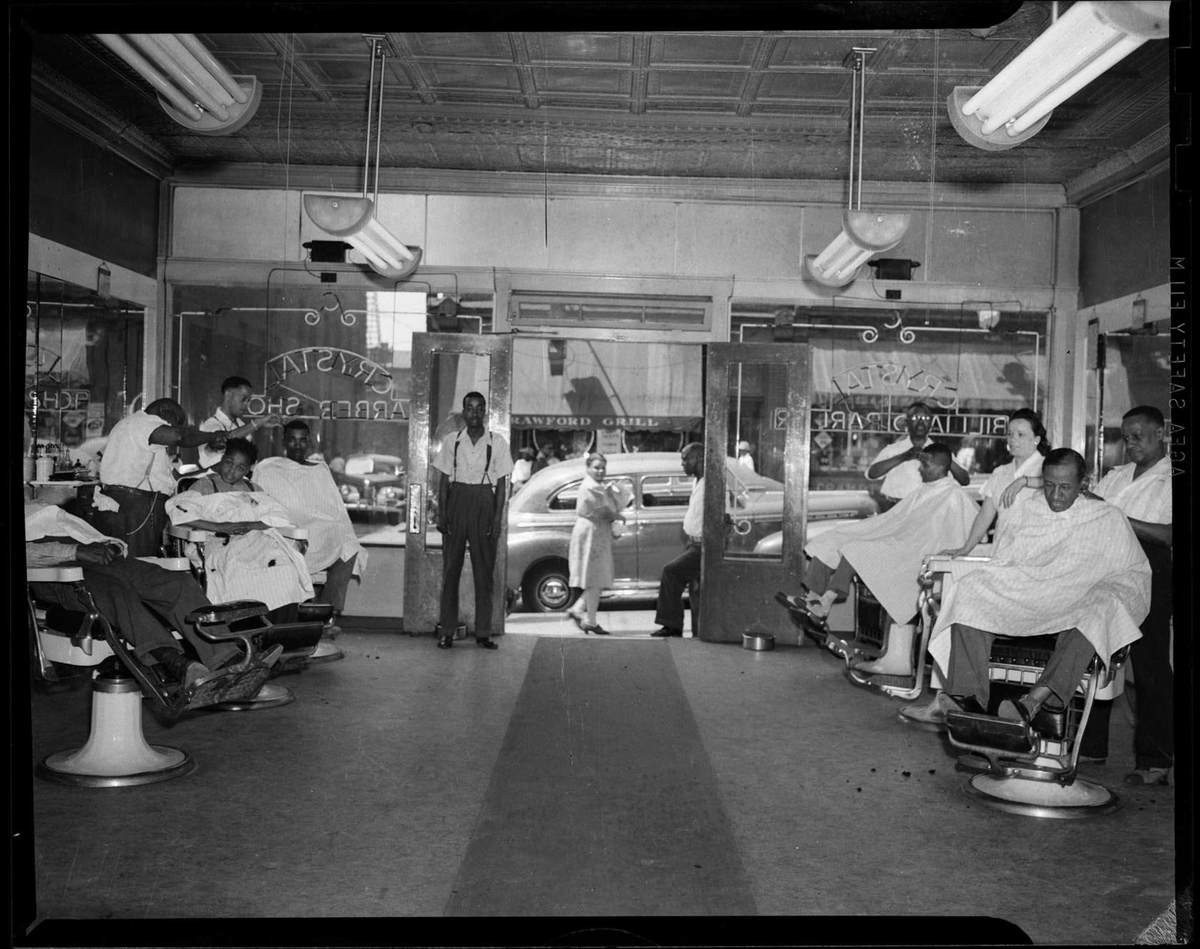
    <summary type="html"><![CDATA[<p><img src="https://hillhistory.org/files/fullsize/aca79f120b73dcf8d96436bf655e30c6.jpg" alt="Barbers at Work" /><br/><p><strong><em>From business to betting, this barbershop carries a lasting legacy in Pittsburgh.</em></strong></p><p><p><span style="font-weight: 400;">In a small corner building at the intersection of Wylie Avenue and Crawford Street stood the Crystal Barber Shop and Billiard Parlor. Bright neon signs in the front window drew customers into a place that provided more than just haircuts and shaves - it was a hub of all aspects of male social life in the Hil.<br /></span></p>
<p><span style="font-weight: 400;">The roots of Crystal Barber Shop traced back to the 1920s when skilled barber Frank Belt frst opened it.</span></p>
<blockquote>Woogie Harris had ulterior motives for purchasing the shop…it was used by Harris and Greenlee as one of the headquarters for an illegal lottery known as “the numbers.”</blockquote>
<p><span style="font-weight: 400;">While he sold the business in 1923 to William "Woogie" Harris, Belt continued to work as a barber at Crystal for many years, gaining a reputation as one of the finest barbers in the city.<br /></span></p>
<p><span style="font-weight: 400;">Men and boys of all ages congregated within the confines of the six-chair shop to engage in activities that went beyond the realm of hairstyling. Like many Black barbershops, the Crystal played an instrumental role in fostering a sense of community and trust among Black entrepreneurs and customers. It was a space where patrons could immerse themselves in the news of the day, swap stories, and get cleaned up for a night out at nearby entertainment venues like Crawford Grill or the Hurricane Lounge. </span><span style="font-weight: 400;">Adding to its appeal as a male social hub, the basement of Crystal's also housed a billiards room, opened in 1941 by Harris and his business partner Gus Greenlee.<br /></span></p>
<h3><span style="font-weight: 400;">Behind Closed Doors</span></h3>
<p><span style="font-weight: 400;">The Crystal Barber Shop and Billiard Parlor also had its secrets. While it was, in fact, a legitimate business, Woogie Harris had ulterior motives for purchasing the shop - namely, the shop was used by Harris and Greenlee as one of the headquarters for an illegal lottery known as “the numbers."&nbsp; </p><p>The numbers is a lottery-style game where players would choose a number, lay a bet with a bookie, and hope their number hit at the next call. To ensure the game wasn't fixed, the number was usually based on some unrelated figure that was both publically available and outside the bookie's control - a popular choice was the published volume of shares traded in a given day on the New York Stock Exchange. It was the Hill’s worst-kept secret that this small barber shop was a front for one of the most successful numbers “banks” in the city.<br /></span></p>
<p><span style="font-weight: 400;">Traditionally, the rise of Harris and Greenlee as the preeminent numbers men in Pittsburgh has been ascribed to a 1930 “crisis” when the number 805 - a favorite "lucky number" of bettors - hit and the city’s numbers men were on the hook for massive payouts. As the story goes, many competing Pittsburgh numbers banks collapsed on the same bet, but Harris and Greenlee scrounged sufficient funds together to emerge after the crisis as the "only game in town.” Conflicting accounts in the historical record, however, suggest this narrative may be more lore than fact. <br /></span></p>
<p><span style="font-weight: 400;">Regardless, by the 1930s the partners ran a highly-successful numbers racket. While Pittsburgh police arrested Harris and Greenlee numerous times over the years on racketeering charges, the fines made little impact on business. It is estimated that at its peak, Harris and Greenlee earned as much as $25,000 a day running numbers.</span></p>
<h3><span style="font-weight: 400;">New Places and New Faces</span></h3>
<p><span style="font-weight: 400;">Pittsburgh’s urban renewal projects ultimately pushed Harris out of his Wylie Avenue shop to a new location at 1605 Centre Avenue. Upon Woogie’s passing in 1967, his wife, Ada, inherited the shop and entrusted its management to her former son-in-law, Harold Slater. Slater was not involved in the numbers game like his predecessor, but had quite the knack for building community. In addition to the shop, Slater worked in waste management for the city of Pittsburgh. He and his wife, Dolores, raised their family just across the street from the Crystal Barber Shop. Harold gave excellent hot towel treatments, served Pittsburgh’s ballplayers and boxers, and generally created a social atmosphere to be remembered.</span></p>
<p><span style="font-weight: 400;">Although the Crystal Barber Shop and Billiard Parlor no longer stands on Centre Avenue, its legacy persists in a unique way. Michelle Slater, the daughter of Crystal manager and barber Harold Slater, began practicing hair over twenty-eight years ago. Today, Michelle operates as “The Crystal Barber” out of Sola Salon, located at 5241 Liberty Avenue Suite 1—just a few minutes away from the original Wylie Avenue shop. Michelle hopes that, through her work, she can continue the tradition of the barbershop and salon as an inclusive community space.</span></p></p></p><p><em><strong><a href="https://hillhistory.org/items/show/18">For more (including 7 images), view the original article</a>.</strong></em></p><p></p>]]></summary>
    <published>2023-08-29T02:38:32+00:00</published>
    <updated>2025-06-18T19:17:52+00:00</updated>
    <link rel="alternate" type="text/html" href="https://hillhistory.org/items/show/18"/>
    <id>https://hillhistory.org/items/show/18</id>
    <author>
      <name>Alyssa Chesek</name>
    </author>
  </entry>
  <entry>
    <title type="html"><![CDATA[Daisy Lampkin – Tireless Advocate for Women and Black Civil Rights]]></title>
    <summary type="html"><![CDATA[<p><img src="https://hillhistory.org/files/fullsize/a88c07b9c7cf53df6381b9c2aa7c1b27.jpg" alt="Daisy Lampkin speaking" /><br/><p><strong><em>Despite her quiet and unassuming demeanor, Daisy Lampkin achieved astonishing feats as a tireless crusader for women and civil rights.</em></strong></p><p>Daisy Lampkin was a woman with many roles and had her voice heard throughout more organizations than one could imagine, many centered in the Hill District. Nicknamed by some as the “Dynamic Daisy Lampkin”, she has a long list of activism across social issues such as suffrage, civil rights, and even youth initiatives in the Hill District of Pittsburgh. </p><p>Ms. Lampkin was born to a working-class family in Washington D.C. in 1883. At the age of 26, she made the decision to move to Pittsburgh and settled in the Hill District, where she married restaurant owner William Lampkin three years later. Daisy and William would never have children of their own during their 50 years of marriage, but they would adopt and raise their 11-month old goddaughter Romaine Childs in 1924.<br />
<h3><span style="font-weight: 400;">Dynamic Daisy's Activism</span></h3>
<br />Beginning with consumer protest groups among Black housewives in the city, Daisy started her long career of activism which would continue until the 1960s. During the women’s suffrage movement of the 1910s, Ms. Lampkin was a founder and leader of the Lucy Stone Civil League which was a society for Black women who supported suffrage efforts. She also had prominent roles in the National Council of Negro Women (NCNW) and the National Association of Colored Women. While working with the NCNW, she was called “Our Daisy” by many in the council, especially after giving a rousing speech which led to $16,000 in pledges for the council in 1947.</p><p>During this time, suffrage groups were highly segregated between White and Black women, leaving the suffrage movement to be a divided fight. Ms. Lampkin solidified her voice in the fight for gender equality in the United States and made the fight for suffrage an instance of an integrated cause for women. She became a prominent figure for women of color across many social issues that she fought for in the decades to come.</p><p>Along with the suffrage movement, Ms. Lampkin devoted much of her life to fighting for the civil rights of African Americans throughout the early 20th century. She is most known for holding a very prominent and driving role in the National Association for the Advancement of Colored People (NAACP).&nbsp; Her efforts within the NAACP, particularly in her founding of the Pittsburgh branch, helped drive membership to roughly 2,000 by 1929. She was known to have a “oratorical flair and vigorous fundraising” spirit when advocating both on the local and national levels. She traveled to various cities across the East and Midwest cities to hold meetings for the NAACP, including Baltimore, Chicago, and Memphis. </p><p>Ms. Lampkin worked alongside some of the most notable members of the NAACP on the national level, including Mary McLeod Bethune, Mary Church Terrell, and Thurgood Marshall. In particular, she was instrumental in convincing Marshall to join the NAACP’s legal defense team, which sparked his career further into becoming one of the most prominent African Americans in the legal system. Marshall was instrumental in winning many cases that fought segregation laws, most notably Brown v. Board of Education of Topeka which found segregation in public schools unconstitutional in 1954. Marshall also went on to serve on the U.S. Supreme Court until 1991.</p><p>During the 1920s, Ms. Lampkin went further in her political activism as she served as the vice chairman of the Negro Voters League of Pennsylvania and the Colored Voters Division of the Republican Party. In the former, she was known as an alternate delegate-at-large, meaning she was ready to represent the league as a whole at the Republican national convention. Her time in politics did not go without its tough waters. During her time as president of the Negro Women’s Republican League of Allegheny County, she responded to gossip about the league and claims of greed with her usual flair at a meeting towards the council: “I had said I would resign; that I would not work for you like I have, neglecting my home and my hubands’ work and not be appreciated. But in the face of your spirit here tonight I stand here as your county chairman until you elect another, and all the devils in hell can not prevent me from doing so.”<br />
<blockquote>Our male leadership is so busy with their private interests that nothing is done unless the women do it. <br /><b>-Daisy Lampkin</b></blockquote>
<br />Ms. Lampkin's efforts did not end with the spoken word. For 35 years, she was the vice president and stockholder of the <em>Pittsburgh Courier</em>, which was a weekly newspaper for African Americans that was prominent across the country for the first half of the 20th century. In this role, she was able to bring the <em>Courier</em> to great heights. Her voice became a prominent sounding board for including African Americans into the conversation of world affairs. When discussing the actual role of the United Nations in 1955 and the reader's “fogginess” regarding the subject, she is noted to have asked “What can we do to bring its meaning to our readers?” effectively advocating for African Americans to be involved in discourse about global topics. <br />
<h3><span style="font-weight: 400;">Other Significant Roles</span></h3>
<br />Aside from these expanded notable roles, she was instrumental in many local charities and associations as well throughout her life. She served in the Pittsburgh chapter of the American Red Cross, the Pittsburgh Urban League, the Council of Churches, and a youth initiative known as Hill City. While at the Courier, Daisy continued to use her voice to advocate for the Hill District when she protested against dumping of garbage on street corners, stating that “I have complained repeatedly about these conditions. I have had sanitary inspectors come to see me. They have stated it is better to have the [garbage] thrown out into the streets than hidden in cellars where it might become a health menace. It is ridiculous that a city the size of Pittsburgh should have to accept this condition as a lesser of two evils.”</p><p>In 1964, she was the first to receive the Eleanor Roosevelt- Mary McLeod Bethune World Citizenship Award which was accepted by her friend Lena Horne due to her failing health after a stroke.</p><p>Ms. Lampkin remained in the Hill District on Webster Avenue until her death in March of 1965. On August 9, 1983 a historical marker was placed outside her former home in the Hill District commemorating her life and service. She was the first African American woman in Pennsylvania history to receive this honor. The Daisy E. Lampkin Award is also given annually to a woman of the community of Pittsburgh (many who have resided in the Hill District) who dedicates service to the fight for equal rights.</p></p><p><em><strong><a href="https://hillhistory.org/items/show/12">For more, view the original article</a>.</strong></em></p><p></p>]]></summary>
    <published>2023-07-26T22:08:49+00:00</published>
    <updated>2025-06-07T00:21:44+00:00</updated>
    <link rel="alternate" type="text/html" href="https://hillhistory.org/items/show/12"/>
    <id>https://hillhistory.org/items/show/12</id>
    <author>
      <name>Katie O'Toole</name>
    </author>
  </entry>
  <entry>
    <title type="html"><![CDATA[Daisy Wilson House]]></title>
    <summary type="html"><![CDATA[<p><img src="https://hillhistory.org/files/fullsize/28bcb5ca1fa92ba6678ed5c4580ef6fc.jpg" alt="1621 Bedford Avenue" /><br/><p><strong><em></em></strong></p><p><div style="text-align: left;">Daisy Wilson, the mother of August Wilson, lived at this address for some time until her death in 1983. At the 1999 world premire of <em>King Hedley II,</em> August Wilson recognized the backyard of 1621 Bedford Avenue as the intended setting for the play. <em>Two Trains Running&nbsp;</em>also makes reference to the address 1621; however, it serves as an extra homage to Wilson's mother rather than an actual setting.</div></p></p><p><em><strong><a href="https://hillhistory.org/items/show/24">For more, view the original article</a>.</strong></em></p><p></p>]]></summary>
    <published>2023-09-27T00:13:20+00:00</published>
    <updated>2025-06-17T22:17:47+00:00</updated>
    <link rel="alternate" type="text/html" href="https://hillhistory.org/items/show/24"/>
    <id>https://hillhistory.org/items/show/24</id>
    <author>
      <name>The Hill District Digital History Team</name>
    </author>
  </entry>
  <entry>
    <title type="html"><![CDATA[Eddie's Restaurant – Diner was regular hangout for Hill District writers]]></title>
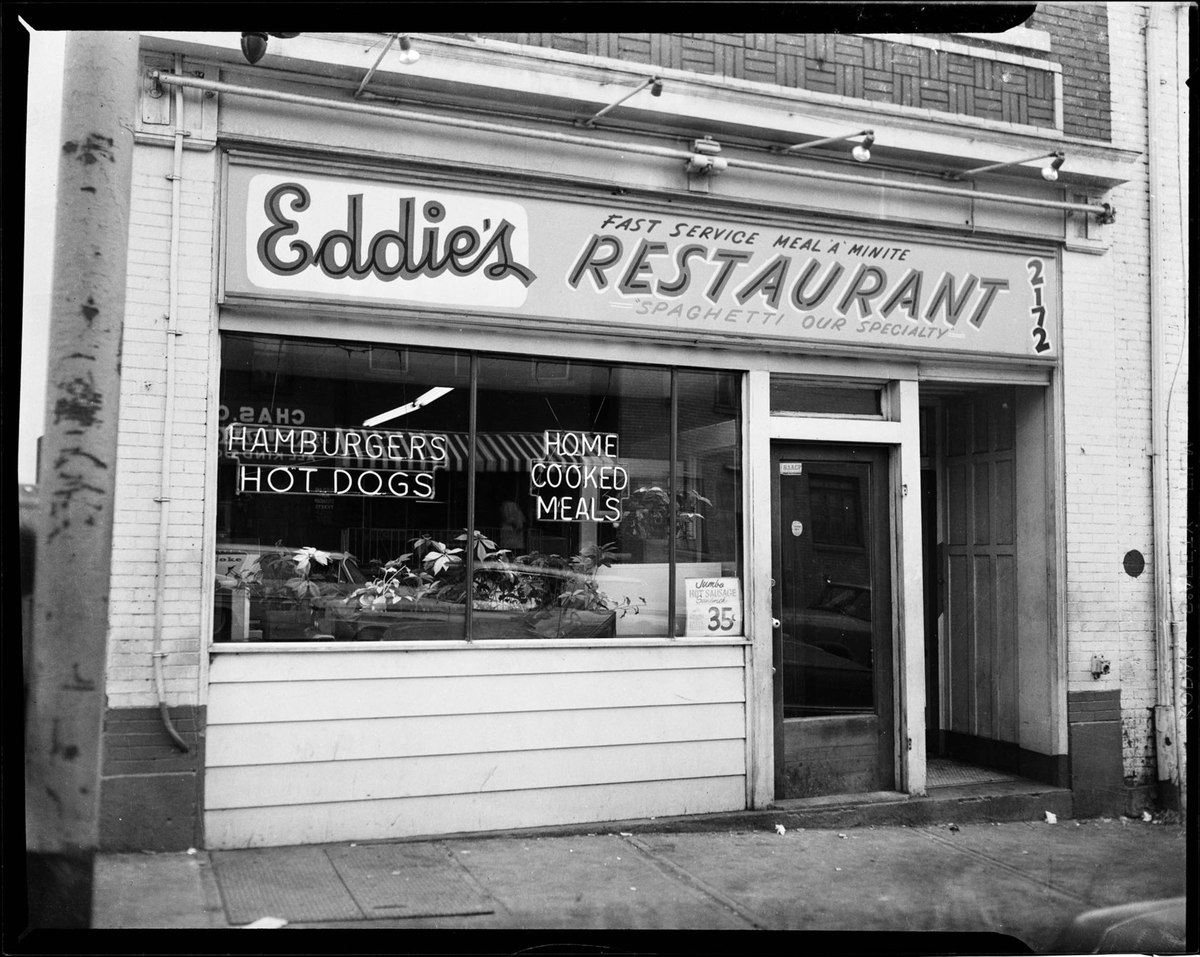
    <summary type="html"><![CDATA[<p><img src="https://hillhistory.org/files/fullsize/ee3e6f8f3c1759f2fe034227d768ced0.jpg" alt="Eddie&#039;s Restaurant exterior" /><br/><p><strong><em></em></strong></p><p>Eddie's Restaurant was an unassuming, inexpensive eatery frequented by many Hill District residents, most notably the group of playwrights and poets that made up the "Black Horizon Theatre Group" - including Rob Penny, Bob Johnson, Maisha Baton, Sala Udin, and August Wilson<br />
<blockquote>"Another place we would hang out was Eddie's Restaurant...they would allow us to sit for hours<br />and didn't bother us. We didn't buy a lot of food, but they would always keep filling up our coffee cups." <br />
<p>-<strong>Sala Udin, recalling the spots favored by the Black Horizon Theatre group<br /></strong></p>
</blockquote>
<p>It has been said that Wilson concieved <em>Jitney</em>, the first of his Pittsburgh Cycle plays, at Eddie's. While Eddie's is mentioned in <em>The Piano Lesson</em>, the play with the strongest connections to it is <em>Two Trains Running</em>, set in a fictional but similar diner, Memphis Lee's, located somewhere in the immediate vicinity.</p><p>Eddie's was torn down in 2006 as part of the construction of the new Hill District branch of the Carnegie Library - perhaps a fitting end for a place that nurtured so many writers with its endless cups of coffee.</p></p></p><p><em><strong><a href="https://hillhistory.org/items/show/33">For more, view the original article</a>.</strong></em></p><p></p>]]></summary>
    <published>2023-10-02T23:27:51+00:00</published>
    <updated>2025-03-17T22:05:02+00:00</updated>
    <link rel="alternate" type="text/html" href="https://hillhistory.org/items/show/33"/>
    <id>https://hillhistory.org/items/show/33</id>
    <author>
      <name>The Hill District Digital History Team</name>
    </author>
  </entry>
  <entry>
    <title type="html"><![CDATA[Ellis Hotel – Green Book-listed lodging and nightspot]]></title>
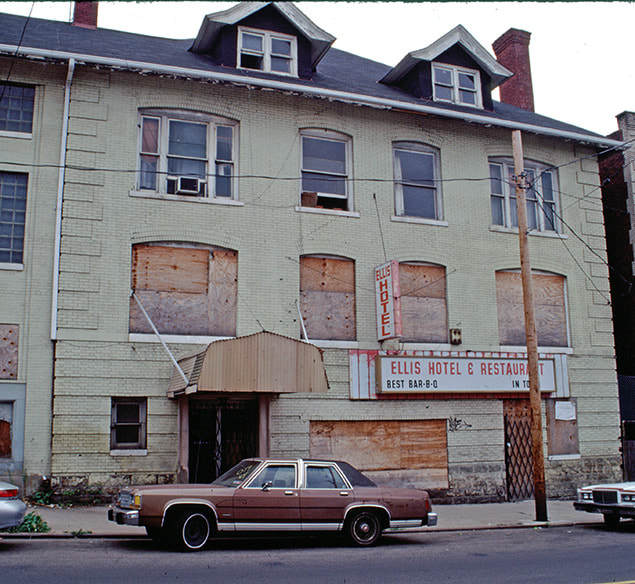
    <summary type="html"><![CDATA[<p><img src="https://hillhistory.org/files/fullsize/de204876b3d9bf6020d7a6f34959b404.jpg" alt="Ellis Hotel after closing" /><br/><p><strong><em></em></strong></p><p>This now vacant lot was once the site of the Ellis Hotel, <span style="font-weight: 400;">a safe haven for traveling Black artists and celebrities, and a hub of culture for the local Hill community.</p><p></span>Originally established by James and Frank Ellis in Pittsburgh's South Side, the hotel eventually relocated to this Centre Avenue address when <span style="font-weight: 400;"><span style="font-weight: 400;"><span style="font-weight: 400;">Frank Ellis and his wife purchased the former Black YWCA building. They transformed</span></span></span><span style="font-weight: 400;"><span style="font-weight: 400;"> the spacious 45-room structure into a centerpiece hotel in the Hill District, opening in 1957. Once opened, the new Ellis was touted as one of the finest establishments in Pittsburgh’s Hill District, gaining a listing in the “Green Book” as a safe place for black travelers visiting Pittsburgh.</span></span>
<p><span style="font-weight: 400;">The Green Book, officially titled <em>The Negro Motorist Green Book,</em> was published annually from 1936 to 1967, and was a lifeline for those navigating a divided America.&nbsp; The book directed Black travelers to restaurants, hotels or service stations that welcomed them with open arms. In an era when downtown Pittsburgh hotels had an unspoken "whites only" policy, the Ellis Hotel was a sanctuary where luminaries like Ella Fitzgerald and Duke Ellington found a home away from home.</span></p>
<span style="font-weight: 400;">Frank Ellis was a president of the Hotel Owners Alliance, an organization consisting of Black hoteliers in the city which formed in 1952 in response to a series of police raids on Black-owned hotels on charges of disorderly conduct or violation of liquor laws. The Hotel Owners Alliance were united in the goal of continuing to provide “courteous service and reasonable prices for their patrons."&nbsp; <br /></span>
<p><span style="font-weight: 400;">The Ellis Hotel was instrumental in Pittsburgh’s jazz culture, hosting famous jazz artists of the time, such as Al Morall, Danny Varlotta and Don Molica. </span><span style="font-weight: 400;">Eddie Russ and his combo could commonly be heard serenading hotel patrons with his “smooth melodic deliveries” that were said to make music lovers “sit up and listen”</span><span style="font-weight: 400;">.</span> <span style="font-weight: 400;"></span></p>
<blockquote>The new Ellis was touted as one of the finest establishments in Pittsburgh’s Hill District, gaining a listing in the “Green Book” as a safe place for black travelers visiting Pittsburgh</blockquote>
<p><span style="font-weight: 400;">More famous patrons were also known to make an appearance - Ella Fitzgerald and pianist Duke Ellington were rare, but highly anticipated performances.</span> <span style="font-weight: 400;">In a time when businesses could turn away patrons on the basis of race, the Ellis Hotel hospitably received Black celebrities such as Jackie Robinson, Miles Davis, Nina Simone, and Ray Charles.</p><p>The Ellis Hotel was known for its entertainment and food alike - the hotel's Shangri-La Lounge showcased</span><span style="font-weight: 400;"> jazz luminaries and served up french-fried shrimp and steak alongside the soulful tunes.</p><p>The Ellis Hotel frequently appears in the plays of August Wilson, including <i>Jitney</i>, <i>Two Trains Running</i>, and <i>King Hedley II</i>. In all three stories, Wilson depicts the hotel as a rendezvous point for escapades between lovers.<br /></span></p>
<p><span style="font-weight: 400;">Like many Hill District businesses, the hotel faced a series of difficulties beginning in the 1970s.&nbsp; In 1980, the building was ultimately converted into a senior living center; however, a 1995 fire left the structure abandoned, and it was demolished in 2002.</p><p>While it no longer stands today, the Ellis Hotel is a symbol of Black resilience and a testament to the challenges faced and the victories won during an era of upheaval.<br /></span></p>
<p><span style="font-weight: 400;"></span></p>
<p><span style="font-weight: 400;">&nbsp;</span></p></p></p><p><em><strong><a href="https://hillhistory.org/items/show/34">For more, view the original article</a>.</strong></em></p><p></p>]]></summary>
    <published>2023-10-02T23:29:18+00:00</published>
    <updated>2025-06-25T01:52:43+00:00</updated>
    <link rel="alternate" type="text/html" href="https://hillhistory.org/items/show/34"/>
    <id>https://hillhistory.org/items/show/34</id>
    <author>
      <name>Amanda Ryczek and Dianne Lemon</name>
    </author>
  </entry>
  <entry>
    <title type="html"><![CDATA[Freedom Corner – A Rallying Point for Pittsburgh Activism]]></title>
    <summary type="html"><![CDATA[<p><img src="https://hillhistory.org/files/fullsize/3e2fe580e1d62bac710d51170d6d12a4.jpg" alt="MLK Day of Mourning March " /><br/><p><strong><em>The intersection of Centre Avenue and Crawford Street serves as a significant monument to civil rights activism in Pittsburgh.</em></strong></p><p>In the 1950s, city planners across the country labeled neighborhoods as "sub-standard" and moved to replace them with new houses and gentrified communities. Eradication disguised in the name of "urban renewal" threatened to destroy the Hill District and the lives of the people that called it home. To make room for the development of the Civic Arena, planners seized large areas of the Lower Hill District by means of eminent domain and forced 8,000 residents and 400 businesses to leave the Lower Hill District, as "progress" destroyed their homes and businesses and threatened their way of life. </p><p>As talk of further top-down redevelopment crept into the Hill District, residents held the line at the corner of Crawford and Centre. A grassroots group called the <span style="font-weight: 400;">Citizens Committee for Hill District Renewal (CCHDR) erected a billboard on the corner in 1966, declaring "Attention City Hall and URA: NO REDEVELOPMENT BEYOND THIS POINT! We Demand: LOW INCOME HOUSING FOR THE LOWER HILL." </span>As the bulwark against demolition and eradication, the geographic point known as "Freedom Corner" first became tied to the concept of civil discourse and organized resistance. The actions of activists transformed this intersection from an ordinary streetcorner into a place of significance for social activism, protest, and remembrance.</p><p>From its early beginnings, Freedom Corner has served as a meeting point for groups protesting against injustice and prejudice. Pittsburgh Councilman Sala Udin noted in 1998 that "One cannot discuss the civil rights struggle in Pittsburgh without mentioning Freedom Corner. The two are intertwined."</p><p>In 1963, thousands of Pittsburgh civil rights marchers met at Freedom Corner to depart for Washington, D.C. and the landmark March on Washington for Jobs and Freedom. Five years later, following the assassination of Martin Luther King, Jr. in 1968, violence broke out throughout the country and in the Hill District. The NAACP had planned a peaceful march from Freedom Corner to downtown Pittsburgh, only to be stopped by the police before a single step took place. In the end, organizers convinced the police to allow the march to proceed and the peaceful event advanced through downtown to Point State Park. Events like the 1968 march have helped the Hill District community to remain strong and have offered opportunities to heal during times of adversity.</p><p>Over the years, Pittsburghers have met at Freedom Corner as a starting point to march and protest a myriad of issues. Freedom Corner has served a role in civil liberties marches and parades, community food drives, war protests, marches supporting victims of violence, and a meeting place for remembrance services. These events and the actions of the community have allowed Freedom Corner to become infused by the spirit of those who gave the struggle for social and civil rights their voices, their muscle and their lives. This spirit has transformed an ordinary streetcorner into the prominent place of remembrance Freedom Corner is today.</p><p>For decades, no formal monument marked Freedom Corner. After years of hard work and fundraising, local leaders dedicated a monument at Freedom Corner in March 2002. These efforts began in 1992 when the late city councilman Jake Milliones began a campaign to erect a sculpture at the corner. After Milliones' death in 1993, Councilman Sala Udin and the Freedom Corner committee worked tirelessly to obtain funding and finish Milliones' campaign. The Freedom Corner monument, designed by local Black artist Carlos Peterson, is made of granite and features a bronze figure of a spiritual form that rises from the rear wall of the structure. Soaring with arms uplifted, the figure signifies hope, faith and a future of human rights triumphs.
<blockquote>From its early beginnings, Freedom Corner has served as a meeting point for groups protesting against injustice and prejudice.</blockquote>
</p><p>The monument remains an important meeting point and starting point for groups in Pittsburgh and the Hill District in particular. In keeping with tradition, the 2023 Juneteenth parade started at Freedom Corner before making its way through downtown Pittsburgh. The significance of Freedom Corner's past continues to speak to a new generation of activists that build on and honor the previous marches that started there. Their actions transformed the corner of Crawford and Centre from an ordinary streetcorner into the prominent place of social action and movement known as Pittsburgh's Freedom Corner.</p></p><p><em><strong><a href="https://hillhistory.org/items/show/7">For more (including 3 images and 1 video), view the original article</a>.</strong></em></p><p></p>]]></summary>
    <published>2023-07-25T21:19:43+00:00</published>
    <updated>2025-03-26T15:43:21+00:00</updated>
    <link rel="alternate" type="text/html" href="https://hillhistory.org/items/show/7"/>
    <id>https://hillhistory.org/items/show/7</id>
    <author>
      <name>Julie Bowman</name>
    </author>
  </entry>
  <entry>
    <title type="html"><![CDATA[Freedom House Ambulance Service – Transforming Emergency Medical Services Against All Odds]]></title>
    <summary type="html"><![CDATA[<p><img src="https://hillhistory.org/files/fullsize/4dee7eecaa739ae95f5d94a8cd6fed9d.jpg" alt="Freedom House Employees" /><br/><p><strong><em>Hill District ambulance service revolutionized healthcare, establishing a model for emergency medical services emulated nationwide.</em></strong></p><p>In the blistering summer heat of 1968, the first ambulance of its kind wailed down the street, and as it came to a screeching halt, out hopped emergency medical service professional John Moon. Like the ambulance, Mr. Moon was also a first: one of the first professionally medically trained men to serve the Hill community of Pittsburgh, Pennsylvania. As an Emergency Medical Service (EMS) member, Mr. Moon provided lifesaving emergency medical care <em>en route</em> to a hospital in the back of a moving vehicle. He did all this in the name of serving his community, The Hill District.</p><p>Not only was an ambulance equipped with an EMS professional a sight to see in 1968, but even more surprising was that the EMS professional was a Black man, at a time when America was torn by racial strife. The ability of Mr. Moon to attain such an important job and give back to his community would not have been possible without the Freedom House Ambulance Service.</p><p>Freedom House Ambulance Service emerged in 1967 as a response to the Hill community's desire for self-reliance. Before Freedom House, the Hill community - and all Pittsburgh residents - had limited access to emergency medical services.&nbsp; Ambulances were driven by police officers, firefighters, or even mortuary workers, all with little or no medical training. There was no on-site or in-transit treatment, only an effort to get the patient to the hospital quickly.</p><p>John Moon describes the experience of emergency medical transportation in the 1960s as "swoop and scoop...which meant you'd call the police, and they'd pick you up, throw you in the back of a paddy wagon, and rush you off to the hospital. They could do little more than offer patients basic first aid, a canvas stretcher, a half-empty oxygen tank, and a pillow, which often only served to choke off your airway." </p><p>"And on top of that," recalled Moon, "both officers got up front. The patient was left to fend for themselves in the back of the police van. If you stopped breathing in the backseat, there was no one there to assist you."</p><p>In addition to the limited medical care, police ambulances often failed to respond to emergency calls in a timely manner, especially in poorer, Black-majority neighborhoods like the Hill. The <em>Pittsburgh Courier</em> regularly reported cases which resulted in serious harm or death due to police negligence or lack of response. </p><p>Freedom House Enterprises, Inc. was an organization initially aimed at fostering Black-owned businesses and creating jobs in Pittsburgh's Hill District. Headed by James McCoy, Jr., the program was a part of Lyndon Johnson's "War on Poverty" initiative. </p><p>In 1966, McCoy connected with Philip Hallen, a former ambulance driver and president of the Maurice Falk Medical Fund, a local foundation. Hallen's experience as an ambulance driver made him sympathetic to problems faced by Hill residents, and he decided that if Freedom House could sell produce out of a truck, then they could easily shuttle members of the Hill Community to the hospital in lieu of city police ambulances. <br />
<div class="flex flex-grow flex-col gap-3">
<div class="min-h-[20px] flex items-start overflow-x-auto whitespace-pre-wrap break-words flex-col gap-4">
<div class="markdown prose w-full break-words dark:prose-invert light">
<p>Freedom House leadership had a broader vision for their service, aiming to go beyond shuttling to provide on-site medical care.</p>
<blockquote>By 1968, two ambulances equipped with community members from the Hill hit the streets to serve their community's medical needs.</blockquote>
<p>However, they faced a challenge - their staff lacked the necessary training as EMS professionals. Dr. Peter Safar, a physician at Pittsburgh's Presbyterian Hospital, played a crucial role in addressing this issue. In 1966, Dr. Safar experienced a personal tragedy when his 11-year-old daughter Elizabeth suffered a major asthma attack, fell into a coma en route to the hospital, and passed away shortly thereafter. This heartbreaking event motivated Dr. Safar, already a pioneer in CPR, to embark on developing a program for emergency street treatment.</p>
<p>Collaborating with Freedom House leadership and Dr. Safar, Dr. Nancy Caroline, a recent graduate of the University of Pittsburgh's medical program, created a curriculum for Freedom House paramedics. The resulting program was called "Emergency Care in the Streets," a 32-week course that covered topics such as anatomy, physiology, CPR, advanced first aid, nursing, and even defensive driving.</p>
</div>
</div>
</div>
Early ambulances driven by Freedom House EMSs were outfitted with EKG machines in conjunction with other medications which could be administered at the scene of a medical emergency. The paramedics who graduated from this program became some of the first in the nation to possess such comprehensive medical skills. By 1968, two ambulances equipped with community members from the Hill hit the streets to serve their community's medical needs. </p><p>The impact of the Freedom House Ambulance Service reverberated beyond Pittsburgh. Recognizing the importance of Freedom House's work, other cities and communities across the country began to adopt similar models of EMS training and integrate advanced life support systems into their ambulances. The Freedom House Ambulance Service thus became a catalyst for change, racial equality, and community strength, inspiring the development and advancement of EMS throughout the nation. </p><p>But this success, unfortunately, came at a cost to Freedom House. Political squabbling and racial inequality cut down Freedom House Ambulance Service in its prime. As improved standards of emergency medical care were taken up by the state, local community services like Freedom House lost their funding.</p><p>The Hill community now had to use the same state-run emergency medical programs that underserved them in the first place once again. The closing of Freedom House reflected politicians' unwillingness to employ or allow African American folk to engage with their communities in a meaningful way.</p><p>In 1975, Mayor Pete Flaherty struck one final blow. He announced that the city would roll out its brand-new paramedic service. Not only was the new service showered with the resources Freedom House had long been denied, but none of the new recruits were African American. Dr. Caroline got the city to hire Freedom House's staff, but most of them were quickly reassigned to non-medical or non-essential duties, and even as late as the 1990s, Pittsburgh's EMS program was 98% white.</p><p>Despite this, the legacy of the Freedom House Ambulance Service showcases the extraordinary impact a single African American community can have on transforming emergency medical services. Their efforts raised standards and expectations for EMS, inspiring change, challenging barriers, and leaving a legacy of hope, progress, and community empowerment. The paramedics of Freedom House inspired generations to believe that they too could be effective and create positive change in communities like the Hill.</p></p><p><em><strong><a href="https://hillhistory.org/items/show/6">For more (including 3 images), view the original article</a>.</strong></em></p><p></p>]]></summary>
    <published>2023-07-25T20:08:16+00:00</published>
    <updated>2025-03-26T15:33:19+00:00</updated>
    <link rel="alternate" type="text/html" href="https://hillhistory.org/items/show/6"/>
    <id>https://hillhistory.org/items/show/6</id>
    <author>
      <name>Kevan Whalen</name>
    </author>
  </entry>
</feed>