<?xml version="1.0" encoding="UTF-8"?>
<feed xmlns="http://www.w3.org/2005/Atom">
  <title type="text">Hill District Digital History</title>
  <updated>2026-04-25T16:30:41+00:00</updated>
  <generator uri="http://framework.zend.com" version="1.12.20">Zend_Feed_Writer</generator>
  <link rel="alternate" type="text/html" href="https://hillhistory.org/"/>
  <link rel="self" type="application/atom+xml" href="https://hillhistory.org/items/browse?output=rss2"/>
  <id>https://hillhistory.org/</id>
  <author>
    <name>Hill District Digital History</name>
    <uri>https://hillhistory.org</uri>
  </author>
  <link rel="hub" href="http://pubsubhubbub.appspot.com/"/>
  <entry>
    <title type="html"><![CDATA[Art Blakey – Orphan from the Hill became world-famous jazz legend]]></title>
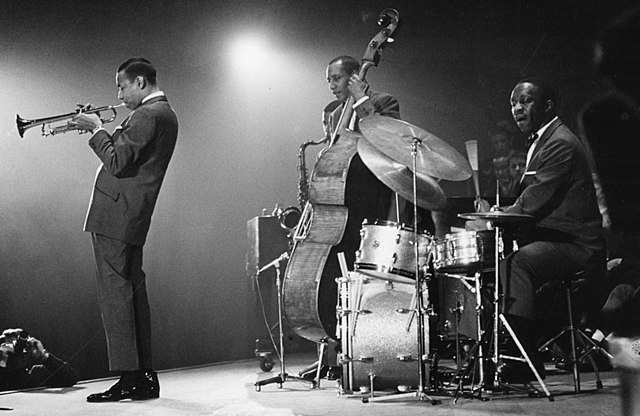
    <summary type="html"><![CDATA[<p><img src="https://hillhistory.org/files/fullsize/ea03b307ae70d86525135c31d4034d98.jpg" alt="Jazz Messengers in concert at Amsterdam&#039;s Concertgebouw. " /><br/><p><strong><em></em></strong></p><p><p><span style="font-weight: 400;">When most people think of jazz drummer Art Blakey, they might think of his unique and influential style of playing, or his years spent with his wildly popular band the Jazz Messengers. What often goes unnoticed are his roots in the Hill.</p><p></span><span style="font-weight: 400;">Blakey was born on October 11, 1919 in Pittsburgh to a single mother who died soon after he was born. He was raised by a family friend, not learning until years later that his foster mother was not his biological mother. Growing up in a home on Chauncey Street, he received some piano lessons in school, and gained musical experience in his foster family’s Seventh-Day Adventist Church. His uncle, Rubi Blakey, was a well known choir director in the area - in the late 1930s the elder Blakey put on several concerts with his group at venues like the Warren Methodist United Church in the Hill and Pittsburgh’s Carnegie Music Hall.&nbsp;</span></p>
<p><span style="font-weight: 400;">As a young teen, Art worked in the Carnegie steel mills, an experience he later described as one he “would like to forget.” His talent for music soon gave him a route out of the rough industrial work that was common in Pittsburgh, and by the time he was 14, Art was making money playing at clubs in the Hill. He started with piano, but soon switched to the drums when fellow Pittsburgh jazz legend Errol Garner needed a drummer for a gig.&nbsp;</span></p>
<p><span style="font-weight: 400;">While gaining a variety of experience in Pittsburgh nightclubs, Blakey was still working other jobs to make ends meet. At 18, he married his first wife, Clarice Stewart and began a family. The 1940 U.S. Census locates the Blakey family, including two young daughters, living in the Hill at 613 Boone Way (a location eventually demolished as part of the 1950s Lower Hill redevelopment project), and lists Art’s primary occupation as a road construction laborer for the Works Progress Administration.&nbsp; The census record also identifies 3 of Clarice’s siblings and an unrelated lodger at the same address, suggesting the young family’s straitened circumstances.&nbsp;</span></p>
<p><span style="font-weight: 400;">In the early 1940s, however, Art began to gain steadier employment as a musician, securing a residency with Alyce Brooks in a group called the “Rhythm Maniacs” at the Coobus Club (later renamed the Celebrity) on Centre Avenue. He also toured with Mary Lou Williams, a jazz pianist and composer from East Liberty. By 1943, he began to work in Fletcher Henderson’s big band, though he would soon move on the next year to play with Billy Eckstine, another Pittsburgh native. Art would later drum for the likes of Miles Davis and Charlie Parker, and in the mid-50s he formed his own band, the Jazz Messengers.&nbsp;</span></p>
<p><span style="font-weight: 400;">Art’s drumming was intense and passionate. His playing provided every tune with a raw bed of energy which fed into the solos of other band members. He was also an innovator; contemporaries credit Art with being among the first to master complex musical stylings like polyrhythms, and he was said to be a master of maintaining independence between all four limbs while drumming. Critics have labeled his music as “hard bop”, a faster, more aggressive variant of be-bop which was reminiscent of jazz’s roots in the blues. In a time when jazz audiences were becoming increasingly white, Art’s music managed to captivate a mostly Black audience. His bluesy style of playing was a return to the beginnings of jazz, and can be considered a revival of the Black ballroom scene.</span></p>
<p><span style="font-weight: 400;">While his playing style w</span><span style="font-weight: 400;">as distinctive and influential, Blake</span><span style="font-weight: 400;">y’s role as a bandleader and mentor was an equally important legacy.</span></p>
<blockquote><span style="font-weight: 400;">Even when I was playing with Miles Davis, Art was the strength of the band. </span><b><br />-Jackie McLean, saxophonist</b><span style="font-weight: 400;"></span></blockquote>
<p><span style="font-weight: 400;">&nbsp; His keen eye for talent led him to invest in </span><span style="font-weight: 400;">many young jazz musicians who would go on to become legends in their own right. Folks like Donald Byrd, Freddie Hubbard, Keith Jarrett, and Joanne Brackeen were all shaped by Art over the years as part of his band. Wynton Marsalis credited his time playing with Blakey’s Jazz Messengers as influential in his choice to pursue jazz instead of classical music. The musicians Blakey worked with saw him as the core of any group he was a part of; as saxophonist Jackie McLean put it, “Even when I was with Miles Davis, Art was the strength of the band.” In addition to developing the members of his band as musicians, Art became almost like a father figure to many. Javon Jackson, a member of the Jazz Messengers in the late 80’s, told the </span><i><span style="font-weight: 400;">New York Times</span></i><span style="font-weight: 400;"> that Art “taught [him] to be a man, how to stand up and be accounted for.”&nbsp;</span></p>
<span style="font-weight: 400;">Although Art Blakey died in 1990, his influence persists. For Meredith Soeder, a historian of jazz, the culture of mentorship that Art created was a reflection of his Pittsburgh roots. She writes in the </span><i><span style="font-weight: 400;">Western Pennsylvania History</span></i><span style="font-weight: 400;"> journal that the “warmth and fraternity that was so easily found in Pittsburgh” was spread throughout the jazz world by “its famous musicians who never forgot their home.” His natural talent as a drummer and a bandleader certainly helped him carve out for himself a distinguished place in jazz history, but it was his beginnings in the Hill that started Art Blakey on his journey to become an icon of modern jazz drumming. </span></p></p><p><em><strong><a href="https://hillhistory.org/items/show/50">For more (including 6 images), view the original article</a>.</strong></em></p><p></p>]]></summary>
    <published>2024-01-02T17:11:26+00:00</published>
    <updated>2025-07-02T19:08:17+00:00</updated>
    <link rel="alternate" type="text/html" href="https://hillhistory.org/items/show/50"/>
    <id>https://hillhistory.org/items/show/50</id>
    <author>
      <name>Nolan Cowan</name>
    </author>
  </entry>
  <entry>
    <title type="html"><![CDATA[Crawford Grill – A Multicultural Haven for Jazz and Community]]></title>
    <summary type="html"><![CDATA[<p><img src="https://hillhistory.org/files/fullsize/644a4782610f8d397d5a35cdefd12836.jpg" alt="Crawford Grill No. 2 facade, 1975." /><br/><p><strong><em>A key remnant of Pittsburgh’s 20th century musical culture, Crawford Grill was a landmark of Black entrepreneurship, inclusive atmosphere, and legendary jazz music.</em></strong></p><p>When approaching Crawford Grill No. 2, the bustling sounds of the evening crowd could be heard from the curb of Wylie Avenue. Laughter filled the night air, mingling with the hum of loud chatter and the backdrop of jazz music. Upon entering through the front door, patrons were immediately greeted with warm smiles from familiar faces and the enticing aroma of Crawford’s famous chicken wings. For many, Crawford Grill No. 2 was more than just a bar—it was a second home, a platform for both local and nationally-renowned musicians, a haven for those seeking desegregation and equality, and a place where people felt safe and empowered. </p><p>The original Grill was founded by Gus Greenlee, a local Pittsburgh businessman and owner of the Pittsburgh Crawfords, the local Negro league baseball team. The Grill quickly gained a reputation for attracting top-notch music acts while maintaining a welcoming atmosphere for both locals and visitors. It became a well-known venue for legendary musicians like Louis Armstrong, Ella Fitzgerald, Dizzie Gillespie, and Miles Davis, who graced the patrons with their mesmerizing melodies. Moreover, Crawford Grill played a crucial role in nurturing local talents and elevating Pittsburgh as a thriving center of jazz culture. Artists like Walt Harper found their beginnings and built their careers in the city. Harper's performances at Crawford Grill significantly boosted both the venue's popularity and his own recognition, even earning him second place in the <em>Pittsburgh Courier</em> "favorite combo" poll, right behind Louis Armstrong. </p><p>Crawford Grill No. 2 came into existence in 1943 during the peak success of its predecessor. Gus Greenlee, with the help of his business partner Joseph Robinson, expanded his restaurant business to multiple locations. Grill No. 2 also attracted esteemed customers, including the John F. Kennedy, Martin Luther King Jr., Frank Sinatra, and Muhammad Ali, among others. Similar to Grill No. 1, it embraced a diverse clientele, welcoming people of all races and genders at a time when racial violence and segregation were prevalent across much of the United States. Joseph Robinson, later succeeded by his son William “Buzzy” Robinson, managed Crawford Grill No. 2 as a haven for music and good food until its closure nearly 60 years later.
<blockquote>For many, Crawford Grill No. 2 was more than just a bar, it was a second home.</blockquote>
In the late 1940s and early 1950s, Greenlee attempted to expand further, opening two more Crawford Grill locations, but they only lasted a short time. Unfortunately, a fire in 1951 forced Crawford Grill No. 1 to close permanently. Reopening the restaurant proved difficult, and Greenlee passed away one year later in 1952, leaving Grill No. 1 shuttered. Amidst these changes, Crawford Grill No. 2 remained the torchbearer of Crawford Grill's influence on Pittsburgh's music and restaurant scene. </p><p>In the 1960s, changes to the Hill and the larger culture presented challenges to Crawford Grill's continued success&nbsp; First, urban redevelopment in the 1950s and the construction of the Civic Arena in 1960 contributed to the deterioration of the Hill District community, displacing more than 8,000 residents and severing friendships, community support systems, and even aspects of cultural identity. Second, the riots of 1968 following the assassination of Martin Luther King, Jr., damaged the Hill District's reputation among White patrons; in its heyday, 80 percent of the club's audience had been White. Finally, the rise of rock and roll and other forms of popular music led to a decline in the audience for jazz by the late 1960s. While the club remained a mecca for jazz lovers and Hill residents, it could not maintain the booming business of its heyday. A 1975 <em>Post-Gazette</em> article described Joe Robinson, surveying a sparsely-occupied Crawford Grill No. 2 dining room and lamenting, "Used to be you couldn't find a place to sit during lunch hour. Look now—who's here?" </p><p>These challenges ultimately proved insurmountable. With declining interest from outside patrons and a failing urban infrastructure around it, Crawford Grill No. 2 closed its doors for the final time in 2003. It was listed for sale in 2006 and has remained vacant since, serving as a poignant reminder of Pittsburgh's role in America's jazz scene and the Hill District's significant contribution to the diverse and vibrant culture of 20th-century Pittsburgh.</p></p><p><em><strong><a href="https://hillhistory.org/items/show/3">For more (including 9 images), view the original article</a>.</strong></em></p><p></p>]]></summary>
    <published>2023-07-24T12:54:59+00:00</published>
    <updated>2025-03-17T22:08:37+00:00</updated>
    <link rel="alternate" type="text/html" href="https://hillhistory.org/items/show/3"/>
    <id>https://hillhistory.org/items/show/3</id>
    <author>
      <name>Darren Frehulfer</name>
    </author>
  </entry>
  <entry>
    <title type="html"><![CDATA[Daisy Lampkin – Tireless Advocate for Women and Black Civil Rights]]></title>
    <summary type="html"><![CDATA[<p><img src="https://hillhistory.org/files/fullsize/a88c07b9c7cf53df6381b9c2aa7c1b27.jpg" alt="Daisy Lampkin speaking" /><br/><p><strong><em>Despite her quiet and unassuming demeanor, Daisy Lampkin achieved astonishing feats as a tireless crusader for women and civil rights.</em></strong></p><p>Daisy Lampkin was a woman with many roles and had her voice heard throughout more organizations than one could imagine, many centered in the Hill District. Nicknamed by some as the “Dynamic Daisy Lampkin”, she has a long list of activism across social issues such as suffrage, civil rights, and even youth initiatives in the Hill District of Pittsburgh. </p><p>Ms. Lampkin was born to a working-class family in Washington D.C. in 1883. At the age of 26, she made the decision to move to Pittsburgh and settled in the Hill District, where she married restaurant owner William Lampkin three years later. Daisy and William would never have children of their own during their 50 years of marriage, but they would adopt and raise their 11-month old goddaughter Romaine Childs in 1924.<br />
<h3><span style="font-weight: 400;">Dynamic Daisy's Activism</span></h3>
<br />Beginning with consumer protest groups among Black housewives in the city, Daisy started her long career of activism which would continue until the 1960s. During the women’s suffrage movement of the 1910s, Ms. Lampkin was a founder and leader of the Lucy Stone Civil League which was a society for Black women who supported suffrage efforts. She also had prominent roles in the National Council of Negro Women (NCNW) and the National Association of Colored Women. While working with the NCNW, she was called “Our Daisy” by many in the council, especially after giving a rousing speech which led to $16,000 in pledges for the council in 1947.</p><p>During this time, suffrage groups were highly segregated between White and Black women, leaving the suffrage movement to be a divided fight. Ms. Lampkin solidified her voice in the fight for gender equality in the United States and made the fight for suffrage an instance of an integrated cause for women. She became a prominent figure for women of color across many social issues that she fought for in the decades to come.</p><p>Along with the suffrage movement, Ms. Lampkin devoted much of her life to fighting for the civil rights of African Americans throughout the early 20th century. She is most known for holding a very prominent and driving role in the National Association for the Advancement of Colored People (NAACP).&nbsp; Her efforts within the NAACP, particularly in her founding of the Pittsburgh branch, helped drive membership to roughly 2,000 by 1929. She was known to have a “oratorical flair and vigorous fundraising” spirit when advocating both on the local and national levels. She traveled to various cities across the East and Midwest cities to hold meetings for the NAACP, including Baltimore, Chicago, and Memphis. </p><p>Ms. Lampkin worked alongside some of the most notable members of the NAACP on the national level, including Mary McLeod Bethune, Mary Church Terrell, and Thurgood Marshall. In particular, she was instrumental in convincing Marshall to join the NAACP’s legal defense team, which sparked his career further into becoming one of the most prominent African Americans in the legal system. Marshall was instrumental in winning many cases that fought segregation laws, most notably Brown v. Board of Education of Topeka which found segregation in public schools unconstitutional in 1954. Marshall also went on to serve on the U.S. Supreme Court until 1991.</p><p>During the 1920s, Ms. Lampkin went further in her political activism as she served as the vice chairman of the Negro Voters League of Pennsylvania and the Colored Voters Division of the Republican Party. In the former, she was known as an alternate delegate-at-large, meaning she was ready to represent the league as a whole at the Republican national convention. Her time in politics did not go without its tough waters. During her time as president of the Negro Women’s Republican League of Allegheny County, she responded to gossip about the league and claims of greed with her usual flair at a meeting towards the council: “I had said I would resign; that I would not work for you like I have, neglecting my home and my hubands’ work and not be appreciated. But in the face of your spirit here tonight I stand here as your county chairman until you elect another, and all the devils in hell can not prevent me from doing so.”<br />
<blockquote>Our male leadership is so busy with their private interests that nothing is done unless the women do it. <br /><b>-Daisy Lampkin</b></blockquote>
<br />Ms. Lampkin's efforts did not end with the spoken word. For 35 years, she was the vice president and stockholder of the <em>Pittsburgh Courier</em>, which was a weekly newspaper for African Americans that was prominent across the country for the first half of the 20th century. In this role, she was able to bring the <em>Courier</em> to great heights. Her voice became a prominent sounding board for including African Americans into the conversation of world affairs. When discussing the actual role of the United Nations in 1955 and the reader's “fogginess” regarding the subject, she is noted to have asked “What can we do to bring its meaning to our readers?” effectively advocating for African Americans to be involved in discourse about global topics. <br />
<h3><span style="font-weight: 400;">Other Significant Roles</span></h3>
<br />Aside from these expanded notable roles, she was instrumental in many local charities and associations as well throughout her life. She served in the Pittsburgh chapter of the American Red Cross, the Pittsburgh Urban League, the Council of Churches, and a youth initiative known as Hill City. While at the Courier, Daisy continued to use her voice to advocate for the Hill District when she protested against dumping of garbage on street corners, stating that “I have complained repeatedly about these conditions. I have had sanitary inspectors come to see me. They have stated it is better to have the [garbage] thrown out into the streets than hidden in cellars where it might become a health menace. It is ridiculous that a city the size of Pittsburgh should have to accept this condition as a lesser of two evils.”</p><p>In 1964, she was the first to receive the Eleanor Roosevelt- Mary McLeod Bethune World Citizenship Award which was accepted by her friend Lena Horne due to her failing health after a stroke.</p><p>Ms. Lampkin remained in the Hill District on Webster Avenue until her death in March of 1965. On August 9, 1983 a historical marker was placed outside her former home in the Hill District commemorating her life and service. She was the first African American woman in Pennsylvania history to receive this honor. The Daisy E. Lampkin Award is also given annually to a woman of the community of Pittsburgh (many who have resided in the Hill District) who dedicates service to the fight for equal rights.</p></p><p><em><strong><a href="https://hillhistory.org/items/show/12">For more, view the original article</a>.</strong></em></p><p></p>]]></summary>
    <published>2023-07-26T22:08:49+00:00</published>
    <updated>2025-06-07T00:21:44+00:00</updated>
    <link rel="alternate" type="text/html" href="https://hillhistory.org/items/show/12"/>
    <id>https://hillhistory.org/items/show/12</id>
    <author>
      <name>Katie O'Toole</name>
    </author>
  </entry>
  <entry>
    <title type="html"><![CDATA[Freedom Corner – A Rallying Point for Pittsburgh Activism]]></title>
    <summary type="html"><![CDATA[<p><img src="https://hillhistory.org/files/fullsize/3e2fe580e1d62bac710d51170d6d12a4.jpg" alt="MLK Day of Mourning March " /><br/><p><strong><em>The intersection of Centre Avenue and Crawford Street serves as a significant monument to civil rights activism in Pittsburgh.</em></strong></p><p>In the 1950s, city planners across the country labeled neighborhoods as "sub-standard" and moved to replace them with new houses and gentrified communities. Eradication disguised in the name of "urban renewal" threatened to destroy the Hill District and the lives of the people that called it home. To make room for the development of the Civic Arena, planners seized large areas of the Lower Hill District by means of eminent domain and forced 8,000 residents and 400 businesses to leave the Lower Hill District, as "progress" destroyed their homes and businesses and threatened their way of life. </p><p>As talk of further top-down redevelopment crept into the Hill District, residents held the line at the corner of Crawford and Centre. A grassroots group called the <span style="font-weight: 400;">Citizens Committee for Hill District Renewal (CCHDR) erected a billboard on the corner in 1966, declaring "Attention City Hall and URA: NO REDEVELOPMENT BEYOND THIS POINT! We Demand: LOW INCOME HOUSING FOR THE LOWER HILL." </span>As the bulwark against demolition and eradication, the geographic point known as "Freedom Corner" first became tied to the concept of civil discourse and organized resistance. The actions of activists transformed this intersection from an ordinary streetcorner into a place of significance for social activism, protest, and remembrance.</p><p>From its early beginnings, Freedom Corner has served as a meeting point for groups protesting against injustice and prejudice. Pittsburgh Councilman Sala Udin noted in 1998 that "One cannot discuss the civil rights struggle in Pittsburgh without mentioning Freedom Corner. The two are intertwined."</p><p>In 1963, thousands of Pittsburgh civil rights marchers met at Freedom Corner to depart for Washington, D.C. and the landmark March on Washington for Jobs and Freedom. Five years later, following the assassination of Martin Luther King, Jr. in 1968, violence broke out throughout the country and in the Hill District. The NAACP had planned a peaceful march from Freedom Corner to downtown Pittsburgh, only to be stopped by the police before a single step took place. In the end, organizers convinced the police to allow the march to proceed and the peaceful event advanced through downtown to Point State Park. Events like the 1968 march have helped the Hill District community to remain strong and have offered opportunities to heal during times of adversity.</p><p>Over the years, Pittsburghers have met at Freedom Corner as a starting point to march and protest a myriad of issues. Freedom Corner has served a role in civil liberties marches and parades, community food drives, war protests, marches supporting victims of violence, and a meeting place for remembrance services. These events and the actions of the community have allowed Freedom Corner to become infused by the spirit of those who gave the struggle for social and civil rights their voices, their muscle and their lives. This spirit has transformed an ordinary streetcorner into the prominent place of remembrance Freedom Corner is today.</p><p>For decades, no formal monument marked Freedom Corner. After years of hard work and fundraising, local leaders dedicated a monument at Freedom Corner in March 2002. These efforts began in 1992 when the late city councilman Jake Milliones began a campaign to erect a sculpture at the corner. After Milliones' death in 1993, Councilman Sala Udin and the Freedom Corner committee worked tirelessly to obtain funding and finish Milliones' campaign. The Freedom Corner monument, designed by local Black artist Carlos Peterson, is made of granite and features a bronze figure of a spiritual form that rises from the rear wall of the structure. Soaring with arms uplifted, the figure signifies hope, faith and a future of human rights triumphs.
<blockquote>From its early beginnings, Freedom Corner has served as a meeting point for groups protesting against injustice and prejudice.</blockquote>
</p><p>The monument remains an important meeting point and starting point for groups in Pittsburgh and the Hill District in particular. In keeping with tradition, the 2023 Juneteenth parade started at Freedom Corner before making its way through downtown Pittsburgh. The significance of Freedom Corner's past continues to speak to a new generation of activists that build on and honor the previous marches that started there. Their actions transformed the corner of Crawford and Centre from an ordinary streetcorner into the prominent place of social action and movement known as Pittsburgh's Freedom Corner.</p></p><p><em><strong><a href="https://hillhistory.org/items/show/7">For more (including 3 images and 1 video), view the original article</a>.</strong></em></p><p></p>]]></summary>
    <published>2023-07-25T21:19:43+00:00</published>
    <updated>2025-03-26T15:43:21+00:00</updated>
    <link rel="alternate" type="text/html" href="https://hillhistory.org/items/show/7"/>
    <id>https://hillhistory.org/items/show/7</id>
    <author>
      <name>Julie Bowman</name>
    </author>
  </entry>
  <entry>
    <title type="html"><![CDATA[Freedom House Ambulance Service – Transforming Emergency Medical Services Against All Odds]]></title>
    <summary type="html"><![CDATA[<p><img src="https://hillhistory.org/files/fullsize/4dee7eecaa739ae95f5d94a8cd6fed9d.jpg" alt="Freedom House Employees" /><br/><p><strong><em>Hill District ambulance service revolutionized healthcare, establishing a model for emergency medical services emulated nationwide.</em></strong></p><p>In the blistering summer heat of 1968, the first ambulance of its kind wailed down the street, and as it came to a screeching halt, out hopped emergency medical service professional John Moon. Like the ambulance, Mr. Moon was also a first: one of the first professionally medically trained men to serve the Hill community of Pittsburgh, Pennsylvania. As an Emergency Medical Service (EMS) member, Mr. Moon provided lifesaving emergency medical care <em>en route</em> to a hospital in the back of a moving vehicle. He did all this in the name of serving his community, The Hill District.</p><p>Not only was an ambulance equipped with an EMS professional a sight to see in 1968, but even more surprising was that the EMS professional was a Black man, at a time when America was torn by racial strife. The ability of Mr. Moon to attain such an important job and give back to his community would not have been possible without the Freedom House Ambulance Service.</p><p>Freedom House Ambulance Service emerged in 1967 as a response to the Hill community's desire for self-reliance. Before Freedom House, the Hill community - and all Pittsburgh residents - had limited access to emergency medical services.&nbsp; Ambulances were driven by police officers, firefighters, or even mortuary workers, all with little or no medical training. There was no on-site or in-transit treatment, only an effort to get the patient to the hospital quickly.</p><p>John Moon describes the experience of emergency medical transportation in the 1960s as "swoop and scoop...which meant you'd call the police, and they'd pick you up, throw you in the back of a paddy wagon, and rush you off to the hospital. They could do little more than offer patients basic first aid, a canvas stretcher, a half-empty oxygen tank, and a pillow, which often only served to choke off your airway." </p><p>"And on top of that," recalled Moon, "both officers got up front. The patient was left to fend for themselves in the back of the police van. If you stopped breathing in the backseat, there was no one there to assist you."</p><p>In addition to the limited medical care, police ambulances often failed to respond to emergency calls in a timely manner, especially in poorer, Black-majority neighborhoods like the Hill. The <em>Pittsburgh Courier</em> regularly reported cases which resulted in serious harm or death due to police negligence or lack of response. </p><p>Freedom House Enterprises, Inc. was an organization initially aimed at fostering Black-owned businesses and creating jobs in Pittsburgh's Hill District. Headed by James McCoy, Jr., the program was a part of Lyndon Johnson's "War on Poverty" initiative. </p><p>In 1966, McCoy connected with Philip Hallen, a former ambulance driver and president of the Maurice Falk Medical Fund, a local foundation. Hallen's experience as an ambulance driver made him sympathetic to problems faced by Hill residents, and he decided that if Freedom House could sell produce out of a truck, then they could easily shuttle members of the Hill Community to the hospital in lieu of city police ambulances. <br />
<div class="flex flex-grow flex-col gap-3">
<div class="min-h-[20px] flex items-start overflow-x-auto whitespace-pre-wrap break-words flex-col gap-4">
<div class="markdown prose w-full break-words dark:prose-invert light">
<p>Freedom House leadership had a broader vision for their service, aiming to go beyond shuttling to provide on-site medical care.</p>
<blockquote>By 1968, two ambulances equipped with community members from the Hill hit the streets to serve their community's medical needs.</blockquote>
<p>However, they faced a challenge - their staff lacked the necessary training as EMS professionals. Dr. Peter Safar, a physician at Pittsburgh's Presbyterian Hospital, played a crucial role in addressing this issue. In 1966, Dr. Safar experienced a personal tragedy when his 11-year-old daughter Elizabeth suffered a major asthma attack, fell into a coma en route to the hospital, and passed away shortly thereafter. This heartbreaking event motivated Dr. Safar, already a pioneer in CPR, to embark on developing a program for emergency street treatment.</p>
<p>Collaborating with Freedom House leadership and Dr. Safar, Dr. Nancy Caroline, a recent graduate of the University of Pittsburgh's medical program, created a curriculum for Freedom House paramedics. The resulting program was called "Emergency Care in the Streets," a 32-week course that covered topics such as anatomy, physiology, CPR, advanced first aid, nursing, and even defensive driving.</p>
</div>
</div>
</div>
Early ambulances driven by Freedom House EMSs were outfitted with EKG machines in conjunction with other medications which could be administered at the scene of a medical emergency. The paramedics who graduated from this program became some of the first in the nation to possess such comprehensive medical skills. By 1968, two ambulances equipped with community members from the Hill hit the streets to serve their community's medical needs. </p><p>The impact of the Freedom House Ambulance Service reverberated beyond Pittsburgh. Recognizing the importance of Freedom House's work, other cities and communities across the country began to adopt similar models of EMS training and integrate advanced life support systems into their ambulances. The Freedom House Ambulance Service thus became a catalyst for change, racial equality, and community strength, inspiring the development and advancement of EMS throughout the nation. </p><p>But this success, unfortunately, came at a cost to Freedom House. Political squabbling and racial inequality cut down Freedom House Ambulance Service in its prime. As improved standards of emergency medical care were taken up by the state, local community services like Freedom House lost their funding.</p><p>The Hill community now had to use the same state-run emergency medical programs that underserved them in the first place once again. The closing of Freedom House reflected politicians' unwillingness to employ or allow African American folk to engage with their communities in a meaningful way.</p><p>In 1975, Mayor Pete Flaherty struck one final blow. He announced that the city would roll out its brand-new paramedic service. Not only was the new service showered with the resources Freedom House had long been denied, but none of the new recruits were African American. Dr. Caroline got the city to hire Freedom House's staff, but most of them were quickly reassigned to non-medical or non-essential duties, and even as late as the 1990s, Pittsburgh's EMS program was 98% white.</p><p>Despite this, the legacy of the Freedom House Ambulance Service showcases the extraordinary impact a single African American community can have on transforming emergency medical services. Their efforts raised standards and expectations for EMS, inspiring change, challenging barriers, and leaving a legacy of hope, progress, and community empowerment. The paramedics of Freedom House inspired generations to believe that they too could be effective and create positive change in communities like the Hill.</p></p><p><em><strong><a href="https://hillhistory.org/items/show/6">For more (including 3 images), view the original article</a>.</strong></em></p><p></p>]]></summary>
    <published>2023-07-25T20:08:16+00:00</published>
    <updated>2025-03-26T15:33:19+00:00</updated>
    <link rel="alternate" type="text/html" href="https://hillhistory.org/items/show/6"/>
    <id>https://hillhistory.org/items/show/6</id>
    <author>
      <name>Kevan Whalen</name>
    </author>
  </entry>
  <entry>
    <title type="html"><![CDATA[George Benson – Hill District Child Prodigy]]></title>
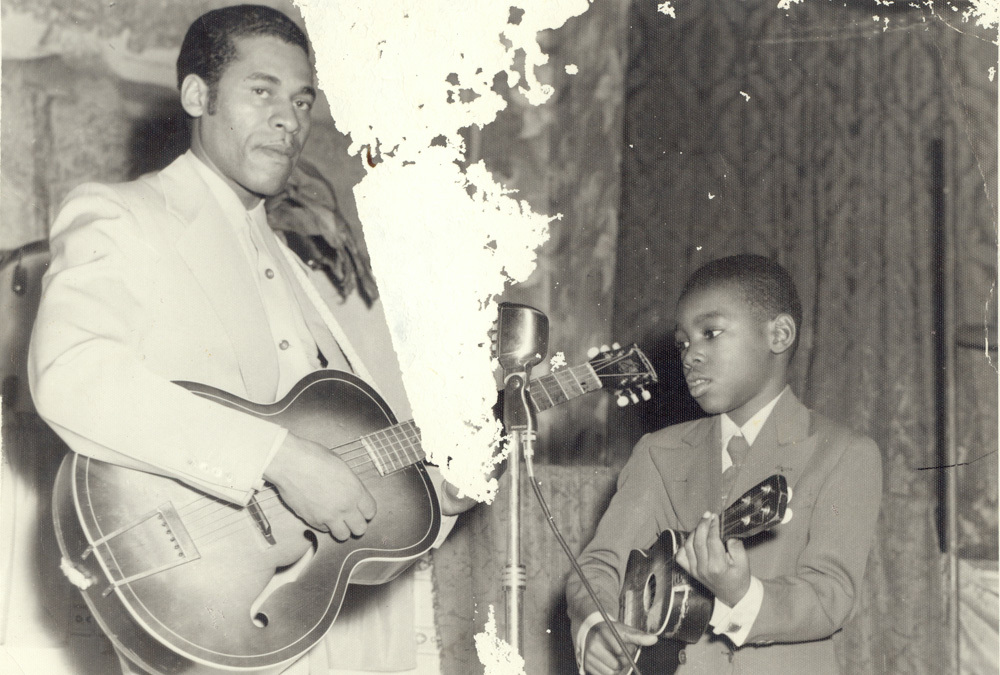
    <summary type="html"><![CDATA[<p><img src="https://hillhistory.org/files/fullsize/483e4df7044693e325fae039cdcad739.jpg" alt="Playing Ukulele at a Nightclub" /><br/><p><strong><em></em></strong></p><p><p><span style="font-weight: 400;">George Benson is a renowned jazz guitarist who has won ten Grammys, recorded a certified triple platinum album, and worked with the likes of Miles Davis, Freddie Hubbard, and Quincy Jones over the course of his career. He is also the child of a poor, single mother from Pittsburgh, who got his start in music at seven years old, playing ukulele at a corner drugstore in the Hill.&nbsp;</span></p>
<p><span style="font-weight: 400;">Born in the Hill in 1943, George Benson grew up “in the heart of the ghetto,” as he would later describe it, with his mother at a hotel on Gilmore Way. The hotel was demolished during the building of the Civic Arena less than a decade later. Records from the 1950 census indicate that George’s mother worked in night service, likely at the hotel where they lived. The small family was happy but poor, and as a child Benson had a job selling newspapers at a stand right across from </span><a href="https://hillhistory.org/items/show/51"><span style="font-weight: 400;">Stanley’s Bar,</span></a><span style="font-weight: 400;"> where jazz legends like Art Blakey, Charlie Parker, and Billy Eckstine played.</span></p>
<p><span style="font-weight: 400;">When he began school at Letsche Elementary, his music teachers quickly discovered his natural talent as a singer - they would often ask “Little Georgie” to sing for his classmates. He experimented with teaching himself any instrument that was available, including the hotel lobby piano and an old violin, but it wasn’t until his stepfather Tom Collier took an interest in his music and gave him a ukulele that his talent really exploded. It was with this instrument that he began to attract attention. After earning three dollars with an impromptu performance at Goode’s Drug Store on Wylie Ave, his stepfather assisted his budding career by booking gigs for him at clubs like the Little Paris and would even join him on stage occasionally.</span></p>
<p><span style="font-weight: 400;">Benson soon graduated from ukulele to playing whatever guitars he could get his hands on—his first electric guitar was made out of “his mother’s hope chest with a used tape recorder for an amplifier”—and he cut his first record in New York with RCA Victor at the tender young age of nine. For his recording name, he used the same nickname his elementary music teachers gave him: Little George.</span></p>
<p><span style="font-weight: 400;">As he grew older, he would go on to play and tour with organist Jack McDuff in clubs like the famous </span><a href="https://hillhistory.org/items/show/4"><span style="font-weight: 400;">Hurricane Bar</span></a><span style="font-weight: 400;">. Benson signed with a few labels in his early 20s, and played with jazz greats like Miles Davis and Stanley Turrentine because of the connections he made there.&nbsp; He was mainly known as an instrumentalist until the recording of his smash hit album 1976 </span><i><span style="font-weight: 400;">Breezin’</span></i><span style="font-weight: 400;">, where he sang on “This Masquerade”, for which he won Record of the Year at the 1976 Grammys.</span></p>
<blockquote>Nobody could love Pittsburgh more…I’ve seen what a town like this can produce.<br /><b>-George Benson</b></blockquote>
<p><span style="font-weight: 400;">Benson is a dynamic and passionate guitarist. While those well-versed in jazz guitar canon will certainly be able to hear inspiration from players like Wes Montgomery or Grant Green in his stylings, Benson builds on the ideas of jazz greats before him to create something unique and personal. Folks who played with him said he possessed an extraordinary sense of “swing” when he was playing jazz standards, and he was a sought after player for any band because of his speed and agility on the guitar. His most famous technique was his ability to “play in unison”, or play a melody line on his instrument while he sang the same melody. This style can be heard on tracks like 1980’s “Give Me the Night” or “This Masquerade”, and made Benson stand out as both a guitarist and singer.</span></p>
<p><span style="font-weight: 400;">He is also known for incorporating jazz into popular music. This has drawn criticism from many jazz purists, but Benson, as well contemporaries like Quincy Jones, Herbie Hancock, and Ramsey Lewis, saw a shift to more popular stylings as necessary to preserve an interest in jazz, which was beginning to die out by the time the late 70s and 80s rolled around. “I’m aware of the limited audience for real jazz music,” he once told </span><i><span style="font-weight: 400;">The Pittsburgh Courier</span></i><span style="font-weight: 400;">. “I play something my audience wants to hear first, and I play jazz in-between.”</span></p>
<span style="font-weight: 400;">Benson rarely misses an opportunity to express his love for the city which began his career. “</span><span style="font-weight: 400;">Nobody could love Pittsburgh more,” he once told CBS Pittsburgh. “I've seen what a town like this can produce.</span><span style="font-weight: 400;">” He often returns to the city to play, as he sees Pittsburgh as a crossroads for jazz innovation that fostered him and many others in their playing. Through his immense talent and passion for his music, George Benson, a child prodigy turned jazz legend, showed the whole world that even a poor kid from the Hill had something to sing about. </span></p></p><p><em><strong><a href="https://hillhistory.org/items/show/60">For more (including 5 images), view the original article</a>.</strong></em></p><p></p>]]></summary>
    <published>2024-03-06T15:00:01+00:00</published>
    <updated>2025-03-17T22:02:18+00:00</updated>
    <link rel="alternate" type="text/html" href="https://hillhistory.org/items/show/60"/>
    <id>https://hillhistory.org/items/show/60</id>
    <author>
      <name>Nolan Cowan</name>
    </author>
  </entry>
  <entry>
    <title type="html"><![CDATA[Herbert Bean – Businessman with strong work ethic invested in the Hill community]]></title>
    <summary type="html"><![CDATA[<p><img src="https://hillhistory.org/files/fullsize/34379d1b5c508d2160a779d08a140b10.jpg" alt="Bean and community members" /><br/><p><strong><em></em></strong></p><p><p><span style="font-weight: 400;">In the heart of Pittsburgh in the 1960s, an aspiring gas station owner became so much more - a model of Black entrepreneurship, and a respected pillar in the Hill District’s economy and community.&nbsp;</span></p>
<p><span style="font-weight: 400;">Herbert Bean was born in Union Springs, Alabama in 1915 to a schoolteacher and a cotton farmer. When his father developed a heart condition, Bean left school after 4th grade to work on the farm. At age 25, Bean took a train to Pittsburgh and landed in the Hill with determination, a spirit to succeed, and a desire for a better life. Herbert Bean not only found all he was looking for, but also contributed to making the Hill District a better place.&nbsp;</span></p>
<p><span style="font-weight: 400;">Bean’s business ventures in Pittsburgh began with hard work at several different jobs, including several positions at the steel mill and taxi driving. As he worked these jobs, he gained experience and built connections throughout the Hill District. Bean also found work at a gas station, where he carefully observed how the business operated. This experience sparked his desire to own a gas station himself, having observed firsthand the potential of the industry.</span></p>
<p><span style="font-weight: 400;">Herbert Bean purchased the gas station at Kirkpatrick and Centre from Willie Stevenson for $1,800 in 1961, using his personal car as collateral for the loan. Bean and a few friends worked the gas station in the early months, putting in 16-20 hour days and splitting the meager profits among themselves until the business was successful enough to establish payroll. That hard work soon paid off – within its first year, the station was selling six times more gasoline than under the previous owner, and Bean soon became the biggest gasoline seller in the Hill District.&nbsp;</span></p>
<p><span style="font-weight: 400;">This success placed Bean among a select group of approximately 1,200 Black gas station owners nationwide, making him part of an exclusive community of Black entrepreneurs in the petroleum industry. Bean’s success led to the acquisition of a second business, when in 1966 Gulf Oil to asked him to take over a failing service station in Homewood. This, too, became a highly profitable business, and he eventually acquired a third.</span></p>
<p><span style="font-weight: 400;">Bean’s business philosophy was straightforward and practical. He believed deeply in maintaining high standards</span><span style="font-weight: 400;">—</span><span style="font-weight: 400;">insisting on clean uniforms, excellent service, and spotless stations. Once when asked for advice to aspiring entrepreneurs, he declared, “Don’t mess with whiskey, women or gambling…if you start doing those things, you can forget about having a successful business.” This wisdom guided his own success and the counsel he offered to others in the community.&nbsp;</span></p>
<p><span style="font-weight: 400;">Bean also had a unique approach to hiring. When considering someone for employment, he would offer them temporary work, then tell them that he had to step out to talk to his friend, and then send others into the station to observe what the potential employee would do when left alone. This method helped him gauge character and work ethic. Of the ten original employees at his first station, seven were still working for him a decade later, a testament to Bean’s ability to choose good people and earn loyalty.&nbsp;</span></p>
<p><span style="font-weight: 400;">Never one to remain still, Bean was constantly on the move, connecting with his customers and understanding their needs. Besides his service stations, he also rented spaces that would become the highlight of nightlife in the Hill and centers for entertainment and social gathering. Bean also had dreams of building a restaurant and a motel in the area. Perhaps someday, if such establishments are ever built on the Hill, someone will honor his legacy by naming them "Bean's."</span></p>
<p><span style="font-weight: 400;">Herbert Bean’s role in the Hill extended beyond just making a profit, though – he believed in supporting and encouraging Black business ownership and building up the community. In addition to his other enterprises, he operated a bondsman business and also personally provided loans to community members when financial institutions would not. The author witnessed firsthand the respect he commanded when, as a child, she accompanied her Aunt Verma to secure a loan from Mr. Bean. Years later, as an adult, she benefited from his services herself.&nbsp;</span></p>
<p><span style="font-weight: 400;">Inspired by Martin Luther King Jr., Bean proudly displayed his picture on the wall as a symbol of hope and determination. He was an advocate for civil rights who participated in pickets against companies discriminating against Black people. Among his many community activities, he served on the board of Pittsburgh NAACP, and as a board member of his friend Robert Lavelle’s Dwelling House Savings and Loan. He was also one of the founders of the Freedom House Ambulance Service, demonstrating his commitment to essential services for the neighborhood. His community involvement extended to spiritual life as well, as a longtime member and fund-raiser for Calvary Baptist Church.&nbsp;</span></p>
<p><span style="font-weight: 400;">Herbert Bean passed away in 1998, but his name is still widely known throughout the Hill. He exemplified the strong men and women who came to Pittsburgh, worked tirelessly, and built a lasting legacy in the Hill. Bean represented what true business leadership looked like in the neighborhood: committed, hard-working, and deeply invested. </p><p>In 2008, Carnegie Library of Pittsburgh opened the new facility for its Hill District branch on the former site of Bean's Gulf station.</span></p></p></p><p><em><strong><a href="https://hillhistory.org/items/show/81">For more (including 4 images), view the original article</a>.</strong></em></p><p></p>]]></summary>
    <published>2025-06-17T00:53:42+00:00</published>
    <updated>2025-06-23T00:35:26+00:00</updated>
    <link rel="alternate" type="text/html" href="https://hillhistory.org/items/show/81"/>
    <id>https://hillhistory.org/items/show/81</id>
    <author>
      <name>Renee Wilson</name>
    </author>
  </entry>
  <entry>
    <title type="html"><![CDATA[New Granada Theater – A Pillar of Pittsburgh Black Culture]]></title>
    <summary type="html"><![CDATA[<p><img src="https://hillhistory.org/files/fullsize/b86dad3aa003ee8c894842a24deb2cb1.jpg" alt="Street View of the New Granada" /><br/><p><strong><em>In the heart of the Hill District stands a time-worn monument, witness to a vibrant history and home to an exciting future.</em></strong></p><p>The New Granada, located in the Hill District at 2007 Centre Avenue, tells a story that is still being created today. The three-story building has served various roles in the community throughout the decades. From ballroom dancing, star-studded music performances, weekly cinematic features, and community events, all have taken place at this site, serving as an "icon" for the Hill District then and now. </p><p>The New Granada has an evolving history that begins with prominent African American architect, Louis Bellinger. He was one of only sixty black architects in the United States in the 1930s. One of his most prominent works, and also one of the few still standing, is the New Granada Theater. The building first opened in 1927 as the Pythian Temple for the fraternal order, the Colored Knights of Pythias. This organization served numerous roles for its members. For example, they were the only social organization at the time to offer life insurance, which aided families after a member's death. Under their ownership, the Knights of Pythias hosted live music and community events. The architectural vision Bellinger constructed for the Pythian Temple led to the iconic New Granada Theater. The Pythian Temple was bought by Henry Hendel after the Knights struggled to make mortgage payments. </p><p>Bellinger's designs allowed for the Pythian Temple to easily be transformed into the New Granada Theater by architect Alfred M. Marks. He redesigned the first floor from a banquet hall to a commercial movie theater. On May 20, 1937, the building reopened as The New Granada Theater. "When the beautiful new Granada theater threw open its doors last Thursday evening, a huge crowd jammed the sidewalks and streets... Men, women, and children ogled and marveled at the beauty and elegance of the interior," and "all races and colors filled up the ticket booth." <span style="font-weight: 400;">While the theater did occasionally show popular white movies like </span><i><span style="font-weight: 400;">Casablanca</span></i><span style="font-weight: 400;">, it was well-known for mostly playing films with African American-led casts, something that was not common at the time. </span>The theater showed a variety of genres from musicals to dramas. The building was also welcoming to all. "A cross-section of Pittsburghers, white and black, middle class, and working poor, attended both 'sepia cinema' or black films starring African American movie stars." The movie theater wasn't the only entertainment that drew in large crowds. The second floor of the New Granada continued the traditions of the Pythian Temple by hosting live music events. </p><p>On the second floor, patrons were transported to a magnificent ballroom stage where "the jazz greats played. The ballroom had indirect lighting, beautiful Venetian blinds, colorful drapes, wall murals, and a revolving crystal ball." Harlem music, a form of jazz, was a staple for the period. Harlem music itself shaped parts of the Hill District culture. This style of jazz music was developed in Harlem, New York, in the early 1900s. Due to the differing racial and economic differences in New York City, the area of Harlem became known as a "city-within-the-city" of New York City. This description can be shared with the Hill District, as it too can be seen as a "city-within-the-city" in comparison to Pittsburgh. Harlem musicians touring from New York City to Chicago would make a stop along the way in Pittsburgh to play on the second floor of the New Granada. </p><p>The second floor housed the Hill City Auditorium and then later changed to the Savoy Ballroom. The Harlem singers were popular in the area but were not the only style of entertainment the Savoy Ballroom saw. Local bands, singers, and orchestras played there as well. They also used the space to host jitterbug contests. The stage at the New Granada attracted well-known jazz stars as well as local performers.</p><p>The New Granada Theater provided a variety of entertainment for Pittsburgh while continuing to be a staple for residents of the Hill District. The building was often used for civic and community engagement. The space housed high school proms and graduations but also worked to "combat juvenile delinquency." The Hill City Youth Municipality was an organization that worked to prevent crime but also worked to serve and "uplift the underprivileged girls and boys of the community." In June of 1939, this organization hosted programs persuading residents to aid in "eliminating conditions that lead to crime and delinquency." They ended the week of events by showing a celebratory film in the New Granada Theater. </p><p>Although the New Granada Theater was a packed place at its height, its popularity and clientele eventually began to wither. The theater had to close its doors in the 1970s. It was purchased by the Hill Community Development Corps (CDC) in 1990. The site became listed on the National Register of Historic Places in 2011. The groundbreaking for the New Granada Square took palce in May 2023 which opened the door for construction of artist apartments, cultural spaces, retail spaces, and more. The New Granada Theater is currently being revitalized as a space of bright hope for the future of the Hill District.</p></p><p><em><strong><a href="https://hillhistory.org/items/show/8">For more (including 6 images), view the original article</a>.</strong></em></p><p></p>]]></summary>
    <published>2023-07-25T21:48:04+00:00</published>
    <updated>2025-06-18T19:08:40+00:00</updated>
    <link rel="alternate" type="text/html" href="https://hillhistory.org/items/show/8"/>
    <id>https://hillhistory.org/items/show/8</id>
    <author>
      <name>Hanna Brandebura</name>
    </author>
  </entry>
  <entry>
    <title type="html"><![CDATA[Rhumba Theater – Entertainment Hotspot for the Lower Hill]]></title>
    <summary type="html"><![CDATA[<p><img src="https://hillhistory.org/files/fullsize/dbc8e8b4faddc794b76cfab696fddc7c.jpg" alt="Rhumba Theatre patrons" /><br/><p><strong><em></em></strong></p><p><p><span style="font-weight: 400;">In 1914, brothers Thomas and Martin Burke built a two-story entertainment and retail complex at 53-55 Fullerton at a cost of $7500. The two floors of the structure contained nearly 8,000 total square feet, housing a dance hall, juke box theater, and retail space.</span></p>
<p><span style="font-weight: 400;">Brothers Stanley and Alexander Williams, Hill District entertainment entrepreneurs, operated a 14-table pool hall in the basement for the first decade.&nbsp; After a venture into baseball, Andy then returned to the Burke’s basement and operated the four-lane Monarch Bowling lanes in the basement beginning in 1929.&nbsp; Pastimes such as movies, bowling, and billiards were popular forms of entertainment during the Great Depression, as they were relatively affordable ways for people to forget about hard times, at least for a little while.</span></p>
<h3><span style="font-weight: 400;">Entertainment Nightly</span></h3>
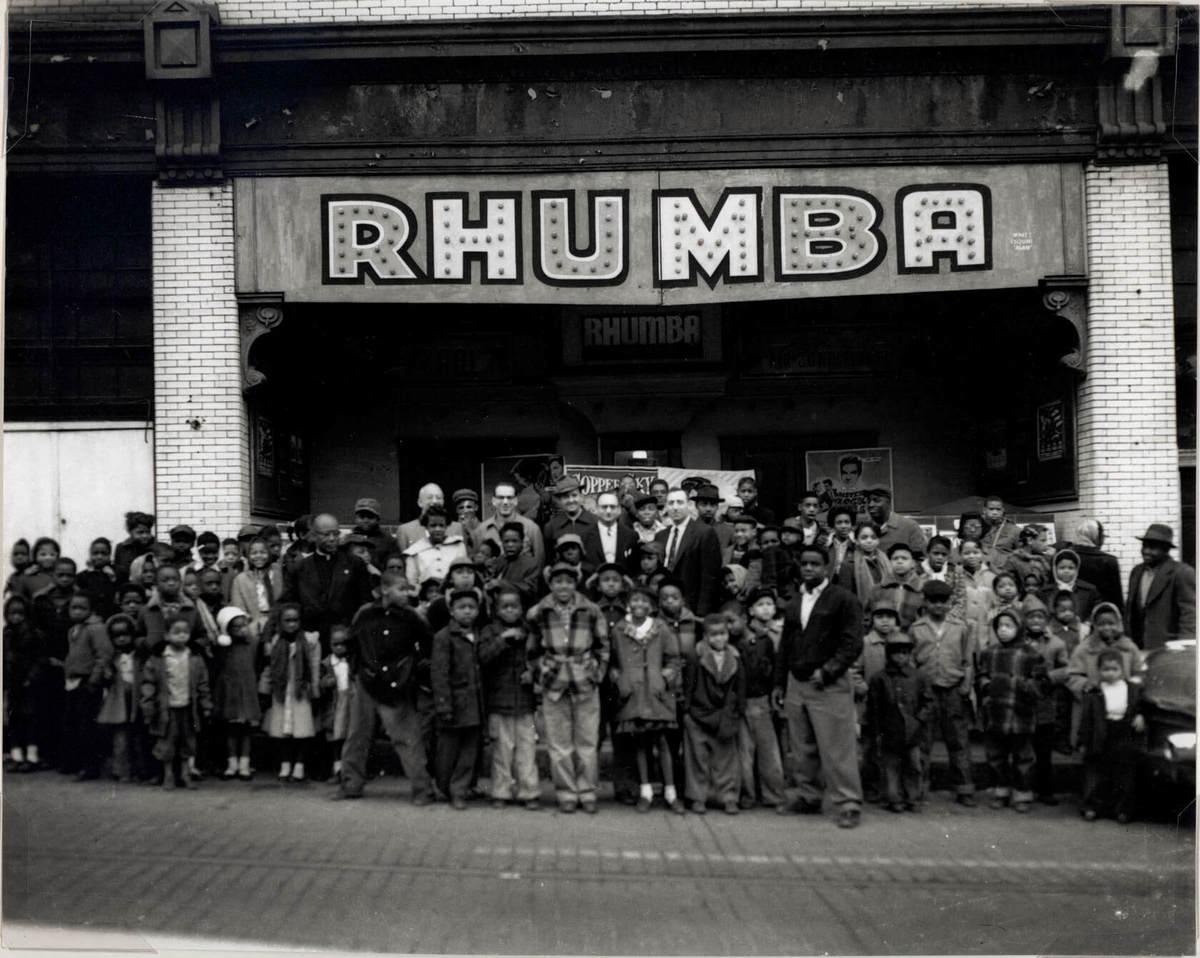
<p><span style="font-weight: 400;">The economic turmoil of the Depression led to a number of changes at the site.&nbsp; Jacob and Sidney Soltz purchased the building during the 1930s, upgraded the theater to show “talkies” (motion pictures with sound), and renamed it the Rhumba.</span></p>
<p><span style="font-weight: 400;">In 1935, the second floor of the building hosted a nightclub called Javo’s Jungle, hailed in the </span><i><span style="font-weight: 400;">Courier</span></i><span style="font-weight: 400;"> as “the classiest night club in the city” at its opening. The nightclub offered a nightly floor show with actress and singer Cora Green, Martha Price, and impersonator Bob Davis. Dewey McDaniels greeted the guests at the door, while “Battle” Keys kept the peace. Tom West and “Hungry Bill” manned the “futuristic” bar and could make any drink requested, no matter how complicated.&nbsp;</span></p>
<p><span style="font-weight: 400;">The building’s basement was also a entertainment hotspot, though less upscale than the upper floor. The basement held the after-hours, or as the </span><i><span style="font-weight: 400;">Pittsburgh Courier </span></i><span style="font-weight: 400;">called them “after yawning” clubs.&nbsp; Frequent proprietorship changes brought a rotating list of club names in the spot, including the Ritz and the El Congo. The members-only Bambola social club opened its doors on November 3, 1946, with floor shows starting at 12:30 am and 2:30 am. The floor shows featured singers, “shake dancers” (burlesque performers), and jazz bands, both of local and national fame.&nbsp; The club finally became the “Tia Juana” club, advertised in the 1950 </span><i><span style="font-weight: 400;">Courier </span></i><span style="font-weight: 400;">as the “hottest spot outside of a blast furnace.”</span></p>
<h3><span style="font-weight: 400;">The Rhumba's Final Bow</span></h3>
<p><span style="font-weight: 400;">Declining conditions in the surrounding neighborhood, and rumors of impending urban redevelopment, led to a decline in the Rhumba.&nbsp; A 1952 gas explosion in nearby properties caused some damage to the theater, and it suffered several projector fires. In his memoir </span><i><span style="font-weight: 400;">Song of the Hill, </span></i><span style="font-weight: 400;">Dr. Ralph Proctor recalled that “The Rhumba was nice when it first opened, but then deteriorated into a ratty place we avoided.” It was demolished in 1957 as part of the Urban Redevelopment Authority’s Lower Hill Redevelopment Project.&nbsp;</span></p></p></p><p><em><strong><a href="https://hillhistory.org/items/show/42">For more (including 4 images and 1 sound clip), view the original article</a>.</strong></em></p><p></p>]]></summary>
    <published>2023-10-02T23:52:55+00:00</published>
    <updated>2025-06-13T13:32:16+00:00</updated>
    <link rel="alternate" type="text/html" href="https://hillhistory.org/items/show/42"/>
    <id>https://hillhistory.org/items/show/42</id>
    <author>
      <name>Andrea Santella</name>
    </author>
  </entry>
  <entry>
    <title type="html"><![CDATA[St. Benedict the Moor Church – Historic home of Pittsburgh's Black Catholic community]]></title>
    <summary type="html"><![CDATA[<p><img src="https://hillhistory.org/files/fullsize/1fc7ca50a9a2036755b10f654573e9af.jpg" alt="Statue of St. Benedict the Moor" /><br/><p><strong><em><span style="font-weight: 400;">For over a century, Pittsburgh’s Black Catholics have found a literal sanctuary at St. Benedict the Moor, a church named for the patron saint of African Americans.</span></em></strong></p><p><p><span style="font-weight: 400;">The late 19th century saw the emergence of the “Colored Conventions” movement - a series of national conventions organized by Black leaders and focused on a variety of social and political issues.&nbsp;</span></p>
<blockquote>As many of the Hill District’s older white residents left the neighborhood, St. Benedict the Moor’s clergy and the Diocese listened and learned how to adapt the liturgies for Black traditions, including a gospel choir which performs weekly.</blockquote>
<p><span style="font-weight: 400;">Among these was the Colored Catholic Congress, first held January 1889 in Washington, DC to address racial discrimination within the American Catholic church.&nbsp; Moved by these efforts, Fr. Patrick McDermott, CSSp, created a mission as part of the Pittsburgh Catholic College of the Holy Ghost (now Duquesne University) in July 1889. The Black parish met in several church buildings through the years, until in 1962 the Diocese of Pittsburgh reopened the former Holy Trinity Church building as a new permanent home for St. Benedict the Moor parish. <br /></span></p>
<p><span style="font-weight: 400;">At the time of the move, the Hill District was still trying to rebuild its community and find a way forward from the destruction wrought by the city’s Urban Redevelopment Authority when it cleared much of the Lower Hill during the late 1950s for the construction of the city’s Civic Arena. The corner of Centre Avenue and Crawford Street became the “line drawn in the sand” for Hill residents, who organized to prevent further clearance and redevelopment of the Hill at a place now known as <a href="https://hillhistory.org/items/show/7">Freedom Corner</a>. St. Benedict the Moor Church became a symbolic landmark as Black Pittsburghers of all faiths and their allies rallied and marched for equality and civil rights protections from the church's front steps.<br /></span></p>
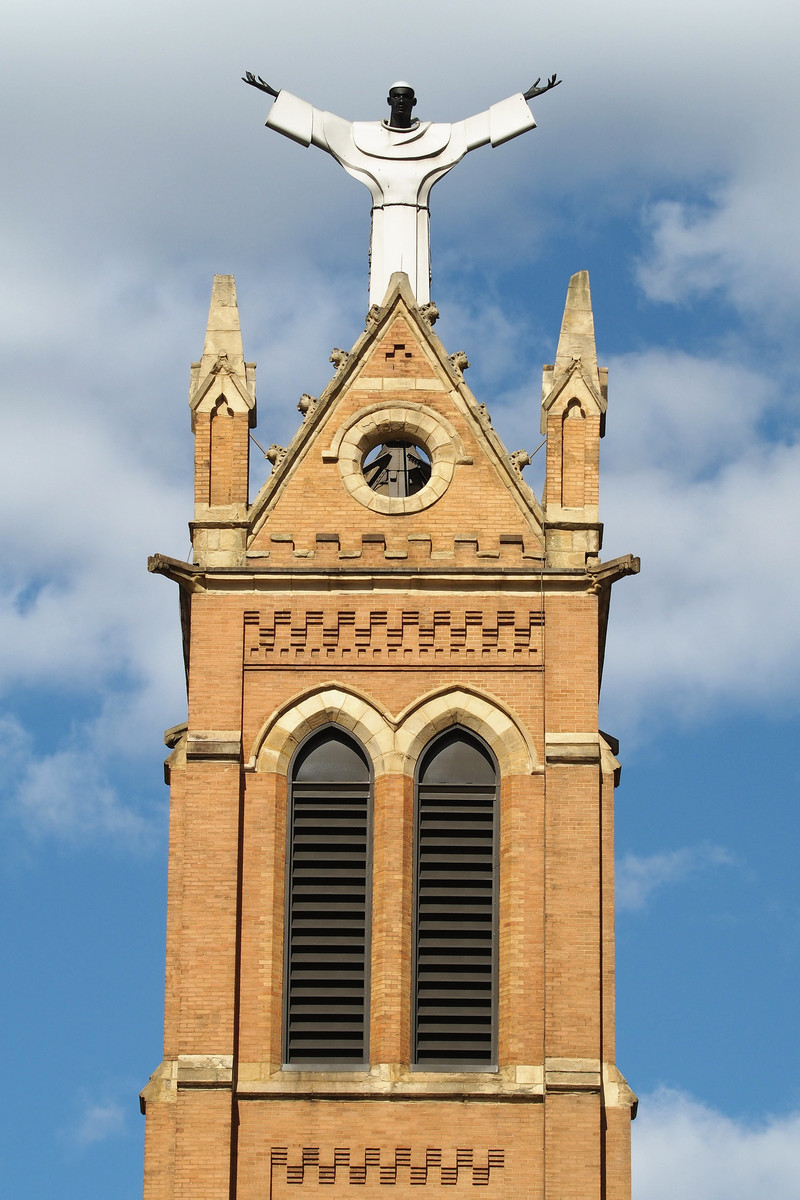
<p><span style="font-weight: 400;">In late 1968, the Diocese of Pittsburgh installed the eighteen-foot-tall statue of</span> <span style="font-weight: 400;">St. Benedict the Moor</span><span style="font-weight: 400;"> atop the church’s bell tower. St. Benedict the Moor was born as Benedetto Manasseri near Messina, Italy. His parent were Africans who had been enslaved in the early 16th Century and taken to San Fratello, a part of the region of Sicily, Italy. Although persecuted because of his race, he became known for generosity, feeding the hungry, and conducting miracles. The statue was commissioned by Bishop John Wright and funded through a donation from an “anonymous Protestant donor of one of Pittsburgh’s oldest families.” Sculpted by </span><span style="font-weight: 400;">Frederick Charles Shandy</span><span style="font-weight: 400;">, the statue depicts St. Benedict facing the Golden Triangle with arms spread wide.&nbsp; The symbolism of the statue has been interpreted in various ways - some intepret it as a rebuke of downtown and its neglect of the Hill, while others argue the statue is in a posture of welcoming and embrace.</span><span style="font-weight: 400;"> "At the precise boundary between these two worlds," said Rev. John Wright, bishop of Pittsburgh, in 1968, "the hands of a black Christian saint, St. Benedict the Moor, will be lifted in gestures of forgiveness, prayer, and peace over the Pittsburgh community."&nbsp;<br /></span></p>
<p><span style="font-weight: 400;">As many of the Hill District’s older white residents left the neighborhood, St. Benedict the Moor’s clergy and the Diocese listened and learned how to adapt the liturgies for Black traditions, including a gospel choir which performs weekly. St. Benedict the Moor was also the first parish in the Diocese of Pittsburgh to be assigned a Black priest, Fr. Augustus Taylor, Jr. </p><p>In addition to serving the Hill, the parish draws worshippers from throughout Greater Pittsburgh. This geographic reach is generally unheard of in the Catholic faith, where parishes are typically based upon physical residence. The Diocese had merged St. Benedict the Moor with two other parishes at the beginning of 2020, but this move was met with resistance from St. Benedict the Moor’s parishioners.&nbsp; Both clergy and the congregation saw an opportunity to preserve their traditions and petitioned the diocese to recognize St. Benedict the Moor as a “personal parish”, which distinguishes a parish with traditions additional to the usual mass structures. Bishop David Zubik approved the petition and recognized the personal parish of St. Benedict the Moor on July 13, 2020.</span></p></p></p><p><em><strong><a href="https://hillhistory.org/items/show/44">For more (including 4 images), view the original article</a>.</strong></em></p><p></p>]]></summary>
    <published>2023-10-17T13:32:02+00:00</published>
    <updated>2025-03-17T22:03:23+00:00</updated>
    <link rel="alternate" type="text/html" href="https://hillhistory.org/items/show/44"/>
    <id>https://hillhistory.org/items/show/44</id>
    <author>
      <name>Amy Brunner</name>
    </author>
  </entry>
  <entry>
    <title type="html"><![CDATA[The Court of Ideas – <span style="font-weight: 400;">A community-built outdoor theater was an internationally-acclaimed experimen in community planning</span>]]></title>
    <summary type="html"><![CDATA[<p><img src="https://hillhistory.org/files/fullsize/bc119a01f4b967f80be5cac957f57c4b.jpg" alt="Court of Ideas" /><br/><p><strong><em></em></strong></p><p><p>In the late 1960s, Pittsburgh’s Hill District became the birthplace of an innovative architectural project. Spearheaded by visionary architect Troy West, this initiative sought to use architecture as a means of fostering social change in urban communities.</p>
<p>Troy West was no ordinary architect. After studying at Carnegie-Mellon University and working alongside renowned figures like Louis Kahn, West returned to Pittsburgh with a clear mission: to partner with disadvantaged communities in challenging the top-down approach often associated with urban development. His vision took shape in the Hill District through a project called Architecture 2001, which embraced inclusive and participatory design to rehabilitate the neighborhood.</p>
<p>Architecture 2001 brought together an eclectic and diverse team. In addition to architects, the group included a psychologist, a lawyer, and a carpenter who had honed his skills while incarcerated. They were supported by local youth and members of the community, all working toward a shared goal—to create a functional, inspiring space known as the "Court of Ideas" at 2001 Center Avenue. The team didn’t just build; they also provided vocational training in construction, offered rehabilitation programs for those struggling with drug addiction, and improved local housing conditions.</p>
<p>The Court of Ideas itself was an architectural experiment, featuring sloping geometric concrete plinths, forum-like spaces, and a series of mini-stages and seating areas—all covered in vibrant orange carpeting. According to project leader Dick Morton, community reactions during construction were mixed. “People came around to see that we had enough water, and kids came to watch with their dogs. But others would stand whole days and laugh. To them, it was a big joke. They were sure it would not work. Now, everyone wants to be part of it.”</p>
<p>Despite early skepticism, the Court of Ideas quickly became a cultural hub. It hosted poetry readings, political rallies, Christmas parties, and musical concerts featuring renowned artists like Art Blakey and Abbey Lincoln. Architects and designers from around the world visited the site, drawn to its innovative approach to public space and community engagement.</p>
<p>For residents of the Hill District, the Court of Ideas became a source of hope. Troy West emphasized the significance of this grassroots effort, stating, “The best part about this is that it’s being built from within. The people are doing it themselves.”</p><p>One of the most compelling success stories to emerge from the experiment was that of Charles ‘Chuck’ Dial. A former drug addict, Dial turned his life around through his involvement with the project. Initially hired as a construction supervisor, Dial also found stability, overcame his addiction, and became a role model for others in the community.</p>
<p>While today the Court of Ideas site is empty, its lessons about the value of community-driven design, collaboration, and inclusivity still remain, and offer practical insights for community leaders looking to create spaces that serve and uplift local residents.</p></p></p><p><em><strong><a href="https://hillhistory.org/items/show/71">For more (including 3 images), view the original article</a>.</strong></em></p><p></p>]]></summary>
    <published>2024-09-26T15:38:33+00:00</published>
    <updated>2025-03-31T14:22:18+00:00</updated>
    <link rel="alternate" type="text/html" href="https://hillhistory.org/items/show/71"/>
    <id>https://hillhistory.org/items/show/71</id>
    <author>
      <name>Mustafa Kandil</name>
    </author>
  </entry>
  <entry>
    <title type="html"><![CDATA[The Pittsburgh Courier – America's Largest Black Newspaper]]></title>
    <summary type="html"><![CDATA[<p><img src="https://hillhistory.org/files/fullsize/da6e5133d56a0a27510810f17c3998bf.jpg" alt="Pittsburgh Courier newspaper press operator, possibly William Brown, possibly printing Chicago or other Midwestern edition" /><br/><p><strong><em></em></strong></p><p><p><span style="font-weight: 400;">In the late 1800s and early 1900s, Pittsburgh’s newsstands suffered from a serious lack of quality Black papers. Out of the six white dailies in the city, only one included Black news. </span><i><span style="font-weight: 400;">The Pittsburgh Press</span></i><span style="font-weight: 400;">’ segregated “Afro-American News” column was far from ideal however, and the little reporting that the </span><i><span style="font-weight: 400;">Press</span></i><span style="font-weight: 400;"> did offer mostly consisted of sensational accounts of crimes, affairs, and other sordid material which hardly painted the Black community in a favorable light.</span></p>
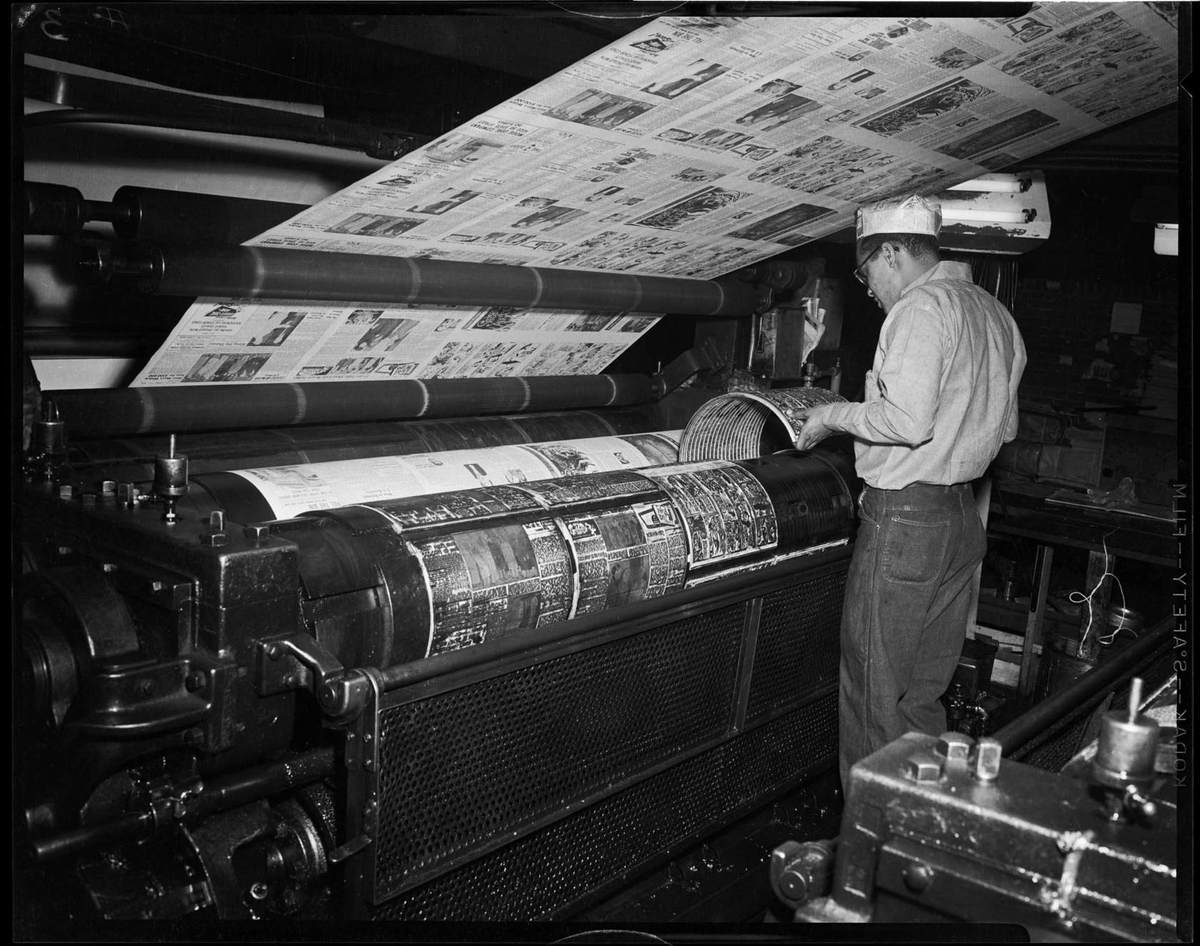
<p><span style="font-weight: 400;">This all would change when Nathaniel Edward Harleston, a security guard at the H.J. Heinz food packing facility, began a newspaper as a way to publish some of his poetry. With the help of a couple of friends from the Heinz plant, the first official issue of the <em>Courier</em> was printed on January 15, 1910. Just a few years later, Harelston’s new paper would expand to include headquarters at 1212 Wylie Ave (though this would later move downtown), and its own publishing plant at 2628 Centre Ave.</span></p>
<p><span style="font-weight: 400;">With such deep roots in the largest historically Black neighborhood in Pittsburgh, it is no surprise that </span><i><span style="font-weight: 400;">The Pittsburgh Courier</span></i><span style="font-weight: 400;"> would become one of the most prominent voices in Black America within just a few decades. Not only would the paper go on to provide a rich account of Black life over the years, it would also serve as an instrument of agency in the fight for civil rights.</span></p>
<h3><span style="font-weight: 400;">A Fight for Rights</span></h3>
<p><span style="font-weight: 400;">Much of the </span><i><span style="font-weight: 400;">Courier’s</span></i><span style="font-weight: 400;"> early reputation as a “crusader” paper for Black rights can be attributed to its first editor, Robert Lee Vann.</span></p>
<blockquote>One reporter, Edna Chappel, was even assigned to visit businesses in the greater Western Pennsylvania area and write about her experiences of discrimination there because of her race.</blockquote>
<p><span style="font-weight: 400;">Vann was the first African American to graduate from University of Pittsburgh’s school of law, and he was one of only five Black lawyers in Pittsburgh at the time. After helping to find investors and using his law expertise to draw up the incorporation papers, Vann took over as editor of the </span><i><span style="font-weight: 400;">Courier</span></i><span style="font-weight: 400;"> when Harleston left in late 1910.&nbsp;</span></p>
<p><span style="font-weight: 400;">From the very beginning, Vann made his vision for the </span><i><span style="font-weight: 400;">Courier</span></i><span style="font-weight: 400;"> clear; the paper would serve to “abolish every vestige of Jim Crowism in Pittsburgh”, as he wrote in an early editorial. In the first years, he would use his writing to address pressing issues in the Hill District, calling for a Black building and loan association as well as a Black hospital to combat the housing and health crises there.&nbsp;</span></p>
<p><span style="font-weight: 400;">A future politician himself, (he would serve as Assistant Attorney General in the Roosevelt administration), Vann called for the readers of his paper to organize in politics. When the </span><i><span style="font-weight: 400;">Courier </span></i><span style="font-weight: 400;">began to have national influence in the early 30s, Vann’s writings carried increasing weight in Black politics. His opinion in one 1932 editorial that “negroes have changed their political philosophy... This year I see them voting a Democratic ticket” has even been credited by some historians with significantly contributing to Roosevelt’s victory later that year.&nbsp;</span></p>
<p><span style="font-weight: 400;">This foray into national affairs continued into the mid-20th century, as the </span><i><span style="font-weight: 400;">Courier</span></i><span style="font-weight: 400;"> began to report more and more on the Civil Rights movement across the country. They covered stories like the </span><a href="https://nmaahc.si.edu/explore/stories/scottsboro-boys"><span style="font-weight: 400;">Scottsboro Boys</span></a><span style="font-weight: 400;">, </span><a href="https://www.archives.gov/milestone-documents/brown-v-board-of-education"><span style="font-weight: 400;">Brown v. Board</span></a><span style="font-weight: 400;">, and the campaigns of </span><a href="https://www.history.com/topics/black-history/a-philip-randolph"><span style="font-weight: 400;">A. Phillip Randolph</span></a><span style="font-weight: 400;">, while their sports reporters doggedly followed Black boxer Joe Louis as he won repeated victories in the ring.&nbsp;</span></p>
<p><span style="font-weight: 400;">The </span><i><span style="font-weight: 400;">Courier </span></i><span style="font-weight: 400;">reported on local injustice towards African Americans as well. They frequently covered the Homestead Grays, Pittsburgh’s Negro League baseball team, and fought for major league desegregation in their editorials. One reporter, Edna Chappel, was even assigned to visit businesses in the greater Western Pennsylvania area and write about her experiences of discrimination there because of her race.&nbsp;</span></p>
<p><span style="font-weight: 400;">The </span><i><span style="font-weight: 400;">Courier </span></i><span style="font-weight: 400;">was known for hiring young, Black talent like Chappel who might never have been given a job at another paper. Famous Pittsburgh photographer Charlie “Teenie” Harris was briefly employed at the paper, as well as William Gardner Smith, a novelist who spent time in the company of other great Black authors like James Baldwin and Richard Wright. Other reporters at</span> <span style="font-weight: 400;">the </span><i><span style="font-weight: 400;">Courier</span></i><span style="font-weight: 400;"> are less well known, but their work was foundational for the paper.&nbsp;</span></p>
<h3><span style="font-weight: 400;">Later Years</span></h3>
<p><span style="font-weight: 400;">After the death of Robert Vann in 1940, the paper did not find an executive editor who could match its first in passion and vision until Percival L. Prattis accepted the executive editorship in 1956. Prattis had worked at the </span><i><span style="font-weight: 400;">Courier</span></i><span style="font-weight: 400;"> for years prior, and had already been instrumental in its development before becoming editor. Vann had originally hired him in 1935 after seeing his impressive work at the </span><i><span style="font-weight: 400;">Courier</span></i><span style="font-weight: 400;">’s rival Black paper, </span><i><span style="font-weight: 400;">The Chicago Defender</span></i><span style="font-weight: 400;">, where Prattis had been city editor. Prattis used his connections in Chicago to expand the circulation of the </span><i><span style="font-weight: 400;">Courier</span></i><span style="font-weight: 400;"> in the Midwest, where the paper had previously struggled to find distributors in its competition with the </span><i><span style="font-weight: 400;">Defender</span></i><span style="font-weight: 400;">.&nbsp;</span></p>
<p><span style="font-weight: 400;">Before he became executive editor, Prattis reported on reconstruction after the war. He heavily covered the creation of the United Nations, even personally attending the founding conference in San Francisco. He also reported on the conflicts in the Middle East, something which was not often seen in Black papers.&nbsp;</span></p>
<p><span style="font-weight: 400;">In the mid-1950s, the advancement of the Civil Rights movement was beginning to convince many establishment white papers to take Black news more seriously. As competition with these white dailies increased, the </span><i><span style="font-weight: 400;">Courier </span></i><span style="font-weight: 400;">began to struggle financially. Despite this, Prattis increased the circulation to a peak of 350,000 copies, with 14 editions nationwide. This likely is due to his aggressive style; under Prattis, the </span><i><span style="font-weight: 400;">Courier</span></i><span style="font-weight: 400;"> reported stories of injustice which its competitors were simply unwilling to publish.</span></p>
<p><span style="font-weight: 400;">Eventually, the </span><i><span style="font-weight: 400;">Courier</span></i><span style="font-weight: 400;">’s money troubles proved too much to overcome, however, and the paper was sold in 1966 to John Sengstacke, owner of the </span><i><span style="font-weight: 400;">Defender</span></i><span style="font-weight: 400;">. He relaunched the paper the next year as </span><i><span style="font-weight: 400;">The New Pittsburgh Courier</span></i><span style="font-weight: 400;">. By then, many of its finest reporters and editors had left, including Prattis and Bolden, and the paper would never again reclaim its previous quality or national influence.&nbsp;</span></p>
<span style="font-weight: 400;">Over the half-century of its publication, </span><i><span style="font-weight: 400;">The Pittsburgh Courier</span></i><span style="font-weight: 400;"> went from a two page collection of a Steel City security guard’s poems to a national paper which changed the landscape of Black life in America. As Frank Bolden once said in an interview, the Black press acted as an “advocate of all our dreams, wishes, and desires.” Without that small printing plant in the Hill, dutifully churning out issues week after week, Black Americans would not have had the chance to see their histories, sufferings, and longings given a voice in the work of the </span><i><span style="font-weight: 400;">Courier</span></i><span style="font-weight: 400;">.</span></p></p><p><em><strong><a href="https://hillhistory.org/items/show/62">For more (including 7 images), view the original article</a>.</strong></em></p><p></p>]]></summary>
    <published>2024-03-07T15:50:22+00:00</published>
    <updated>2025-06-23T00:26:16+00:00</updated>
    <link rel="alternate" type="text/html" href="https://hillhistory.org/items/show/62"/>
    <id>https://hillhistory.org/items/show/62</id>
    <author>
      <name>Nolan Cowan</name>
    </author>
  </entry>
</feed>