<?xml version="1.0" encoding="UTF-8"?>
<feed xmlns="http://www.w3.org/2005/Atom">
  <title type="text">Hill District Digital History</title>
  <updated>2026-04-25T14:58:11+00:00</updated>
  <generator uri="http://framework.zend.com" version="1.12.20">Zend_Feed_Writer</generator>
  <link rel="alternate" type="text/html" href="https://hillhistory.org/"/>
  <link rel="self" type="application/atom+xml" href="https://hillhistory.org/items/browse?output=rss2"/>
  <id>https://hillhistory.org/</id>
  <author>
    <name>Hill District Digital History</name>
    <uri>https://hillhistory.org</uri>
  </author>
  <link rel="hub" href="http://pubsubhubbub.appspot.com/"/>
  <entry>
    <title type="html"><![CDATA[Mary Dee – How The First Black Female DJ Changed America&nbsp;]]></title>
    <summary type="html"><![CDATA[<p><img src="https://hillhistory.org/files/fullsize/d0b3f8bc8beef77293cea74e669b5ed4.jpg" alt="WHOD Promotional Ad" /><br/><p><strong><em></em></strong></p><p>Disc jockeys hold an important place in popular music, bridging the gap between artists and listeners. Many famous DJs have been instrumental in bringing the latest music to the masses. One name that doesn’t come up often, however, is the game-changing Mary Dee, the first Black female disc jockey in the United States, who broadcast from the Hill District.</p><p>Mary Dee was revolutionary. Among the first DJs to become a national figure, her show on Pittsburgh’s WHOD attracted hundreds of thousands of listeners from 1948 to 1956. At the height of her popularity, she had a studio, interviewed celebrities, hosted public events, and promoted new talent. She also used her status to bring attention to issues in the Black community. After she left Pittsburgh in 1956, she remained on air and became a fixture in Baltimore and Philadelphia until her death in 1964.</p><p>Dee was born Mary Elizabeth Goode Dudley in 1912 in Homestead PA. Her parents, William and Mary, the children of enslaved people, moved to the Pittsburgh area in the late 1800s. Driven and keen to express herself, Dee graduated from St. Mann Radio School in Pittsburgh in 1948, and when WHOD started up soon after, she applied for a job. Though the station turned her down, she persisted and was finally offered a show on the condition she found sponsorship. After securing backing, the 15-minute “Movin’ Around with Mary Dee” went on the air and quickly exploded in popularity.</p><p>Within months, her airtime increased to an hour, and she soon had a new segment, the highly successful, faith-based “Gospel Train”. People from all walks of life would tune in to hear her. By the 1950s, she had established herself as WHOD’s shining star, interviewing Jackie Robinson, Sarah Vaughn, Tony Bennett, Nat King Cole, Eartha Kitt, and countless other celebrities. In 1951, the station gifted her "Studio Dee" on the corner of Centre and Herron Avenues in the Hill. </p><p>Dee gave to her community as much as it gave her. Committed to civil rights, she used her platform to address Black issues of the day. She frequently had her brother, Malvin “Mal” Goode, a reporter with the Courier, on her show to cover Black news. Goode, who went on to become the first Black newsman employed by ABC, tackled the latest in segregation and police brutality. Dee also believed in giving a voice to young people. She played music popular with teenagers, such as rock and roll, emceed teen clubs, and had a teen segment hosted by her daughter Sherlynn, or “Little Dee”. Additionally, she promoted the careers of obscure up-and-comers and served as a mentor for Black children, such as future guitarist George Benson.&nbsp;<br />Unfortunately, not everything went smoothly. In 1952, she divorced her abusive husband Franklin, who left her to raise their children alone. While she and WHOD were generally popular, they faced racist backlash from some listeners. In 1955, the station was sold to buyers who converted it into WAMO, a country showcase. In 1956, Dee, her brother, and the four other Black employees were fired, with owner Leonard Walk citing competition in the “Negro market.”&nbsp;</p><p>While Dee lost her studio, she wouldn’t stay down. She moved to Baltimore and continued working, before coming to Philadelphia to start a show in 1958, invited by her friend Dolly Banks who ran a local station.. With her new program, “Songs of Faith”, Dee came back to the mainstream, winning greater popularity than ever before. She remained active in the Black community, joining the NAACP and the National Council of Negro Women, as well as being among the first African Americans accepted into American Women of Radio and Television. By the time of her death on March 17th, 1964, she had become legendary, and 3,000 people attended her Philadelphia funeral.</p><p>“Legendary” describes Mary Dee best. A trailblazer, she not only created a path for many Black women to follow, but through her connection with the society around her, from the Hill to America at large, she helped set the stage for what DJs are supposed to be. She played records others weren’t willing to play and spoke about topics others wouldn’t cover.</p></p><p><em><strong><a href="https://hillhistory.org/items/show/80">For more (including 3 images), view the original article</a>.</strong></em></p><p></p>]]></summary>
    <published>2024-12-11T17:59:45+00:00</published>
    <updated>2025-06-18T15:11:43+00:00</updated>
    <link rel="alternate" type="text/html" href="https://hillhistory.org/items/show/80"/>
    <id>https://hillhistory.org/items/show/80</id>
    <author>
      <name>Charlie Stoops</name>
    </author>
  </entry>
  <entry>
    <title type="html"><![CDATA[George Benson – Hill District Child Prodigy]]></title>
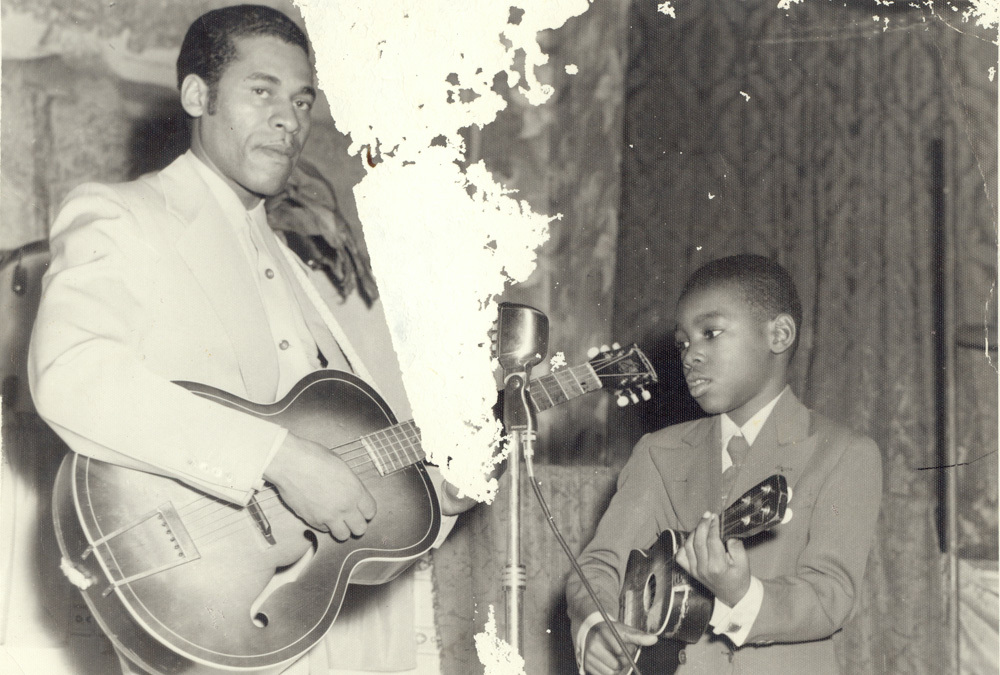
    <summary type="html"><![CDATA[<p><img src="https://hillhistory.org/files/fullsize/483e4df7044693e325fae039cdcad739.jpg" alt="Playing Ukulele at a Nightclub" /><br/><p><strong><em></em></strong></p><p><p><span style="font-weight: 400;">George Benson is a renowned jazz guitarist who has won ten Grammys, recorded a certified triple platinum album, and worked with the likes of Miles Davis, Freddie Hubbard, and Quincy Jones over the course of his career. He is also the child of a poor, single mother from Pittsburgh, who got his start in music at seven years old, playing ukulele at a corner drugstore in the Hill.&nbsp;</span></p>
<p><span style="font-weight: 400;">Born in the Hill in 1943, George Benson grew up “in the heart of the ghetto,” as he would later describe it, with his mother at a hotel on Gilmore Way. The hotel was demolished during the building of the Civic Arena less than a decade later. Records from the 1950 census indicate that George’s mother worked in night service, likely at the hotel where they lived. The small family was happy but poor, and as a child Benson had a job selling newspapers at a stand right across from </span><a href="https://hillhistory.org/items/show/51"><span style="font-weight: 400;">Stanley’s Bar,</span></a><span style="font-weight: 400;"> where jazz legends like Art Blakey, Charlie Parker, and Billy Eckstine played.</span></p>
<p><span style="font-weight: 400;">When he began school at Letsche Elementary, his music teachers quickly discovered his natural talent as a singer - they would often ask “Little Georgie” to sing for his classmates. He experimented with teaching himself any instrument that was available, including the hotel lobby piano and an old violin, but it wasn’t until his stepfather Tom Collier took an interest in his music and gave him a ukulele that his talent really exploded. It was with this instrument that he began to attract attention. After earning three dollars with an impromptu performance at Goode’s Drug Store on Wylie Ave, his stepfather assisted his budding career by booking gigs for him at clubs like the Little Paris and would even join him on stage occasionally.</span></p>
<p><span style="font-weight: 400;">Benson soon graduated from ukulele to playing whatever guitars he could get his hands on—his first electric guitar was made out of “his mother’s hope chest with a used tape recorder for an amplifier”—and he cut his first record in New York with RCA Victor at the tender young age of nine. For his recording name, he used the same nickname his elementary music teachers gave him: Little George.</span></p>
<p><span style="font-weight: 400;">As he grew older, he would go on to play and tour with organist Jack McDuff in clubs like the famous </span><a href="https://hillhistory.org/items/show/4"><span style="font-weight: 400;">Hurricane Bar</span></a><span style="font-weight: 400;">. Benson signed with a few labels in his early 20s, and played with jazz greats like Miles Davis and Stanley Turrentine because of the connections he made there.&nbsp; He was mainly known as an instrumentalist until the recording of his smash hit album 1976 </span><i><span style="font-weight: 400;">Breezin’</span></i><span style="font-weight: 400;">, where he sang on “This Masquerade”, for which he won Record of the Year at the 1976 Grammys.</span></p>
<blockquote>Nobody could love Pittsburgh more…I’ve seen what a town like this can produce.<br /><b>-George Benson</b></blockquote>
<p><span style="font-weight: 400;">Benson is a dynamic and passionate guitarist. While those well-versed in jazz guitar canon will certainly be able to hear inspiration from players like Wes Montgomery or Grant Green in his stylings, Benson builds on the ideas of jazz greats before him to create something unique and personal. Folks who played with him said he possessed an extraordinary sense of “swing” when he was playing jazz standards, and he was a sought after player for any band because of his speed and agility on the guitar. His most famous technique was his ability to “play in unison”, or play a melody line on his instrument while he sang the same melody. This style can be heard on tracks like 1980’s “Give Me the Night” or “This Masquerade”, and made Benson stand out as both a guitarist and singer.</span></p>
<p><span style="font-weight: 400;">He is also known for incorporating jazz into popular music. This has drawn criticism from many jazz purists, but Benson, as well contemporaries like Quincy Jones, Herbie Hancock, and Ramsey Lewis, saw a shift to more popular stylings as necessary to preserve an interest in jazz, which was beginning to die out by the time the late 70s and 80s rolled around. “I’m aware of the limited audience for real jazz music,” he once told </span><i><span style="font-weight: 400;">The Pittsburgh Courier</span></i><span style="font-weight: 400;">. “I play something my audience wants to hear first, and I play jazz in-between.”</span></p>
<span style="font-weight: 400;">Benson rarely misses an opportunity to express his love for the city which began his career. “</span><span style="font-weight: 400;">Nobody could love Pittsburgh more,” he once told CBS Pittsburgh. “I've seen what a town like this can produce.</span><span style="font-weight: 400;">” He often returns to the city to play, as he sees Pittsburgh as a crossroads for jazz innovation that fostered him and many others in their playing. Through his immense talent and passion for his music, George Benson, a child prodigy turned jazz legend, showed the whole world that even a poor kid from the Hill had something to sing about. </span></p></p><p><em><strong><a href="https://hillhistory.org/items/show/60">For more (including 5 images), view the original article</a>.</strong></em></p><p></p>]]></summary>
    <published>2024-03-06T15:00:01+00:00</published>
    <updated>2025-03-17T22:02:18+00:00</updated>
    <link rel="alternate" type="text/html" href="https://hillhistory.org/items/show/60"/>
    <id>https://hillhistory.org/items/show/60</id>
    <author>
      <name>Nolan Cowan</name>
    </author>
  </entry>
  <entry>
    <title type="html"><![CDATA[Art Blakey – Orphan from the Hill became world-famous jazz legend]]></title>
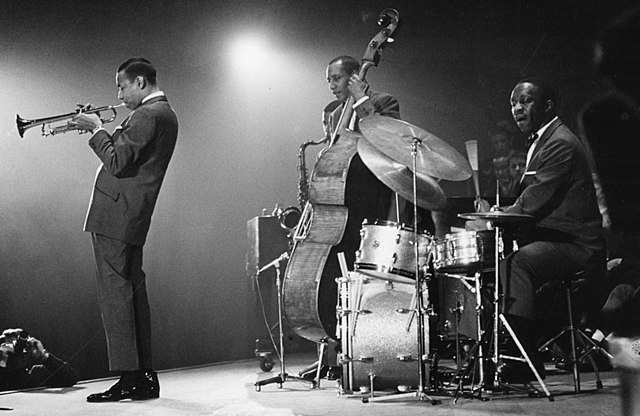
    <summary type="html"><![CDATA[<p><img src="https://hillhistory.org/files/fullsize/ea03b307ae70d86525135c31d4034d98.jpg" alt="Jazz Messengers in concert at Amsterdam&#039;s Concertgebouw. " /><br/><p><strong><em></em></strong></p><p><p><span style="font-weight: 400;">When most people think of jazz drummer Art Blakey, they might think of his unique and influential style of playing, or his years spent with his wildly popular band the Jazz Messengers. What often goes unnoticed are his roots in the Hill.</p><p></span><span style="font-weight: 400;">Blakey was born on October 11, 1919 in Pittsburgh to a single mother who died soon after he was born. He was raised by a family friend, not learning until years later that his foster mother was not his biological mother. Growing up in a home on Chauncey Street, he received some piano lessons in school, and gained musical experience in his foster family’s Seventh-Day Adventist Church. His uncle, Rubi Blakey, was a well known choir director in the area - in the late 1930s the elder Blakey put on several concerts with his group at venues like the Warren Methodist United Church in the Hill and Pittsburgh’s Carnegie Music Hall.&nbsp;</span></p>
<p><span style="font-weight: 400;">As a young teen, Art worked in the Carnegie steel mills, an experience he later described as one he “would like to forget.” His talent for music soon gave him a route out of the rough industrial work that was common in Pittsburgh, and by the time he was 14, Art was making money playing at clubs in the Hill. He started with piano, but soon switched to the drums when fellow Pittsburgh jazz legend Errol Garner needed a drummer for a gig.&nbsp;</span></p>
<p><span style="font-weight: 400;">While gaining a variety of experience in Pittsburgh nightclubs, Blakey was still working other jobs to make ends meet. At 18, he married his first wife, Clarice Stewart and began a family. The 1940 U.S. Census locates the Blakey family, including two young daughters, living in the Hill at 613 Boone Way (a location eventually demolished as part of the 1950s Lower Hill redevelopment project), and lists Art’s primary occupation as a road construction laborer for the Works Progress Administration.&nbsp; The census record also identifies 3 of Clarice’s siblings and an unrelated lodger at the same address, suggesting the young family’s straitened circumstances.&nbsp;</span></p>
<p><span style="font-weight: 400;">In the early 1940s, however, Art began to gain steadier employment as a musician, securing a residency with Alyce Brooks in a group called the “Rhythm Maniacs” at the Coobus Club (later renamed the Celebrity) on Centre Avenue. He also toured with Mary Lou Williams, a jazz pianist and composer from East Liberty. By 1943, he began to work in Fletcher Henderson’s big band, though he would soon move on the next year to play with Billy Eckstine, another Pittsburgh native. Art would later drum for the likes of Miles Davis and Charlie Parker, and in the mid-50s he formed his own band, the Jazz Messengers.&nbsp;</span></p>
<p><span style="font-weight: 400;">Art’s drumming was intense and passionate. His playing provided every tune with a raw bed of energy which fed into the solos of other band members. He was also an innovator; contemporaries credit Art with being among the first to master complex musical stylings like polyrhythms, and he was said to be a master of maintaining independence between all four limbs while drumming. Critics have labeled his music as “hard bop”, a faster, more aggressive variant of be-bop which was reminiscent of jazz’s roots in the blues. In a time when jazz audiences were becoming increasingly white, Art’s music managed to captivate a mostly Black audience. His bluesy style of playing was a return to the beginnings of jazz, and can be considered a revival of the Black ballroom scene.</span></p>
<p><span style="font-weight: 400;">While his playing style w</span><span style="font-weight: 400;">as distinctive and influential, Blake</span><span style="font-weight: 400;">y’s role as a bandleader and mentor was an equally important legacy.</span></p>
<blockquote><span style="font-weight: 400;">Even when I was playing with Miles Davis, Art was the strength of the band. </span><b><br />-Jackie McLean, saxophonist</b><span style="font-weight: 400;"></span></blockquote>
<p><span style="font-weight: 400;">&nbsp; His keen eye for talent led him to invest in </span><span style="font-weight: 400;">many young jazz musicians who would go on to become legends in their own right. Folks like Donald Byrd, Freddie Hubbard, Keith Jarrett, and Joanne Brackeen were all shaped by Art over the years as part of his band. Wynton Marsalis credited his time playing with Blakey’s Jazz Messengers as influential in his choice to pursue jazz instead of classical music. The musicians Blakey worked with saw him as the core of any group he was a part of; as saxophonist Jackie McLean put it, “Even when I was with Miles Davis, Art was the strength of the band.” In addition to developing the members of his band as musicians, Art became almost like a father figure to many. Javon Jackson, a member of the Jazz Messengers in the late 80’s, told the </span><i><span style="font-weight: 400;">New York Times</span></i><span style="font-weight: 400;"> that Art “taught [him] to be a man, how to stand up and be accounted for.”&nbsp;</span></p>
<span style="font-weight: 400;">Although Art Blakey died in 1990, his influence persists. For Meredith Soeder, a historian of jazz, the culture of mentorship that Art created was a reflection of his Pittsburgh roots. She writes in the </span><i><span style="font-weight: 400;">Western Pennsylvania History</span></i><span style="font-weight: 400;"> journal that the “warmth and fraternity that was so easily found in Pittsburgh” was spread throughout the jazz world by “its famous musicians who never forgot their home.” His natural talent as a drummer and a bandleader certainly helped him carve out for himself a distinguished place in jazz history, but it was his beginnings in the Hill that started Art Blakey on his journey to become an icon of modern jazz drumming. </span></p></p><p><em><strong><a href="https://hillhistory.org/items/show/50">For more (including 6 images), view the original article</a>.</strong></em></p><p></p>]]></summary>
    <published>2024-01-02T17:11:26+00:00</published>
    <updated>2025-07-02T19:08:17+00:00</updated>
    <link rel="alternate" type="text/html" href="https://hillhistory.org/items/show/50"/>
    <id>https://hillhistory.org/items/show/50</id>
    <author>
      <name>Nolan Cowan</name>
    </author>
  </entry>
</feed>