<?xml version="1.0" encoding="UTF-8"?>
<feed xmlns="http://www.w3.org/2005/Atom">
  <title type="text">Hill District Digital History</title>
  <updated>2026-04-25T14:57:20+00:00</updated>
  <generator uri="http://framework.zend.com" version="1.12.20">Zend_Feed_Writer</generator>
  <link rel="alternate" type="text/html" href="https://hillhistory.org/"/>
  <link rel="self" type="application/atom+xml" href="https://hillhistory.org/items/browse?output=rss2"/>
  <id>https://hillhistory.org/</id>
  <author>
    <name>Hill District Digital History</name>
    <uri>https://hillhistory.org</uri>
  </author>
  <link rel="hub" href="http://pubsubhubbub.appspot.com/"/>
  <entry>
    <title type="html"><![CDATA[Aurora Reading Club – A club for community involvement with a lasting impact]]></title>
    <summary type="html"><![CDATA[<p><img src="https://hillhistory.org/files/fullsize/38a81c3bb18df164728c2d99fd174734.jpg" alt="90th Anniversary Celebration" /><br/><p><strong><em></em></strong></p><p><p><span style="font-weight: 400;">In 1894, six women in the Hill District of Pittsburgh unknowingly made history with the creation of the Aurora Reading Club. Rachel Lovett Jones, along with Hannah Lovett, Virginia Woodson Proctor, Anna Posey, and Cora V. Hill Washington aimed to create a space where African American women could explore literacy, the arts, and the sciences at a time when African American women were not given many opportunities to do so.&nbsp; Their goals still live on within the club today.</span></p>
<p><span style="font-weight: 400;">The Aurora Reading Club created the motto, “Lifting as we climb,” to signify the women’s goal of helping each member better themselves through education and advocacy for themselves and each other. They did this through sharing literature, participating in cultural and political events, and using the reputation developed through the years to aid in their social pursuits. The club’s most common events consist of luncheons and community events to advocate and raise awareness for promoting literacy both locally and nationally.</span></p>
<p><span style="font-weight: 400;">Each month, the group hosts a luncheon at one of the member’s homes. This is in addition to a grand anniversary luncheon held in a larger venue to accommodate additional guests. Membership in the Aurora Reading Club has become a generational tradition, resulting in members like Thelma Lovette Morris, current co-chair of the club and the great-granddaughter of founder Hannah Lovett.&nbsp;</span></p>
<p><span style="font-weight: 400;">Examples of the club’s work have been regularly mentioned in the </span><i><span style="font-weight: 400;">Pittsburgh Courier</span></i><span style="font-weight: 400;">, which documented the Club’s meetings, including guest speakers, the topic of the meeting’s discussion, and informing readers about the book the group had talked about. They have also documented the wide variety of issues the Aurora Reading Club has addressed to help in the spread of information important to Pittsburgh.</span></p>
<p><span style="font-weight: 400;">In 1959, the </span><i><span style="font-weight: 400;">Pittsburgh Courier</span></i><span style="font-weight: 400;"> documented a club meeting where the topic discussed was about “an ordinance against discriminating in housing.” The luncheon had a member of the Commission come and talk about the working of the Office of the Mayor of Pittsburgh. In addition to area specific news, in 1960, the </span><i><span style="font-weight: 400;">Pittsburgh Courier</span></i><span style="font-weight: 400;"> reported the club had one of their monthly luncheons talking about “Negro History,” which discussed “contributions of the Negro in religion, poetry, music, science, medicine and architecture both locally and nationally.” This meeting also touched on many “firsts” like those of Dr. Vivian Davidson Hewitt, the first African American librarian.&nbsp;</span></p>
<p><span style="font-weight: 400;">The Aurora Reading Club is not only able to help local areas within Western Pennsylvania, like the Hill District, but people all over the country as well. The current day club’s accomplishments, documented in the </span><i><span style="font-weight: 400;">Pittsburgh</span></i> <i><span style="font-weight: 400;">Courier</span></i><span style="font-weight: 400;">, include setting up the Evers Book Fund in order to gather and ship books to multiple communities in Mississippi as well as providing books for the Selma Burke Art Center. The Aurora Reading Club has its roots placed firmly in the Hill District and has shown that it remains true to and has improved upon their original goals in 1894. <br /></span></p></p></p><p><em><strong><a href="https://hillhistory.org/items/show/79">For more (including 2 images and 1 video), view the original article</a>.</strong></em></p><p></p>]]></summary>
    <published>2024-12-11T17:56:51+00:00</published>
    <updated>2025-03-17T21:59:06+00:00</updated>
    <link rel="alternate" type="text/html" href="https://hillhistory.org/items/show/79"/>
    <id>https://hillhistory.org/items/show/79</id>
    <author>
      <name>&lt;p&gt;&lt;span style="font-weight: 400;"&gt;Claire Kleffman&lt;/span&gt;&lt;/p&gt;</name>
    </author>
  </entry>
  <entry>
    <title type="html"><![CDATA[Hill City – <p><span style="font-weight: 400;">Self-governing "city" for Hill District youth led to a decrease in crime and a nationally recognized mini-municipality<br /></span></p>]]></title>
    <summary type="html"><![CDATA[<p><img src="https://hillhistory.org/files/fullsize/31cae6f871002ff214dae73021c5d90a.jpg" alt="Hill City Youth Municipality Band" /><br/><p><strong><em></em></strong></p><p><p><span style="font-weight: 400;">In 1939, a group of children in the Hill District began to gain national attention. With the help of a local detective, they were able to form their own “municipality within a municipality” known as Hill City. This municipality was known as “the social force of the community” and created a model of how social action can empower youth to make a positive change in their community.</span></p>
<p><span style="font-weight: 400;">Police Detective Howard McKinney founded Hill City on June 4, 1939, and modeled it after a similar experiment in Columbus, Ohio. Miniature cities or miniature municipalities were used as a tool for urban reform during the 1890s in an attempt to aid immigrant populations in poor districts of New York. They had faded out of popularity for a while, but during the Great Depression, concerns grew again about growing juvenile crime rates in urban communities. This time, however, instead of being implemented into immigrant housing settlements, it was used for Black urban communities like the Hill District which were facing extreme struggle during the Great Depression. The idea was that if the children of the Hill District were given responsibility over themselves and their peers, it would curb crime and save the community money. The miniature municipality, Hill City, was similar to an after school club that was set up in a building. Children would run their own city and hold councils and trials. This government would make decisions for where money would go- whether it was to recreational activities or paying the building’s light bill. Hill City’s main goals were to cut down on petty crime in the area, help teach children responsibility and give them something to do after school. Over 1,800 Black and white children had joined the municipality, and all of the official positions were elected by and held by children.&nbsp; McKinney served primarily as an advisory position and guided these elected officials through policy and court hearings.</span></p>
<p><span style="font-weight: 400;">Howard McKinney originally started Hill City with his own money. He had framed Hill City as a project where children would be accountable for each other and looking out for each other instead of monitoring and targeting each other. He had believed that children were integral to the future of the Hill District and was deeply passionate about making sure that they grew up to be responsible adults. However, as Hill City started to gain the attention of the Pittsburgh City Council, it started to receive funding from the city of Pittsburgh. Every month, a $50 check would be sent to the Hill City Hall that would allow the members to heat and light the building as well as pay a phone and stationary bill. No purchases could be made in Hill City without prior approval from the Hill City Council, which was made up of children ranging from ages 12 to 19.</span></p>
<p><span style="font-weight: 400;">One of the most impressive aspects of Hill City was the judicial system, which held court at 2038 Wylie Avenue every Saturday. This system was so interesting that it attracted politicians to come and watch the court proceedings. If a child were caught committing a petty crime or partaking in gang activity, the police would turn the child over to Hill City instead of sending them to juvenile prison. Once in court, they would be tried by a judge, who was usually an older teenage Hill City member,&nbsp; as well as a jury made up of Hill City youth. If found guilty, the accused youth would then be sentenced to “hard labor” such as mopping, washing dishes, or other various housekeeping items around the municipality.</span></p>
<p><span style="font-weight: 400;">Hill City did two things for the Hill District: it saved the city of Pittsburgh money and created a society where children were uplifted and given importance and responsibility. It cost the city of Pittsburgh thousands of dollars to combat the crime seen in the Hill District. City officials and parents praised Hill City for giving underserved children better opportunities at a time when racial bias was rampant in urban areas. According to James M. Reid, a writer for the </span><i><span style="font-weight: 400;">Pittsburgh Courier</span></i><span style="font-weight: 400;"> who wrote a series on Hill City, “Fewer fire alarms save thousands of dollars, storekeepers say thefts are reduced 63 per cent, ugly landmarks are beautified, health and recreation programs are promoted...”</span></p>
<p><span style="font-weight: 400;">Hill City was one of many programs that were ended during the urban renewal movement of the 1950s and 60s. The municipality was unable to relocate and therefore faded out of its existence. Now, its legacy is a testament to how children can create a city that is built on community and betterment.</span></p></p></p><p><em><strong><a href="https://hillhistory.org/items/show/77">For more (including 4 images), view the original article</a>.</strong></em></p><p></p>]]></summary>
    <published>2024-12-11T17:50:43+00:00</published>
    <updated>2025-03-31T19:13:19+00:00</updated>
    <link rel="alternate" type="text/html" href="https://hillhistory.org/items/show/77"/>
    <id>https://hillhistory.org/items/show/77</id>
    <author>
      <name>&lt;span&gt;Beau Fillion&lt;/span&gt; and Leah Harris</name>
    </author>
  </entry>
  <entry>
    <title type="html"><![CDATA[Centre Avenue YMCA – A beacon of progress in the Hill District]]></title>
    <summary type="html"><![CDATA[<p><img src="https://hillhistory.org/files/fullsize/83b1fa84fb4f1e7d842ff960c6bce244.jpg" alt="Centre Avenue Y.M.C.A." /><br/><p><strong><em></em></strong></p><p><p>Throughout its history, the Young Men’s Christian Association (YMCA) has had a focus of providing quality support to working class men survive the harsh conditions that they were facing. When it was founded in 1851, the YMCA had strong goals to bring support and services to the working class. Unfortunately, the services and lodgings that were offered by the YMCA were heavily segregated. When William Hunton became the first black full time secretary of the YMCA in 1888, he faced the challenges of establishing a place for African Americans under the YMCA’s segregated policies. This led to the birth of a movement that focused on creating “semi-autonomous African American YMCA system,” that no longer focused on the “seemingly futile goals of participation with whites, and instead advocated self-help and racial solidarity.” YMCAs built under this philosophy were to serve as pillars in African American communities and would&nbsp; “Shield black men from the humiliations of lingering racism and segregationist policies.” This required Hunton and others to fundraise and attract benefactors willing to offer aid to those communities seeking to build their YMCA. After a lengthy process of successfully fundraising the required funds to purchase a site and having the structure built, the Pittsburgh’s African American YMCA affiliate officially joined this legacy as the Centre Avenue YMCA in 1923.</p>
The Centre Avenue YMCA, located on the corner of Francis Street and Centre Avenue, served as a cultural and institutional beacon of the Hill District, offering many amenities such as a swimming pool, gym, boxing ring, and community center. &nbsp;The YMCA also provided lodging. These lodgings were often used by black athletes who could not stay at the white only hotels. Among its 86 rooms, many famous figures have claimed residency at some point or another such as baseball hero Jackie Robinson, jazz legend Dizzy Gillespie, and champion-boxer Joe Louis. The Historic YMCA also hosted several speeches and lectures from prominent African Americans such as W.E.B DuBois, Langston Hughes, and Paul Robeson. Even famous Pittsburgh playwright, August Wilson used the Y’s meeting spaces earlier in his career to meet with his group the Centre Avenue Poets, which included fellow writers Charlie Williams and Rob Penny. The YMCA offered many great programs for community members. One such program provided college scholarships to local students, on the basis that they would return and work and work at the YMCA in some capacity after graduation.<br />
<h3><span style="font-weight: 400;">A Slow Decline</span></h3>
<p>Regardless of the opportunities and services the Central Avenue YMCA provided the residents of the Hill District, membership began to steadily decline in the late 1950s. The changes began with the Urban Renewal projects in the Lower Hill, forcing many members to relocate. As the “separate but equal” doctrine in the YMCA’s policy on membership and attendance dissipated due to the success of the Civil Rights movement, many middle class African Americans chose membership at the better funded YMCAs that had once been segregated. The later collapse of the steel industry in the 1970s and 80s meant more people could not afford to use the Y’s services. This turmoil would cause an upsurge in substance abuse and criminal activity in the late 80s and early 90s for the Hill. The Central Avenue YMCA provided a place for transitional housing and provided support services for people fighting substance abuse and mental illness, causing a shift from recreational and community activities to community services. However it was designated a City Historic Infrastructure in 1995.</p>
<h3><span style="font-weight: 400;">Rebuilding</span></h3>
<p>Later, in 2012, a new YMCA was built on Central Ave and named after Thelma Lovette. Lovette was a prominent activist in Pittsburgh who heavily involved herself with the local YMCA as the first woman on the Central Ave Board. As of today, the Centre Avenue YMCA no longer functions in the same capacity as it once did.&nbsp; This does not mean that it has lost all of its original principles.&nbsp; In 2020, it was announced that a partnership between the YMCA and ACTION Housing, with help from $7.4 million provided by over 20 agencies, would transform the Historic Centre Avenue building into a low-income residency for African American men. This renovation allowed the building to continue its mission of being a safe refuge to African American men who require the safety of its walls.&nbsp;<a href="#_ftnref6" name="_ftn6"></a></p>
<p></p>
<p><a href="#_ftnref10" name="_ftn10"></a></p>
<p><a href="#_ftnref12" name="_ftn12"></a></p></p></p><p><em><strong><a href="https://hillhistory.org/items/show/65">For more (including 3 images), view the original article</a>.</strong></em></p><p></p>]]></summary>
    <published>2024-03-26T03:20:37+00:00</published>
    <updated>2025-05-31T23:58:12+00:00</updated>
    <link rel="alternate" type="text/html" href="https://hillhistory.org/items/show/65"/>
    <id>https://hillhistory.org/items/show/65</id>
    <author>
      <name>&lt;span style="font-weight: 400;"&gt;&amp;nbsp;Brandon Self and Andrew Ciavarino&lt;br /&gt;&lt;/span&gt;</name>
    </author>
  </entry>
  <entry>
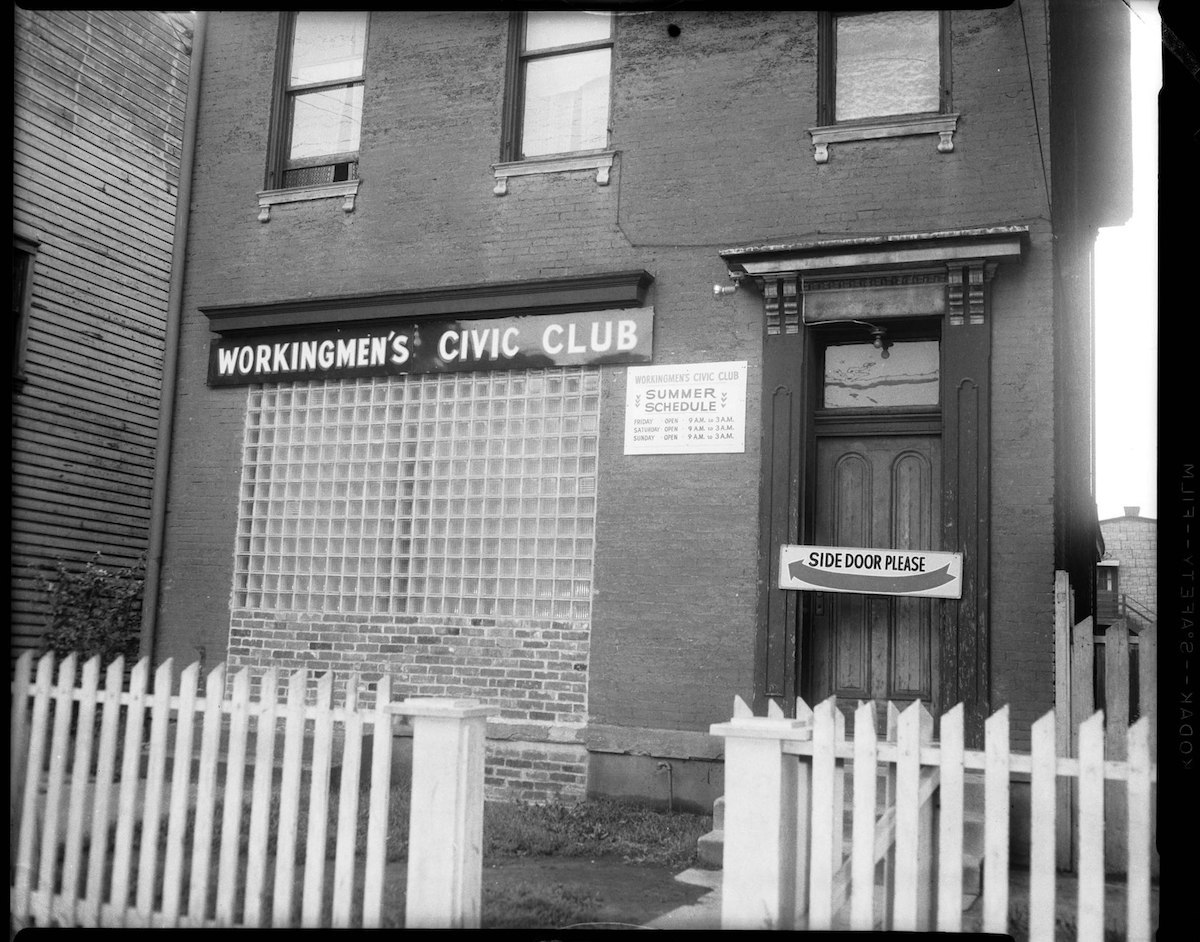
    <title type="html"><![CDATA[Workingmen's Civic Club]]></title>
    <summary type="html"><![CDATA[<p><img src="https://hillhistory.org/files/fullsize/16d652dec11c1795e471468eec8609d2.jpg" alt="Workingmen&#039;s Civic Club exterior" /><br/><p><strong><em><p><em>"I went down the Workmen's Club. They had Kenny Fisher down there. You couldn't hardly get in. I ain't never seen so many people</em>."</p>
<p><em><strong>Philmore, "Jitney"</strong></em></p></em></strong></p><p>Now demolished, the Workingmen's Civic Club was a hotspot for music and entertainment. The club reached the height of its popularity in the 1960s, and inspired scenes in four of August Wilson's plays: <em>Joe Turner's Come and Gone, Seven Guitars, Two Trains Running,&nbsp;</em>and&nbsp;<em>Jitney</em>.</p></p><p><em><strong><a href="https://hillhistory.org/items/show/41">For more, view the original article</a>.</strong></em></p><p></p>]]></summary>
    <published>2023-10-02T23:52:35+00:00</published>
    <updated>2025-03-27T17:24:09+00:00</updated>
    <link rel="alternate" type="text/html" href="https://hillhistory.org/items/show/41"/>
    <id>https://hillhistory.org/items/show/41</id>
    <author>
      <name>The Hill District Digital History Team</name>
    </author>
  </entry>
</feed>