<?xml version="1.0" encoding="UTF-8"?>
<feed xmlns="http://www.w3.org/2005/Atom">
  <title type="text">Hill District Digital History</title>
  <updated>2026-04-25T14:58:38+00:00</updated>
  <generator uri="http://framework.zend.com" version="1.12.20">Zend_Feed_Writer</generator>
  <link rel="alternate" type="text/html" href="https://hillhistory.org/"/>
  <link rel="self" type="application/atom+xml" href="https://hillhistory.org/items/browse?output=rss2"/>
  <id>https://hillhistory.org/</id>
  <author>
    <name>Hill District Digital History</name>
    <uri>https://hillhistory.org</uri>
  </author>
  <link rel="hub" href="http://pubsubhubbub.appspot.com/"/>
  <entry>
    <title type="html"><![CDATA[The Court of Ideas – <span style="font-weight: 400;">A community-built outdoor theater was an internationally-acclaimed experimen in community planning</span>]]></title>
    <summary type="html"><![CDATA[<p><img src="https://hillhistory.org/files/fullsize/bc119a01f4b967f80be5cac957f57c4b.jpg" alt="Court of Ideas" /><br/><p><strong><em></em></strong></p><p><p>In the late 1960s, Pittsburgh’s Hill District became the birthplace of an innovative architectural project. Spearheaded by visionary architect Troy West, this initiative sought to use architecture as a means of fostering social change in urban communities.</p>
<p>Troy West was no ordinary architect. After studying at Carnegie-Mellon University and working alongside renowned figures like Louis Kahn, West returned to Pittsburgh with a clear mission: to partner with disadvantaged communities in challenging the top-down approach often associated with urban development. His vision took shape in the Hill District through a project called Architecture 2001, which embraced inclusive and participatory design to rehabilitate the neighborhood.</p>
<p>Architecture 2001 brought together an eclectic and diverse team. In addition to architects, the group included a psychologist, a lawyer, and a carpenter who had honed his skills while incarcerated. They were supported by local youth and members of the community, all working toward a shared goal—to create a functional, inspiring space known as the "Court of Ideas" at 2001 Center Avenue. The team didn’t just build; they also provided vocational training in construction, offered rehabilitation programs for those struggling with drug addiction, and improved local housing conditions.</p>
<p>The Court of Ideas itself was an architectural experiment, featuring sloping geometric concrete plinths, forum-like spaces, and a series of mini-stages and seating areas—all covered in vibrant orange carpeting. According to project leader Dick Morton, community reactions during construction were mixed. “People came around to see that we had enough water, and kids came to watch with their dogs. But others would stand whole days and laugh. To them, it was a big joke. They were sure it would not work. Now, everyone wants to be part of it.”</p>
<p>Despite early skepticism, the Court of Ideas quickly became a cultural hub. It hosted poetry readings, political rallies, Christmas parties, and musical concerts featuring renowned artists like Art Blakey and Abbey Lincoln. Architects and designers from around the world visited the site, drawn to its innovative approach to public space and community engagement.</p>
<p>For residents of the Hill District, the Court of Ideas became a source of hope. Troy West emphasized the significance of this grassroots effort, stating, “The best part about this is that it’s being built from within. The people are doing it themselves.”</p><p>One of the most compelling success stories to emerge from the experiment was that of Charles ‘Chuck’ Dial. A former drug addict, Dial turned his life around through his involvement with the project. Initially hired as a construction supervisor, Dial also found stability, overcame his addiction, and became a role model for others in the community.</p>
<p>While today the Court of Ideas site is empty, its lessons about the value of community-driven design, collaboration, and inclusivity still remain, and offer practical insights for community leaders looking to create spaces that serve and uplift local residents.</p></p></p><p><em><strong><a href="https://hillhistory.org/items/show/71">For more (including 3 images), view the original article</a>.</strong></em></p><p></p>]]></summary>
    <published>2024-09-26T15:38:33+00:00</published>
    <updated>2025-03-31T14:22:18+00:00</updated>
    <link rel="alternate" type="text/html" href="https://hillhistory.org/items/show/71"/>
    <id>https://hillhistory.org/items/show/71</id>
    <author>
      <name>Mustafa Kandil</name>
    </author>
  </entry>
  <entry>
    <title type="html"><![CDATA[The Pittsburgh Courier – America's Largest Black Newspaper]]></title>
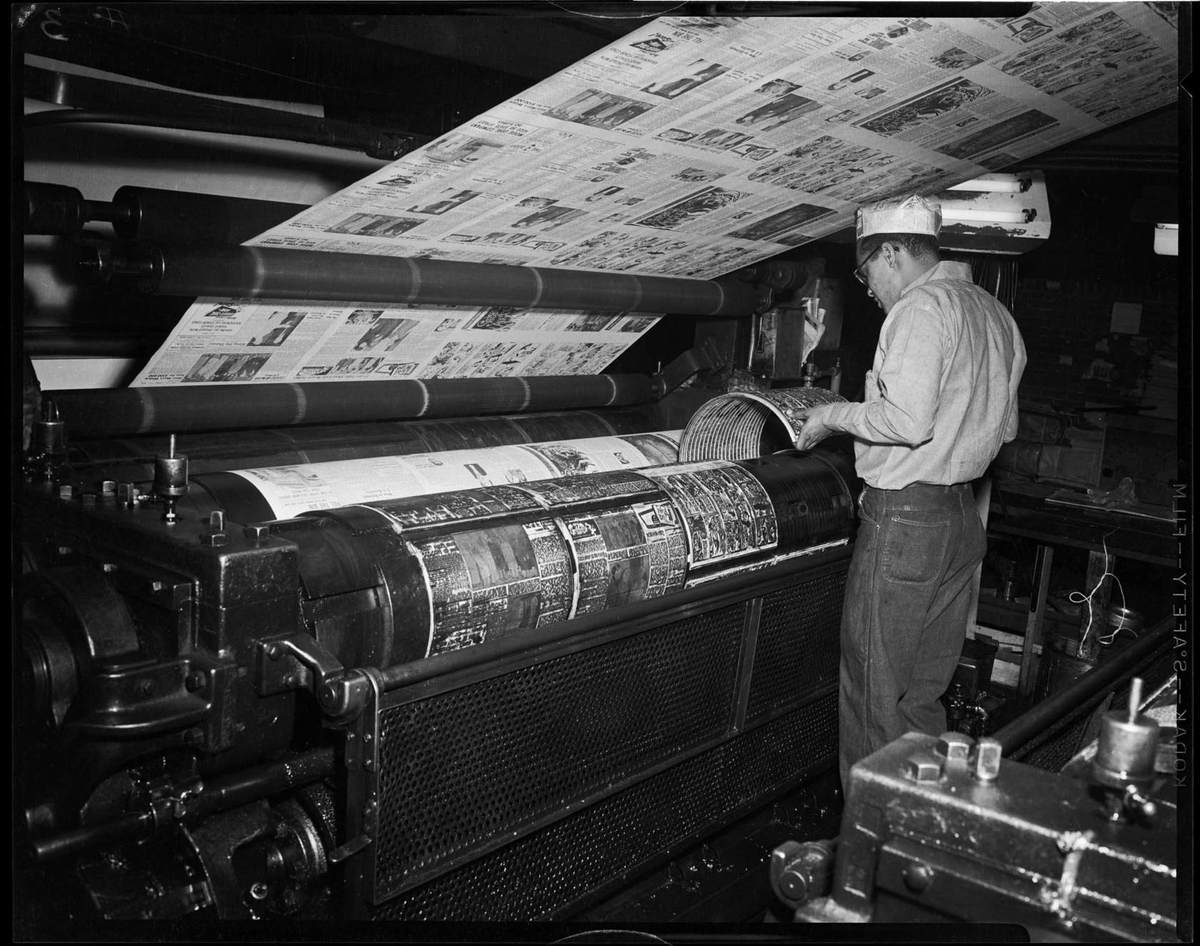
    <summary type="html"><![CDATA[<p><img src="https://hillhistory.org/files/fullsize/da6e5133d56a0a27510810f17c3998bf.jpg" alt="Pittsburgh Courier newspaper press operator, possibly William Brown, possibly printing Chicago or other Midwestern edition" /><br/><p><strong><em></em></strong></p><p><p><span style="font-weight: 400;">In the late 1800s and early 1900s, Pittsburgh’s newsstands suffered from a serious lack of quality Black papers. Out of the six white dailies in the city, only one included Black news. </span><i><span style="font-weight: 400;">The Pittsburgh Press</span></i><span style="font-weight: 400;">’ segregated “Afro-American News” column was far from ideal however, and the little reporting that the </span><i><span style="font-weight: 400;">Press</span></i><span style="font-weight: 400;"> did offer mostly consisted of sensational accounts of crimes, affairs, and other sordid material which hardly painted the Black community in a favorable light.</span></p>
<p><span style="font-weight: 400;">This all would change when Nathaniel Edward Harleston, a security guard at the H.J. Heinz food packing facility, began a newspaper as a way to publish some of his poetry. With the help of a couple of friends from the Heinz plant, the first official issue of the <em>Courier</em> was printed on January 15, 1910. Just a few years later, Harelston’s new paper would expand to include headquarters at 1212 Wylie Ave (though this would later move downtown), and its own publishing plant at 2628 Centre Ave.</span></p>
<p><span style="font-weight: 400;">With such deep roots in the largest historically Black neighborhood in Pittsburgh, it is no surprise that </span><i><span style="font-weight: 400;">The Pittsburgh Courier</span></i><span style="font-weight: 400;"> would become one of the most prominent voices in Black America within just a few decades. Not only would the paper go on to provide a rich account of Black life over the years, it would also serve as an instrument of agency in the fight for civil rights.</span></p>
<h3><span style="font-weight: 400;">A Fight for Rights</span></h3>
<p><span style="font-weight: 400;">Much of the </span><i><span style="font-weight: 400;">Courier’s</span></i><span style="font-weight: 400;"> early reputation as a “crusader” paper for Black rights can be attributed to its first editor, Robert Lee Vann.</span></p>
<blockquote>One reporter, Edna Chappel, was even assigned to visit businesses in the greater Western Pennsylvania area and write about her experiences of discrimination there because of her race.</blockquote>
<p><span style="font-weight: 400;">Vann was the first African American to graduate from University of Pittsburgh’s school of law, and he was one of only five Black lawyers in Pittsburgh at the time. After helping to find investors and using his law expertise to draw up the incorporation papers, Vann took over as editor of the </span><i><span style="font-weight: 400;">Courier</span></i><span style="font-weight: 400;"> when Harleston left in late 1910.&nbsp;</span></p>
<p><span style="font-weight: 400;">From the very beginning, Vann made his vision for the </span><i><span style="font-weight: 400;">Courier</span></i><span style="font-weight: 400;"> clear; the paper would serve to “abolish every vestige of Jim Crowism in Pittsburgh”, as he wrote in an early editorial. In the first years, he would use his writing to address pressing issues in the Hill District, calling for a Black building and loan association as well as a Black hospital to combat the housing and health crises there.&nbsp;</span></p>
<p><span style="font-weight: 400;">A future politician himself, (he would serve as Assistant Attorney General in the Roosevelt administration), Vann called for the readers of his paper to organize in politics. When the </span><i><span style="font-weight: 400;">Courier </span></i><span style="font-weight: 400;">began to have national influence in the early 30s, Vann’s writings carried increasing weight in Black politics. His opinion in one 1932 editorial that “negroes have changed their political philosophy... This year I see them voting a Democratic ticket” has even been credited by some historians with significantly contributing to Roosevelt’s victory later that year.&nbsp;</span></p>
<p><span style="font-weight: 400;">This foray into national affairs continued into the mid-20th century, as the </span><i><span style="font-weight: 400;">Courier</span></i><span style="font-weight: 400;"> began to report more and more on the Civil Rights movement across the country. They covered stories like the </span><a href="https://nmaahc.si.edu/explore/stories/scottsboro-boys"><span style="font-weight: 400;">Scottsboro Boys</span></a><span style="font-weight: 400;">, </span><a href="https://www.archives.gov/milestone-documents/brown-v-board-of-education"><span style="font-weight: 400;">Brown v. Board</span></a><span style="font-weight: 400;">, and the campaigns of </span><a href="https://www.history.com/topics/black-history/a-philip-randolph"><span style="font-weight: 400;">A. Phillip Randolph</span></a><span style="font-weight: 400;">, while their sports reporters doggedly followed Black boxer Joe Louis as he won repeated victories in the ring.&nbsp;</span></p>
<p><span style="font-weight: 400;">The </span><i><span style="font-weight: 400;">Courier </span></i><span style="font-weight: 400;">reported on local injustice towards African Americans as well. They frequently covered the Homestead Grays, Pittsburgh’s Negro League baseball team, and fought for major league desegregation in their editorials. One reporter, Edna Chappel, was even assigned to visit businesses in the greater Western Pennsylvania area and write about her experiences of discrimination there because of her race.&nbsp;</span></p>
<p><span style="font-weight: 400;">The </span><i><span style="font-weight: 400;">Courier </span></i><span style="font-weight: 400;">was known for hiring young, Black talent like Chappel who might never have been given a job at another paper. Famous Pittsburgh photographer Charlie “Teenie” Harris was briefly employed at the paper, as well as William Gardner Smith, a novelist who spent time in the company of other great Black authors like James Baldwin and Richard Wright. Other reporters at</span> <span style="font-weight: 400;">the </span><i><span style="font-weight: 400;">Courier</span></i><span style="font-weight: 400;"> are less well known, but their work was foundational for the paper.&nbsp;</span></p>
<h3><span style="font-weight: 400;">Later Years</span></h3>
<p><span style="font-weight: 400;">After the death of Robert Vann in 1940, the paper did not find an executive editor who could match its first in passion and vision until Percival L. Prattis accepted the executive editorship in 1956. Prattis had worked at the </span><i><span style="font-weight: 400;">Courier</span></i><span style="font-weight: 400;"> for years prior, and had already been instrumental in its development before becoming editor. Vann had originally hired him in 1935 after seeing his impressive work at the </span><i><span style="font-weight: 400;">Courier</span></i><span style="font-weight: 400;">’s rival Black paper, </span><i><span style="font-weight: 400;">The Chicago Defender</span></i><span style="font-weight: 400;">, where Prattis had been city editor. Prattis used his connections in Chicago to expand the circulation of the </span><i><span style="font-weight: 400;">Courier</span></i><span style="font-weight: 400;"> in the Midwest, where the paper had previously struggled to find distributors in its competition with the </span><i><span style="font-weight: 400;">Defender</span></i><span style="font-weight: 400;">.&nbsp;</span></p>
<p><span style="font-weight: 400;">Before he became executive editor, Prattis reported on reconstruction after the war. He heavily covered the creation of the United Nations, even personally attending the founding conference in San Francisco. He also reported on the conflicts in the Middle East, something which was not often seen in Black papers.&nbsp;</span></p>
<p><span style="font-weight: 400;">In the mid-1950s, the advancement of the Civil Rights movement was beginning to convince many establishment white papers to take Black news more seriously. As competition with these white dailies increased, the </span><i><span style="font-weight: 400;">Courier </span></i><span style="font-weight: 400;">began to struggle financially. Despite this, Prattis increased the circulation to a peak of 350,000 copies, with 14 editions nationwide. This likely is due to his aggressive style; under Prattis, the </span><i><span style="font-weight: 400;">Courier</span></i><span style="font-weight: 400;"> reported stories of injustice which its competitors were simply unwilling to publish.</span></p>
<p><span style="font-weight: 400;">Eventually, the </span><i><span style="font-weight: 400;">Courier</span></i><span style="font-weight: 400;">’s money troubles proved too much to overcome, however, and the paper was sold in 1966 to John Sengstacke, owner of the </span><i><span style="font-weight: 400;">Defender</span></i><span style="font-weight: 400;">. He relaunched the paper the next year as </span><i><span style="font-weight: 400;">The New Pittsburgh Courier</span></i><span style="font-weight: 400;">. By then, many of its finest reporters and editors had left, including Prattis and Bolden, and the paper would never again reclaim its previous quality or national influence.&nbsp;</span></p>
<span style="font-weight: 400;">Over the half-century of its publication, </span><i><span style="font-weight: 400;">The Pittsburgh Courier</span></i><span style="font-weight: 400;"> went from a two page collection of a Steel City security guard’s poems to a national paper which changed the landscape of Black life in America. As Frank Bolden once said in an interview, the Black press acted as an “advocate of all our dreams, wishes, and desires.” Without that small printing plant in the Hill, dutifully churning out issues week after week, Black Americans would not have had the chance to see their histories, sufferings, and longings given a voice in the work of the </span><i><span style="font-weight: 400;">Courier</span></i><span style="font-weight: 400;">.</span></p></p><p><em><strong><a href="https://hillhistory.org/items/show/62">For more (including 7 images), view the original article</a>.</strong></em></p><p></p>]]></summary>
    <published>2024-03-07T15:50:22+00:00</published>
    <updated>2025-06-23T00:26:16+00:00</updated>
    <link rel="alternate" type="text/html" href="https://hillhistory.org/items/show/62"/>
    <id>https://hillhistory.org/items/show/62</id>
    <author>
      <name>Nolan Cowan</name>
    </author>
  </entry>
  <entry>
    <title type="html"><![CDATA[Central Baptist Church – Faith and Activism in the Hill]]></title>
    <summary type="html"><![CDATA[<p><img src="https://hillhistory.org/files/fullsize/b9305e405697c49d6c1897b469e6afe0.jpg" alt="Congregation of Central Baptist" /><br/><p><strong><em></em></strong></p><p>Throughout the 111 years that Central Baptist Church has stood at 2200 Wylie Avenue, it has offered the residents of the Hill District a strong Black religious presence in the neighborhood which has uplifted the whole community. Though the church has had its struggles over the decades, the devoted leaders which have pastored it have continually made Central Baptist into a church body which serves the Hill both socially and spiritually.<br />
<h3><span style="font-weight: 400;">Difficult Beginnings</span></h3>
<br />Formed in 1891, Central Baptist purchased its building on the corner of Kirkpatrick and Wylie in 1912, and has stayed there ever since. The church’s first years were uneventful until it began experiencing severe financial difficulties during the tenure of its sixth pastor, Dr. Rev. C.A. Ward, likely due to the economic hardships brought to the Hill by the Great Depression. The situation was made even worse when the church building caught fire from unknown causes in 1934, which required significant efforts to rebuild. According to one Courier article, the church’s debts were so large in the late thirties that they were “‘choking’ the life and spirit” from its congregation. Though Rev. Ward attempted to resign, the church board decided against it, and Central Baptist did not receive a new pastor until the reverend passed away in 1937. </p><p>His successor, Rev. Cornell E. Talley, was one of the most beloved pastors the church ever had. A relatively young man for his trade at just 31 years old, Talley arrived from Indianapolis with his wife and eight month old son, and preached his first sermon at Central Baptist in 1938. Within just three years, he tripled the church’s attendance from 532 regular members to 1,500, and he not only managed to pay off all of Central Baptist’s debts, but increased the church’s savings to $5,000. </p><p>This kind of growth was unheard of for the church previously, but the church’s rocky history seemed not to bother Rev. Talley. He was known for his motto, “Forgetting those things which were behind, and reaching forth unto those things which are before.” Under his leadership this became the guiding vision behind Central Baptist, inspiring their participation in the struggle for Black freedoms.<br />
<h3><span style="font-weight: 400;">Fighting for Rights</span></h3>
<br />The church at this time took an active role in the civil rights movement, hosting several NAACP rallies in support of activists in the South and at home. They even hosted NAACP chief counsel Thurgood Marshall in 1950, just a few years before his landmark victory in <em>Brown v. Board</em> and his historic tenure as the first African American Supreme Court Justice. </p><p>Dr. Martin Luther King came to visit on several occasions, leading services of worship at the church as well as delivering his “A Knock at Midnight” speech there. When Rev. Talley took a position with another church in 1961, Dr. King was even considered as a candidate in the church’s search for a new pastor. </p><p>Talley's resignation was vigorously protested by many of the congregation’s members, a testament to how much he was cherished as the pastor there. He was succeeded by Dr. Isaac Green, who led Central Baptist from 1963 to 1994, and saw the church through endeavors like their first televised services and the creation of the Central Baptist Academy. The church’s current pastor, Rev. Victor Grigsby, has continued Central Baptist’s legacy of community service and activism, even holding a rally to support former President Barack Obama’s campaign in 2008.</p></p><p><em><strong><a href="https://hillhistory.org/items/show/27">For more (including 4 images), view the original article</a>.</strong></em></p><p></p>]]></summary>
    <published>2023-09-27T00:19:55+00:00</published>
    <updated>2025-06-21T18:54:37+00:00</updated>
    <link rel="alternate" type="text/html" href="https://hillhistory.org/items/show/27"/>
    <id>https://hillhistory.org/items/show/27</id>
    <author>
      <name>Nolan Cowan</name>
    </author>
  </entry>
  <entry>
    <title type="html"><![CDATA[Bethel African Methodist Episcopal Church – Resilience and Revitalization in the Hill]]></title>
    <summary type="html"><![CDATA[<p><img src="https://hillhistory.org/files/fullsize/9579d9248f865eb9bd1c2624d9a6d05b.jpg" alt="Bethel A.M.E. Church on 1206 Wylie Avenue, now torn down" /><br/><p><strong><em>An institution focused on faith, service, and activism, Bethel AME is a testament to the enduring spirit of Pittsburgh's Black community.</em></strong></p><p>The Bethel African Methodist Episcopal Church in Pittsburgh recently signed a deal with the Pittsburgh Penguins hockey team to recuperate its historic land. But why was this deal necessary? Under a program known as "urban renewal" in the 1950s, Pittsburgh city leaders ordered Bethel AME and many other historic buildings to be demolished to make way for the Civic Arena. Today, Bethel fights for its return to the neighborhood it called home. Yet this glimpse only tells a fraction of the church's story. To truly understand the modern context, the church's powerful history spanning the 1800s and 1900s needs to be understood. Through its social and spiritual history, Bethel AME Church greatly impacted the Lower Hill neighborhood and its African American community.<br />
<h3><span style="font-weight: 400;">Early Activism</span></h3>
<br />In the nineteenth century, Bethel played a vigorous role in black civil rights. Originally known as the "African Church," black residents created it in 1808 as a non-denominational church to support their small community. The church's recruitment quickly expanded as more black Americans arrived in Pennsylvania, since the state offered a safe haven for escaped slaves. In order to properly organize their membership, the church officially affiliated with the African Methodist Episcopal Church in 1818. The AME Church formed as a national anti-slavery organization; in other words, the church supported escaping slaves in the Underground Railroad, opposed the African colonization movement, and bolstered black suffrage and education. </p><p>Through these political goals, Bethel AME in Pittsburgh joined a united movement dedicated to black civil rights, and actively participated in that movement. Under the leadership of Reverend Lewis Woodson, the Pittsburgh church itself became a stop on the Underground Railroad to help escaping slaves. Reverend Woodson soon led the church to form the city's first school for black children in 1831. Additionally, as the movement expanded throughout Pennsylvania, Bethel AME hosted the state's civil rights convention in 1841. </p><p>During the turbulence of Reconstruction, the national AME Church sent missionaries to help protect the rights of the newly freed African Americans of the South. Black Pittsburgh residents regularly participated in this missionary work. One Pittsburgh Courier article proudly cites the service history of the city's men and women, including local missionary president Harriet White and "young people's department" director Elsie Meeks as recently as 1953. </p><p>The national AME Church also pushed for black representation and justice in American history, as a significant actor in the 1876 centennial celebrations. Representatives like Christian Recorder editor Benjamin Tucker Tanner advocated for events celebrating black history, including memorials of African American military service, religious liberty, and new monuments to black spiritual leaders like African Methodist founder Richard Allen. </p><p>Within this coalition, Bethel AME remained a powerful force for black civil rights in Pittsburgh. Reverend J. W. Gazaway, pastor of Bethel AME, provides a perfect example of black leadership in the city. In 1898, Gazaway spoke out against the trend of lynching black men, and served his community as a spiritual advisor to black Americans imprisoned in an unfair criminal justice system. Through their efforts at black education, suffrage, civil rights, and spiritual support, the leaders of Bethel AME played a key role in black civil rights in the 1800s. <br />
<h3><span style="font-weight: 400;">20th Century Challenges</span></h3>
<br />Moving into the twentieth century, the national AME organization faced new challenges affecting the Pittsburgh church. Over two decades, several black denominations splintered into different factions with disparate goals, and Pittsburgh remained in the center of this debate. Bethel AME hosted a conference for these denominations to unite in common interests and proposed the Pittsburgh Plan for Unification in 1927. The Colored Methodist Episcopal, African Methodist Episcopal, and African Methodist Episcopal Zion churches all wanted an equal balance of leadership and structure, to ensure no single denomination would absorb the others in the potential merger. While these factions ultimately remained separate, this illustrates another example of Bethel's authority on the national stage, which continues through the modern civil rights movement.</p><p>Beyond its wide range of influence, Bethel has provided a welcoming respite to generations of African Americans in Pittsburgh. By 1962, Reverend J. G. Harris found that "the vineyard is richer" as the pews of his church filled with more educated, active members. <em>Pittsburgh Courier</em> writer Theodore Graham reported this steadily growing church membership owed its success to the caring involvement of church leaders in all facets of life, including "housing, labor, community problems, and politics." With such passion for advocacy, Bethel church members knew their leaders would speak out to protect their interests. </p><p>Bethel also stands strong as an institution that feels like a second home to its members.
<blockquote>Bethel has provided a welcoming respite to generations of African Americans in Pittsburgh.</blockquote>
In addition to weekly Sunday services and Wednesday Bible Study and Church School groups, churchgoers have always joined together to celebrate their house of faith. Over decades, members organized anniversary celebrations of the church's founding, including banquets where key community leaders remembered Bethel's role in their lives. These reverent speeches came from influential men and women, such as Judge John Drew of the Common Pleas Court in 1953. During a report on one well-attended banquet, Courier religious editor Bert Logan examined the history of Bethel's charitable entrepreneurs, highlighting a spirit of caring philanthropy. Bethel AME Church acted as a vibrant part of life in the Lower Hill.<br />
<h3><span style="font-weight: 400;">Urban Renewal Era</span></h3>
<br />Unfortunately, during the 1950s, the church's neighborhood came under attack. Relying on environmental language of urban "blight" or a decaying landscape, the Urban Redevelopment Authority of Pittsburgh pursued a program of "urban renewal" and demolished the historically black Lower Hill District. This trend occurred across American cities of the postwar era and aimed to remove poor, declining, and largely minority neighborhoods and replace them with new commercial development. More than 8,000 residents were evicted from the Lower Hill, and many of the businesses and institutions were lost or destroyed.</p><p>After decades of civil rights activism to restore their community, black Pittsburgh residents established major breakthroughs. Twenty-first century activism has produced a legacy of community engagement, including community benefits agreements to guarantee black residents will have a say in projects involving economic development. Within this activism, Bethel AME persists as a community leader, offering a space for change.<br />
<h3><span style="font-weight: 400;">Recent Developments</span></h3>
<br />In April 2023, a great deal of the Pittsburgh press focused on Bethel's story. Through a comprehensive agreement between the Pittsburgh Penguins legal team and the leaders of Bethel AME, new plans are underway to create new housing, a childcare facility, and a commercial zone in the Lower Hill. These public relations initiatives demonstrate how Bethel endures as a vital authority in the memory of Pittsburgh's black community. Despite the shifting physical locations of the Bethel AME Church in Pittsburgh, it has remained an eminent source of strength in the Hill community for over two centuries. The spiritual and social power of this house of faith transcends place and time.</p></p><p><em><strong><a href="https://hillhistory.org/items/show/9">For more, view the original article</a>.</strong></em></p><p></p>]]></summary>
    <published>2023-07-26T12:57:36+00:00</published>
    <updated>2025-06-01T01:09:35+00:00</updated>
    <link rel="alternate" type="text/html" href="https://hillhistory.org/items/show/9"/>
    <id>https://hillhistory.org/items/show/9</id>
    <author>
      <name>Joseph Naughton</name>
    </author>
  </entry>
  <entry>
    <title type="html"><![CDATA[Freedom Corner – A Rallying Point for Pittsburgh Activism]]></title>
    <summary type="html"><![CDATA[<p><img src="https://hillhistory.org/files/fullsize/3e2fe580e1d62bac710d51170d6d12a4.jpg" alt="MLK Day of Mourning March " /><br/><p><strong><em>The intersection of Centre Avenue and Crawford Street serves as a significant monument to civil rights activism in Pittsburgh.</em></strong></p><p>In the 1950s, city planners across the country labeled neighborhoods as "sub-standard" and moved to replace them with new houses and gentrified communities. Eradication disguised in the name of "urban renewal" threatened to destroy the Hill District and the lives of the people that called it home. To make room for the development of the Civic Arena, planners seized large areas of the Lower Hill District by means of eminent domain and forced 8,000 residents and 400 businesses to leave the Lower Hill District, as "progress" destroyed their homes and businesses and threatened their way of life. </p><p>As talk of further top-down redevelopment crept into the Hill District, residents held the line at the corner of Crawford and Centre. A grassroots group called the <span style="font-weight: 400;">Citizens Committee for Hill District Renewal (CCHDR) erected a billboard on the corner in 1966, declaring "Attention City Hall and URA: NO REDEVELOPMENT BEYOND THIS POINT! We Demand: LOW INCOME HOUSING FOR THE LOWER HILL." </span>As the bulwark against demolition and eradication, the geographic point known as "Freedom Corner" first became tied to the concept of civil discourse and organized resistance. The actions of activists transformed this intersection from an ordinary streetcorner into a place of significance for social activism, protest, and remembrance.</p><p>From its early beginnings, Freedom Corner has served as a meeting point for groups protesting against injustice and prejudice. Pittsburgh Councilman Sala Udin noted in 1998 that "One cannot discuss the civil rights struggle in Pittsburgh without mentioning Freedom Corner. The two are intertwined."</p><p>In 1963, thousands of Pittsburgh civil rights marchers met at Freedom Corner to depart for Washington, D.C. and the landmark March on Washington for Jobs and Freedom. Five years later, following the assassination of Martin Luther King, Jr. in 1968, violence broke out throughout the country and in the Hill District. The NAACP had planned a peaceful march from Freedom Corner to downtown Pittsburgh, only to be stopped by the police before a single step took place. In the end, organizers convinced the police to allow the march to proceed and the peaceful event advanced through downtown to Point State Park. Events like the 1968 march have helped the Hill District community to remain strong and have offered opportunities to heal during times of adversity.</p><p>Over the years, Pittsburghers have met at Freedom Corner as a starting point to march and protest a myriad of issues. Freedom Corner has served a role in civil liberties marches and parades, community food drives, war protests, marches supporting victims of violence, and a meeting place for remembrance services. These events and the actions of the community have allowed Freedom Corner to become infused by the spirit of those who gave the struggle for social and civil rights their voices, their muscle and their lives. This spirit has transformed an ordinary streetcorner into the prominent place of remembrance Freedom Corner is today.</p><p>For decades, no formal monument marked Freedom Corner. After years of hard work and fundraising, local leaders dedicated a monument at Freedom Corner in March 2002. These efforts began in 1992 when the late city councilman Jake Milliones began a campaign to erect a sculpture at the corner. After Milliones' death in 1993, Councilman Sala Udin and the Freedom Corner committee worked tirelessly to obtain funding and finish Milliones' campaign. The Freedom Corner monument, designed by local Black artist Carlos Peterson, is made of granite and features a bronze figure of a spiritual form that rises from the rear wall of the structure. Soaring with arms uplifted, the figure signifies hope, faith and a future of human rights triumphs.
<blockquote>From its early beginnings, Freedom Corner has served as a meeting point for groups protesting against injustice and prejudice.</blockquote>
</p><p>The monument remains an important meeting point and starting point for groups in Pittsburgh and the Hill District in particular. In keeping with tradition, the 2023 Juneteenth parade started at Freedom Corner before making its way through downtown Pittsburgh. The significance of Freedom Corner's past continues to speak to a new generation of activists that build on and honor the previous marches that started there. Their actions transformed the corner of Crawford and Centre from an ordinary streetcorner into the prominent place of social action and movement known as Pittsburgh's Freedom Corner.</p></p><p><em><strong><a href="https://hillhistory.org/items/show/7">For more (including 3 images and 1 video), view the original article</a>.</strong></em></p><p></p>]]></summary>
    <published>2023-07-25T21:19:43+00:00</published>
    <updated>2025-03-26T15:43:21+00:00</updated>
    <link rel="alternate" type="text/html" href="https://hillhistory.org/items/show/7"/>
    <id>https://hillhistory.org/items/show/7</id>
    <author>
      <name>Julie Bowman</name>
    </author>
  </entry>
</feed>
